• Fri frakt över 249 kr
  • •
  • Snabba leveranser
  • •
  • Billiga böcker
Kundservice

Du är på sajten för privatpersoner.

Företag, bibliotek eller offentlig verksamhet?

Du handlar på classic.bokus.com, där alla dina funktioner finns intakta.
Till classic.bokus.com
Bokus logotyp. Gå till startsidan.
  • Erbjudanden
  • Nyheter
  • Student
  • Topplistor
  • Barn & ungdom
  • Bokus Play
  • E-böcker
  • Pocketböcker
  • Spel & pussel

10% rabatt på allt med kod NYSTART10 →

Sidfot

Mina sidor

    Hjälp

    • Kundservice
    • Vanliga frågor och svar
    • Frakt och leverans
    • Retur vid ångerrätt
    • Reklamera vara
    • Betalning
    • Köpvillkor
    • Allmänna villkor
    • Information om webbplatsens tillgänglighet

    Om Bokus

    • Om oss
    • Pressrum
    • För studenter
    • För företag
    • För bibliotek och offentlig verksamhet
    • För leverantörer
    • Hållbarhet

    Populärt

    • Aktuella erbjudanden
    • Presentkort
    • Studentlitteratur
    • Nya böcker
    • Topplistor
    • Signerade böcker
    • Engelska böcker

    Inspiration

    • Boktips
    • BookTok
    • Populära bokserier
    • Barnbokskaraktärer
    • Populära författare
    Logotyp för Bokus
    Följ oss på Facebook (extern länk)Följ oss på Instagram (extern länk)Följ oss på YouTube (extern länk)Följ oss på TikTok (extern länk)
    bokus @ CookiesAnpassa cookiesIntegritetspolicyKöpvillkor
    Till Citymail hemsida (extern länk)Till Budbee hemsida (extern länk)Till Postnord hemsida (extern länk)Till Schenker hemsida (extern länk)Till Early Bird hemsida (extern länk)Till Walleys hemsida (extern länk)
    1. Medicin
    2. Klinisk medicin och internmedicin
    3. Diagnostiska metoder

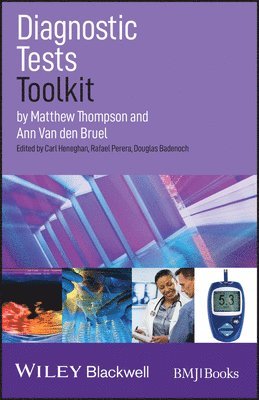
    Diagnostic Tests Toolkit

    AvMatthew Thompson,Ann Van den Bruel

    Häftad, Engelska, 2011

    Del 5 i serien EBMT-EBM Toolkit Series

    370 kr

    Beställningsvara. Skickas inom 5-8 vardagar. Fri frakt över 249 kr.

    Beskrivning

    Diagnostic Tests Toolkit Diagnostic Tests Toolkit Finding the evidence for diagnostic tests Establishing an evidence-based methodology to assess the effectiveness of diagnostic tests has posed problems for many years. Now that the framework is in place health professionals can find and appraise the evidence for themselves. With Diagnostic Tests Toolkit clinicians and junior researchers can interpret the evidence for the effectiveness of different types of diagnostic tests, or develop their own research using the successful ‘step-by-step’ format of the Toolkit series. Written by renowned clinical researchers, this is the first basic guide to evidence-based diagnosis. It is equally valuable to starters in clinical research and those needing a quick refresher on the core elements of evidence-based diagnosis.

    Produktinformation

    • Utgivningsdatum:2011-10-21
    • Mått:112 x 170 x 7 mm
    • Vikt:118 g
    • Format:Häftad
    • Språk:Engelska
    • Serie:EBMT-EBM Toolkit Series
    • Antal sidor:112
    • Förlag:John Wiley & Sons Inc
    • ISBN:9780470657584

    Utforska kategorier

    • Diagnostiska metoder inom Medicin

    Mer om författaren

    Matthew Thompson | Oxford Centre for Monitoring and Diagnosis, Department of Primary Care Health Sciences, University of Oxford, UK & Department of Family Medicine, Oregon Health & Science University, Portland, Oregon, USAAnn Van den Bruel | Department of Primary Care Health Sciences, University of Oxford, Oxford, UKSeries Editors: Carl Heneghan, Centre for Evidence-Based Medicine, Oxford, UK, Rafael Perera, Department of Primary Care, University of Oxford, UK; Douglas Badenoch, Minervation Ltd, Edinburgh, UK

    Innehållsförteckning

    • Acknowledgements, viii Introduction, ixChapter 1 Diagnosis in evidence-based medicine, 1Diagnosis and screening, 1Screening, 3Symptoms, 3Signs and elicited symptoms, 4Bedside or point-of-care testing, 4Laboratory tests, 4Basic structure of studies of diagnostic tests, 4Further reading, 5Chapter 2 Evaluating new diagnostic tests, 6Technical accuracy (‘Can it work?’), 7Place in the clinical pathway (‘Where does the test fi t in the existing clinical pathway?’), 9Ability of the test to diagnose or exclude the target condition (‘Does it work in patients?’), 10The effect of the test on patient outcomes (‘Are patients better off?’), 12Cost-effectiveness (‘Is it worth the cost?’), 14Further reading, 15Chapter 3 Asking an answerable clinical question, 16Defining a clinical question for diagnostic tests – PIRT, 16Further reading, 17Chapter 4 Finding the evidence: how to get the most from your searching, 18Combine textwords and thesaurus, 20Search filters for diagnostic accuracy studies, 20Further reading, 21Chapter 5 Selecting relevant studies, 22Selecting relevant studies, 22Assessing validity, 23What is the difference between bias and variability in diagnostic studies?, 23The ‘ideal’ diagnostic study, 24Flow charts of patients, 24Chapter 6 Sources of bias in diagnostic studies, 26Spectrum bias (also known as selection bias), 26Verification bias (also called referral or work-up bias), 28Incorporation bias, 29Observer (or test review bias) bias, 30Differential reference bias (double gold standard), 31What are the effects of the different design-related biases?, 32Further reading, 33Chapter 7 Measures of discrimination of diagnostic tests, 34Two by two tables, 34Outcome measures, 36Which measure should you use and why?, 38The effect of prevalence on predictive values, 40Effect of time on diagnostic accuracy, 41Effect of severity of the target condition on diagnostic accuracy, 42The referral fi lter, 42Rules of thumb for interpreting likelihood ratios, 44Further reading, 52Chapter 8 Using diagnostic information in clinical practice, 53Validity of data, 54Problem-solving strategies that clinicians use in diagnosis, 55Action thresholds versus testing thresholds (‘Will the test change my management?’), 57Methods for combining test results, 58Multivariable analyses, 60How are clinical prediction rules developed?, 62How to select a prediction rule for clinical practice, 64Further reading, 65Chapter 9 Screening tests, 66What are screening tests?, 66Different types of screening, 66Ideal study design for screening tests, 68Over-diagnosis, 74Further reading, 74Chapter 10 Systematic reviews of diagnostic test  accuracy studies, 75The research question, 75The literature search, 76Assess the quality of individual studies included in the review, 79Summarizing the results of diagnostic studies, 80Combining data and interpreting meta-analyses of diagnostic studies, 85Acknowledgements, 88Further reading, 88Appendix 1 Evidence-based medicine – a glossary of terms, 90Appendix 2 Further reading, 96Books, 96Useful websites, 96Useful journal articles, 96Index, 98