• Fri frakt över 249 kr
  • •
  • Snabba leveranser
  • •
  • Billiga böcker
Kundservice

Du är på sajten för privatpersoner.

Företag, bibliotek eller offentlig verksamhet?

Du handlar på classic.bokus.com, där alla dina funktioner finns intakta.
Till classic.bokus.com
Bokus logotyp. Gå till startsidan.
  • Erbjudanden
  • Nyheter
  • Student
  • Topplistor
  • Barn & ungdom
  • Bokus Play
  • E-böcker
  • Pocketböcker
  • Spel & pussel

10% rabatt på allt med kod: NYSTART10 →

Sidfot

Mina sidor

    Hjälp

    • Kundservice
    • Vanliga frågor och svar
    • Frakt och leverans
    • Retur vid ångerrätt
    • Reklamera vara
    • Betalning
    • Köpvillkor
    • Allmänna villkor
    • Information om webbplatsens tillgänglighet

    Om Bokus

    • Om oss
    • Pressrum
    • För studenter
    • För företag
    • För bibliotek och offentlig verksamhet
    • För leverantörer
    • Hållbarhet

    Populärt

    • Aktuella erbjudanden
    • Presentkort
    • Studentlitteratur
    • Nya böcker
    • Topplistor
    • Signerade böcker
    • Engelska böcker

    Inspiration

    • Boktips
    • BookTok
    • Populära bokserier
    • Barnbokskaraktärer
    • Populära författare
    Logotyp för Bokus
    Följ oss på Facebook (extern länk)Följ oss på Instagram (extern länk)Följ oss på YouTube (extern länk)Följ oss på TikTok (extern länk)
    bokus @ CookiesAnpassa cookiesIntegritetspolicyKöpvillkor
    Till Citymail hemsida (extern länk)Till Budbee hemsida (extern länk)Till Postnord hemsida (extern länk)Till Schenker hemsida (extern länk)Till Early Bird hemsida (extern länk)Till Walleys hemsida (extern länk)
    1. Ekonomi och Ledarskap
    2. Ledarskapsböcker
    3. Projektledning

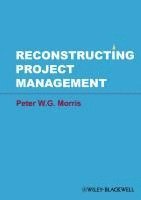
    Reconstructing Project Management

    AvPeter W. G. Morris

    Inbunden, Engelska, 2013

    965 kr

    Beställningsvara. Skickas inom 5-8 vardagar. Fri frakt över 249 kr.

    Fler format och utgåvor

    E-bok

    1 105 kr

    E-bok

    1 105 kr

    Beskrivning

    This hugely informative and wide-ranging analysis on the management of projects, past, present and future, is written both for practitioners and scholars. Beginning with a history of the discipline’s development, Reconstructing Project Management provides an extensive commentary on its practices and theoretical underpinnings, and concludes with proposals to improve its relevancy and value. Written not without a hint of attitude, this is by no means simply another project management textbook.The thesis of the book is that ‘it all depends on how you define the subject’; that much of our present thinking about project management as traditionally defined is sometimes boring, conceptually weak, and of limited application, whereas in reality it can be exciting, challenging and enormously important. The book draws on leading scholarship and case studies to explore this thesis.The book is divided into three major parts. Following an Introduction setting the scene, Part 1 covers the origins of modern project management – how the discipline has come to be what it is typically said to be; how it has been constructed – and the limitations of this traditional model. Part 2 presents an enlarged view of the discipline and then deconstructs this into its principal elements. Part 3 then reconstructs these elements to address the challenges facing society, and the implications for the discipline, in the years ahead.  A final section reprises the sweep of the discipline’s development and summarises the principal insights from the book.This thoughtful commentary on project (and program, and portfolio) management as it has developed and has been practiced over the last 60-plus years, and as it may be over the next 20 to 40, draws on examples from many industry sectors around the world. It is a seminal work, required reading for everyone interested in projects and their management.

    Produktinformation

    • Utgivningsdatum:2013-04-26
    • Mått:180 x 252 x 21 mm
    • Vikt:830 g
    • Format:Inbunden
    • Språk:Engelska
    • Antal sidor:344
    • Förlag:John Wiley and Sons Ltd
    • ISBN:9780470659076

    Utforska kategorier

    • Projektledning inom Ekonomi och Ledarskap

    Mer om författaren

    Peter Morris is Professor of Construction and Project Management at University College London (UCL).He is the author of The Management of Projects (Thomas Telford, 1994) and, with George Hough, of The Anatomy of Major Projects (John Wiley & Sons, 1987) and with Ashley Jamieson of Translating Corporate Strategy into Project Strategy (PMI, 2004). He is co-editor with Jeffrey Pinto of The Wiley Guide to Managing Projects (Wiley, 2005); and, with Jeffrey Pinto and Jonas Söderlund of The Oxford Handbook of Project Management (OUP, 2010).He is a past Chairman of the Association for Project Management (APM) and Deputy Chairman of the International Project Management Association (IPMA).  He received the Project Management Institute's 2005 Research Achievement Award, IPMA's 2009 Research Award, and APM's 2008 Sir Monty Finniston Life Time Achievement Award.

    Recensioner i media

    "This book is well written in plain, unambiguous English. It is for all serious project management practitioners working on any significant project in any area of project management application… This is an academic tome, yet … surprisingly easy and enjoyable reading…the contents throughout the book provide incredible insights and sound and realistic advice."  (From a review by R.Max Wideman, Fellow of the Project Management Institute, December 2014)“Summing Up: Highly recommended.  Upper-division undergraduates through professionals/practitioners.”  (Choice, 1 February 2014)

    Innehållsförteckning

    • Figures xiii Tables xvAbout the Author xviiPreface xixIntroduction 1Structure and Thesis of the Book 2Take-Aways 5References and Endnotes 6PART 1 CONSTRUCTING PROJECT MANAGEMENT 7Chapter 1 Introduction to Part 1 9Historical Method 9Bespeaking Relevant Knowledge 10References and Endnotes 11Chapter 2 Project Management before it was Invented 12Pre-History: Projects and Society 12Early Attempts at Formal Project Integration 19World War II and the Manhattan Project 22References and Endnotes 24Chapter 3 Systems Project Management 27USAF Integration: The Formal Recognition of Project Management 27Schriever and the Atlas Program 30Polaris 33PERT and CPM 34Construction 35The Harvard Business Review Introduces the Project Manager! 36McNamara and the Bureaucracy of Systems 36Apollo: Confi guration Management and Project Leadership 37DoD Bureaucratisation 41Externalities 43Energy and Commodities Projects 46Nuclear Power 46The Extractive Industries 48References and Endnotes 49Chapter 4 The Project Management Knowledge Base 52The PMBOK® Guide 52Theoretical Underpinnings 55‘The Management of Projects’ 60‘The Management of Projects’ Paradigm versus ‘Execution Delivery’ 61The APM, IPMA, and Japanese BOKs 61Quality Management 65New Product Development: Lessons from Toyota 65Academic Engagement 67References and Endnotes 70Chapter 5 Developing Project Management 75IMEC: ‘Large Engineering Projects’ 75Contracting and Procurement 76Partnering and the new Procurement Environment 78Risks and Opportunities 81Flyvbjerg et al.: Transportation Projects and Optimism Bias 81BOT/PFI 82Value and Benefits 83Health, Safety, and Environment 84Defence Projects 86Software Projects and Standish 86Technology and Requirements Management 88Agile Project Management 90Information and Communications Technology (ICT) 91Critical Chain 92Program Management 93Developing Enterprise-Wide p.m. Capability: The US Department of Energy (DoE)/NRC Study 94References and Endnotes 95Chapter 6 Enterprise-Wide Project Management (EWPM) 99Strategy and Governance 99PMOs 100Best Practice Guidelines and Maturity 100Critical Management 102Learning and Development 104Project Management as a Career Track 105References and Endnotes 105Chapter 7 The Development of Project Management: Summary 108PART 2 DECONSTRUCTING PROJECT MANAGEMENT 113Chapter 8 Introduction to Part 2 115The Domain 115Deconstructing Deconstruction 116Approaching the Management of Projects 117Developing Projects 120References and Endnotes 121Chapter 9 Control 123Scope Management 123Scheduling 128Estimating 135Budgeting 138Cost Management 139Performance Management (Earned Value) 140References and Endnotes 142Chapter 10 Organisation 145Roles and Responsibilities 145Structure 149Structural Forms 152Contingency Theory and Organisation Design 156Project Management Contingency: Getting the Fit 157References and Endnotes 157Chapter 11 Governance and Strategy 160Governance 160Strategy 161References and Endnotes 165Chapter 12 Managing the Emerging Project Definition 167Requirements Management 168Solutions Development 170References and Endnotes 174Chapter 13 Procurement and the Project’s Commercial Management 176Acquisition and Contracting Strategy 177Partnering and Alliancing 179Procurement 181Contract Administration 182References and Endnotes 184Chapter 14 Adding Value, Controlling Risk, Delivering Quality, Safely and Securely 186Building Value, Achieving Benefits 186Risk and Opportunity Management 190Quality Management 192Health, Safety, Security, and Environment (HSSE) 194References and Endnotes 195Chapter 15 People 198Leadership 199Teams 201Stakeholder Management 203Culture 203Individuals’ Skills and Behaviours 205References and Endnotes 210Chapter 16 Level 3: The Insti tutional Context 214PMOs 215Functions of the PMO 215Clearing the Decks for Reconstruction 224References and Endnotes 226PART 3 RECONSTRUCTING PROJECT MANAGEMENT 229Chapter 17 Introduction to Part 3 231A Discipline 231A Knowledge Domain 232Foundations for the Future 233References and Endnotes 233Chapter 18 The Character of our PM Knowledge 234Terminology 234Ontology 236Epistemology and Theories of Project Management 237Methodology 240The Character of the Field’s Substantive Knowledge 244References and Endnotes 249Chapter 19 Managing Context 252Independent (or Semi-Independent) Variables 253Dependent Variables 254References and Endnotes 256Chapter 20 Ethos: Building Sponsor Value 257Questions of Purpose 257Effectiveness 258Enhancing Sponsor Value 258The Japanese Approach: Pursuing Innovation and Value 266References and Endnotes 267Chapter 21 ‘only connect’ – the Age of Relevance 269Connecting p.m. to Organisational Performance 269The New Dystopia? 270The Role of MoP/P3M 273References and Endnotes 276PART 4 SUMMA 279Chapter 22 Summary and Conclusions 281The Sweep of Project Management 281Conclusions for the Discipline 283Appendices 287Appendix 1: Critical Success Factor Studies 289Appendix 2: ‘Characteristics of Successful Megaprojects or Systems Acquisitions’ 306Index 309