• Fri frakt över 249 kr
  • •
  • Snabba leveranser
  • •
  • Billiga böcker
Kundservice

Du är på sajten för privatpersoner.

Företag, bibliotek eller offentlig verksamhet?

Du handlar på classic.bokus.com, där alla dina funktioner finns intakta.
Till classic.bokus.com
Bokus logotyp. Gå till startsidan.
  • Erbjudanden
  • Nyheter
  • Student
  • Topplistor
  • Barn & ungdom
  • Bokus Play
  • E-böcker
  • Pocketböcker
  • Spel & pussel

10% rabatt på allt med kod: NYSTART10 →

Sidfot

Mina sidor

    Hjälp

    • Kundservice
    • Vanliga frågor och svar
    • Frakt och leverans
    • Retur vid ångerrätt
    • Reklamera vara
    • Betalning
    • Köpvillkor
    • Allmänna villkor
    • Information om webbplatsens tillgänglighet

    Om Bokus

    • Om oss
    • Pressrum
    • För studenter
    • För företag
    • För bibliotek och offentlig verksamhet
    • För leverantörer
    • Hållbarhet

    Populärt

    • Aktuella erbjudanden
    • Presentkort
    • Studentlitteratur
    • Nya böcker
    • Topplistor
    • Signerade böcker
    • Engelska böcker

    Inspiration

    • Boktips
    • BookTok
    • Populära bokserier
    • Barnbokskaraktärer
    • Populära författare
    Logotyp för Bokus
    Följ oss på Facebook (extern länk)Följ oss på Instagram (extern länk)Följ oss på YouTube (extern länk)Följ oss på TikTok (extern länk)
    bokus @ CookiesAnpassa cookiesIntegritetspolicyKöpvillkor
    Till Citymail hemsida (extern länk)Till Budbee hemsida (extern länk)Till Postnord hemsida (extern länk)Till Schenker hemsida (extern länk)Till Early Bird hemsida (extern länk)Till Walleys hemsida (extern länk)
    1. Kultur
    2. Arkitektur

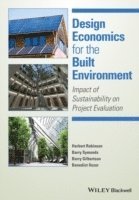
    Design Economics for the Built Environment

    Impact of Sustainability on Project Evaluation

    AvHerbert Robinson,Barry Symonds

    Häftad, Engelska, 2015

    1 262 kr

    Beställningsvara. Skickas inom 5-8 vardagar. Fri frakt över 249 kr.

    Beskrivning

    The drive towards environmentally friendly buildings and infrastructure has led to a growing interest in providing design solutions underpinned by the core principles of sustainability to balance economic, social and environmental factors.Design Economics for the Built Environment: Impact of sustainability on project evaluation presents new directions, reflecting the need to recognise the impact of climate change and the importance of sustainability in project evaluation. The aim is to provide a new approach to understanding design economics in the context of the changing policy environment, legislative and regulatory framework, and increasing economic, environmental and social pressure as result of the sustainability agenda.The book follows a structured approach from theories and principles in the earlier chapters, to the practical applications and emerging techniques focusing on value and social, economic and environmental considerations in making design decisions. It starts with the policy context, building on various theories and principles such as, capital cost, value of design and resource-based theories, the new rules of measurement (NRM) to explore cost planning, the relationship between height and costs, key socio-economic and environmental variables for design appraisal, eco-cost/value ratio (EVR), whole life theory and the treatment of carbon emission as external costs, productivity and efficiency, fiscal drivers and legal framework for carbon reduction, procurement and allocation of risks in contracts.Case studies, practical examples and frameworks throughout reinforce theories and principles and relate them to current practice. The book is essential reading for postgraduate students in architecture, building and quantity surveying and is also a valuable resource for academics, consultants and policy-makers in the built environment.

    Produktinformation

    • Utgivningsdatum:2015-05-22
    • Mått:173 x 245 x 22 mm
    • Vikt:835 g
    • Format:Häftad
    • Språk:Engelska
    • Antal sidor:432
    • Förlag:John Wiley and Sons Ltd
    • ISBN:9780470659090

    Utforska kategorier

    • Arkitektur inom Kultur
    • Byggnadsteknik inom Naturvetenskap och teknik

    Mer om författaren

    The EditorsProfessor Herbert Robinson, is currently a Regional Adviser and Head of Training Division at the United Nations African Institute for Economic Development and Planning (IDEP), part of United Nations Regional Economic Commission for Africa. He was Professor of Construction Economics at London South Bank University and a Senior Research Associate at Loughborough University, UK.Barry Symonds, Senator h.c. Biberach an der Riss, Managing Director of Symonds Konsult International  and Associate Director for Rapid5D (BIM Solutions UK). He was the Head of Property, Surveying and Construction at London South Bank University, UK. As a chartered quantity surveyor, he worked as a partner and consultant for practices in the UK and New Zealand. He held academic advisory roles and has been visiting professor, and external examiner in the UK and abroad.Professor Barry Gilbertson is a Visiting Professor at the University of Northumbria in Newcastle and was a partner at PricewaterhouseCoopers for 15 years. Barry was the first chartered surveyor to become a partner in a firm of chartered accountants, anywhere in the world, and the 123rd President of RICS in 2004/5. Barry was a member of the United Nations Real Estate Advisory Group and a member of the Bank of England's Property Forum.Professor Benedict D. Ilozor teaches construction management, architecture, facilities planning, design & management at the School of Engineering Technology, Eastern Michigan University, where he is Research & Graduate Assistants Coordinator. He previously taught in Australian universities, and was head of Facilities Management for the Built Environment Research Group at the School of Architecture & Building, Deakin University.

    Innehållsförteckning

    • Editors and Contributors xii Foreword xxiiiPreface xxvPART I THEORIES, PRINCIPLES AND APPROACHES 11 Economic Context, Policy Environment and the Changing Role of Design Economists 3Herbert Robinson and Barry Symonds1.1 Introduction 31.2 The economic context 41.3 Globalisation of construction market 61.4 The policy environment and the construction industry 91.5 Current and emerging role of design economists 112 Theories and Principles of Design Economics 16Herbert Robinson and Barry Symonds2.1 Introduction 162.2 Factors affecting design costs and benefits 172.3 Capital cost theory 182.4 Whole life cost theory 212.5 Value management theory 232.6 Value of design theory 242.7 Carter’s model 262.8 Resource]based theory 273 New Approaches and Rules of Measurement for Cost Estimating and Planning 31Barry Symonds, Peter Barnes and Herbert Robinson3.1 Introduction 313.2 The standardisation of cost estimating 323.3 The RICS NRM 1 333.4 RIBA plan of work, RICS estimating, cost planning and NRM 1 343.5 Cost estimating and cost planning 353.6 Elemental Standard Form of Cost Analysis (SFCA) 403.7 Benchmarking (cost limits) 413.8 Building information modelling 433.9 Concluding remarks 444 The Relationship between Building Height and Construction Costs 47David Picken and Benedict Ilozor4.1 Introduction 474.2 Research in the 1970s and 1980s 484.3 More recent research in Hong Kong and Shanghai 504.4 Conclusions 595 Appraisal of Design to Determine Viability of Development Schemes 61Herbert Robinson5.1 Introduction 615.2 Assessing costs and benefits of design alternatives 615.3 Appraisal of design using discounting methods 635.4 Appraisal of design using residual technique 655.5 Case study of the blackfriars development project 695.6 Concluding remarks 776 Eco-cost Associated with Tall Buildings 80Peter de Jong and J.W.F. Hans Wamelink6.1 Introduction 806.2 Overview of the Dutch housing market and land use planning 806.3 Eco-costs/value ratio and the EVR model 826.4 Applying the EVR model to housing 866.5 EVR and tall buildings 886.6 Embedding EVR in other sustainable ranking methods 896.7 Conclusion 907 Productivity in Construction Projects 93Shamil Naoum7.1 Introduction 937.2 Concept and measurement of productivity 947.3 Previous literature on factors affecting site productivity 947.4 Productivity survey 1007.5 Proposed framework for site productivity 1027.6 Conclusion and further research 1048 Design Variables and Whole-Life Cost Modelling 107Andrea Pelzeter8.1 Introduction 1078.2 Whole-life cost modelling 1088.3 Steps in LCC modelling 1108.4 Design principles to optimise lcc 1128.5 A worked example of an office façade 1168.6 Inclusion of carbon emissions into wlc modelling 1188.7 Limitations of wlc 1198.8 Concluding remarks 1199 Procurement and Contract Strategy: Risks Allocation and Construction Cost 121John Adriaanse and Herbert Robinson9.1 Introduction 1219.2 Procurement strategy and contract selection 1229.3 Wembley stadium case study 1239.4 Allocation of risks and forms of contract 1249.5 Risks and construction costs 1259.6 Procurement systems and contract issues 1289.7 Alternative forms of procurement 1339.8 Concluding remarks 13510 Sustainable Design, Investment and Value 137Thomas Lützkendorf and David Lorenz10.1 Introduction 13710.2 Formulation of project goals 13810.3 Identifying value-related characteristics 14210.4 The performance approach 14310.5 Use of sustainability assessment systems 14610.6 Relationship between sustainable credentials and value 14810.7 Concluding remarks 15011 Carbon Reduction and Fiscal Incentives for Sustainable Design 152Paul Farey11.1 Introduction 15211.2 Key drivers of owners and occupiers 15311.3 Reducing demand for energy in buildings 15311.4 Fiscal drivers 15511.5 Reliefs and allowances 16111.6 Subsidies and incentives 17311.7 Conclusion 17512 Environmental Assessment Tools: An Overview of the UK’s BREEAM and the US’s LEED 177Ina Colombo, Benedict Ilozor and Herbert Robinson12.1 Introduction 17712.2 Context and the need to design to reduce carbon emission 17812.3 Key features of environmental assessment tools 17912.4 The Breeam tool 18012.5 The LEED tool 18412.6 Concluding remarks 19013 Space Planning and Organisational Performance 191Benedict Ilozor13.1 Introduction 19113.2 Organisational performance and innovative work settings 19213.3 Hypotheses and test results 19313.4 Discussion 19513.5 Conclusions 19814 Achieving Zero Carbon in Sustainable Communities 201Malgorzata Jacewicz and Herbert Robinson14.1 Introduction 20114.2 Key concepts and principles 20214.3 Key features of decentralised energy networks 20314.4 Activity-based design approach 20414.5 Key steps in the design process 20614.6 Evaluating energy, space and land requirements 20914.7 Concluding remarks 21115 Flood Risk Mitigation: Design Considerations and Cost Implications for New and Existing Buildings 213Rotimi Joseph, David Proverbs and Jessica Lamond15.1 Introduction 21315.2 Increasing challenges of flooding due to global warming and urban development 21415.3 Flood mitigation 21515.4 Flood mitigation consideration for new buildings at design stage 21815.5 Implications of mitigation measures in terms of building cost 21815.6 Implications of mitigation measures in terms of property value and insurance cost 22215.7 Conclusions 224PART II INDUSTRY PERSPECTIVE, CASE STUDIES AND IMPLICATIONS FOR CURRICULUM DEVELOPMENT 22716 Reusing Knowledge and Leveraging Technology to Reduce Design and Construction Costs 229Herbert Robinson and Chika Udeaja16.1 Introduction 22916.2 Knowledge reuse in construction processes and projects 22916.3 Knowledge reuse in construction projects 23116.4 Leveraging knowledge systems to reduce time and costs 23216.5 4Projects knowledge solution 23416.6 Case studies and discussions 23516.7 Concluding remarks 23717 Sustainable Design Economics and Property Valuation: An Industry Perspective 240Barry Gilbertson, Ann Heywood, Ian Selby and John Symes-Thompson17.1 Introduction 24017.2 Sustainable design economics and property valuation 24017.3 Data collection 24317.4 UK government impact 24417.5 The valuation process 24517.6 Conclusion 24718 Cost Planning of Construction Projects: An Industry Perspective 248Jon Scott18.1 Introduction 24818.2 Concept and format of a cost plan 24818.3 How a cost plan is put together 25318.4 How the cost plan evolves through the riba design stages 25518.5 Main factors that affect the overall cost of a building 25718.6 Impact of sustainability on cost plans 25818.7 Recent developments in BIM and the implications for cost planning 26018.8 Conclusion 26019 Life Cycle Costing and Sustainability Assessments: An Industry Perspective with Case Studies 262Sean Lockie19.1 Introduction 26219.2 Sustainability considerations in design 26319.3 Using the life cycle costing standards 26919.4 Case study 1 – whole building 27519.5 Case study 2 – lighting 27919.6 Concluding remarks 28220 Designing Super-Tall Buildings for Increased Resilience: New Measures and Cost Considerations 284James Hayhoe20.1 Introduction 28420.2 Challenges of tall buildings and the need for increased resilience 28420.3 Factors influencing design and cost of tall buildings 28520.4 Design of counter-terrorism measures 28820.5 Cost of new measures and design 29120.6 Concluding remarks 29521 Building Information Modelling: A New Approach to Design, Quantification, Costing, and Schedule Management with Case Studies 299Aviad Almagor and Barry Symonds21.1 Introduction 29921.2 Concept of Bim 30021.3 Integration and dataflow 30221.4 Model Progression Specification: Developing a common language 30321.5 Quality 30521.6 Cost planning 31021.7 Construction schedule 31421.8 Conclusion and future directions 31722 Case Study: Value Engineering and Management Focusing on Groundworks and Piling Packages 319Richard Powell22.1 Introduction 31922.2 Why VM? 31922.3 When and where is VM applied? 32022.4 Value management implemention and tools used 32022.5 Practical benefits and savings 32422.6 Reflection and concluding remarks 32723 Case Study: Value Engineering of a New Office Development with Retail Provision 330Paul Ullmer23.1 Introduction 33023.2 Why value management? 33023.3 When and where is value management applied? 33123.4 Value management implementation and tools used 33223.5 Practical benefits and savings 33423.6 Concluding remarks 33524 Case Studies: Sustainable Design, Innovation and Competitiveness in Construction Firms 336Arthlene Amos and Herbert Robinson24.1 Introduction 33624.2 Background and context 33624.3 Key drivers of sustainability in design and construction 33724.4 Case studies 33924.5 Findings and discussions 34024.6 Concluding Remarks 35325 Case Study: Retrofitting Building Services Design and Sustainability in Star Island 356Victoria Hardy25.1 Introduction 35625.2 Initial study or analysis to identify problems 35725.3 Funding for capital improvement plan 35825.4 Evaluation of design options and the cost implications 35825.5 Proposed design solution and costs 35925.6 Concluding remarks 36126 Case Studies: Maximising Design and Construction Opportunities through Fiscal Incentives 362Paul Farey26.1 Introduction 36226.2 Strategic considerations 36226.3 Capital allowances planning 36426.4 Enhanced capital allowances (ECA) 36626.5 Land remediation relief (LRR) 36726.6 Value added tax 36826.7 Taxation anti-avoidance 37026.8 Conclusion 37027 Mapping Sustainability in the Quantity Surveying Curriculum: Educating Tomorrow’s Design Economists 372Chika Udeaja, Damilola Ekundayo, Lei Zhou, John Pearson and Srinath Perera27.1 Introduction 37227.2 Literature review on sustainability issues 37327.3 Development of the Sustainability Framework 37627.4 Mapping of Sustainability Education in QS Degree Programmes 38027.5 Discussion and conclusions 382Appendix A: UK Property Investment Yields (December 2013) 387Appendix B: IPD/RICS Sustainability Inspection Checklist 2014 389Index 392