• Fri frakt över 249 kr
  • •
  • Snabba leveranser
  • •
  • Billiga böcker
Kundservice

Du är på sajten för privatpersoner.

Företag, bibliotek eller offentlig verksamhet?

Du handlar på classic.bokus.com, där alla dina funktioner finns intakta.
Till classic.bokus.com
Bokus logotyp. Gå till startsidan.
  • Erbjudanden
  • Nyheter
  • Student
  • Topplistor
  • Barn & ungdom
  • Bokus Play
  • E-böcker
  • Pocketböcker
  • Spel & pussel

10% rabatt på allt med kod NYSTART10 →

Sidfot

Mina sidor

    Hjälp

    • Kundservice
    • Vanliga frågor och svar
    • Frakt och leverans
    • Retur vid ångerrätt
    • Reklamera vara
    • Betalning
    • Köpvillkor
    • Allmänna villkor
    • Information om webbplatsens tillgänglighet

    Om Bokus

    • Om oss
    • Pressrum
    • För studenter
    • För företag
    • För bibliotek och offentlig verksamhet
    • För leverantörer
    • Hållbarhet

    Populärt

    • Aktuella erbjudanden
    • Presentkort
    • Studentlitteratur
    • Nya böcker
    • Topplistor
    • Signerade böcker
    • Engelska böcker

    Inspiration

    • Boktips
    • BookTok
    • Populära bokserier
    • Barnbokskaraktärer
    • Populära författare
    Logotyp för Bokus
    Följ oss på Facebook (extern länk)Följ oss på Instagram (extern länk)Följ oss på YouTube (extern länk)Följ oss på TikTok (extern länk)
    bokus @ CookiesAnpassa cookiesIntegritetspolicyKöpvillkor
    Till Citymail hemsida (extern länk)Till Budbee hemsida (extern länk)Till Postnord hemsida (extern länk)Till Schenker hemsida (extern länk)Till Early Bird hemsida (extern länk)Till Walleys hemsida (extern länk)
    1. Ekonomi och Ledarskap
    2. Företagsekonomi
    3. Redovisning och finansiering
    4. Finansiering

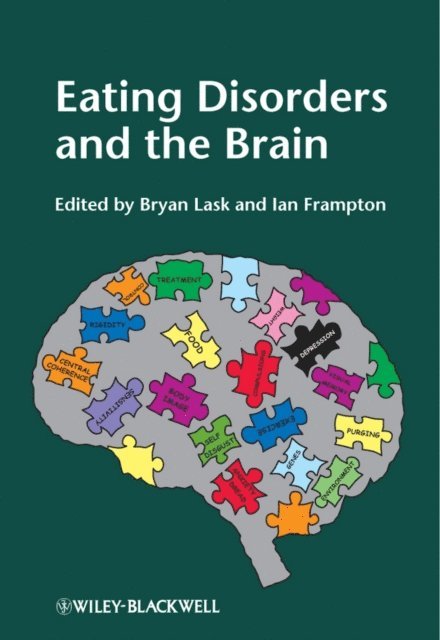
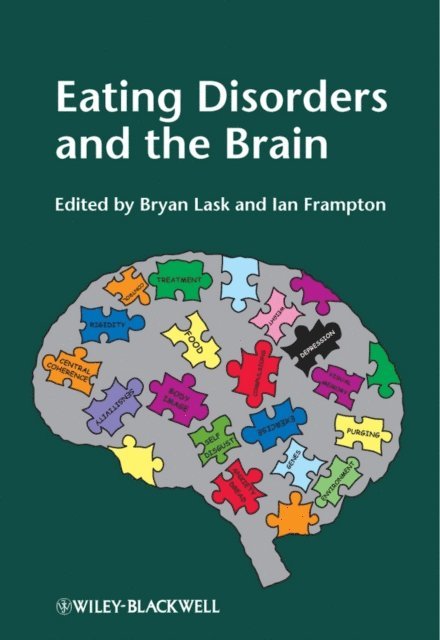
    Eating Disorders and the Brain

    AvBryan Lask,Ian Frampton

    Inbunden, Engelska, 2011

    1 022 kr

    Beställningsvara. Skickas inom 5-8 vardagar. Fri frakt över 249 kr.

    Beskrivning

    Why is the brain important in eating disorders? This ground-breaking new book describes how increasingly sophisticated neuroscientific approaches are revealing much about the role of the brain in eating disorders.  Even more importantly, it discusses how underlying brain abnormalities and dysfunction may contribute to the development and help in the treatment of these serious disorders. Neuropsychological studies show impairments in specific cognitive functions, especially executive and visuo-spatial skills.Neuroimaging studies show structural and functional abnormalities, including cortical atrophy and neural circuit abnormalities, the latter appearing to be playing a major part in the development of anorexia nervosa.Neurochemistry studies show dysregulation within neurotransmitter systems, with effects upon the modulation of feeding, mood, anxiety, neuroendocrine control, metabolic rate, sympathetic tone and temperature.The first chapter, by an eating disorders clinician, explains the importance of a neuroscience perspective for clinicians. This is followed by an overview of the common eating disorders, then chapters on what we know of them from studies of neuroimaging, neuropsychology and neurochemistry. The mysterious phenomenon of body image disturbance is then described and explained from a neuroscience perspective. The next two chapters focus on neuroscience models of eating disorders, the first offering an overview and the second a new and comprehensive explanatory model of anorexia nervosa. The following two chapters offer a clinical perspective, with attention on the implications of a neuroscience perspective for patients and their families, the second providing details of clinical applications of neuroscience understanding. The final chapter looks to the future.This book succinctly reviews current knowledge about all these aspects of eating disorder neuroscience and explores the implications for treatment.  It will be of great interest to all clinicians (psychiatrists, psychologists, nurses, dieticians, paediatricians, physicians, physiotherapists) working in eating disorders, as well as to neuroscience researchers.

    Produktinformation

    • Utgivningsdatum:2011-08-19
    • Mått:176 x 250 x 20 mm
    • Vikt:606 g
    • Format:Inbunden
    • Språk:Engelska
    • Antal sidor:272
    • Förlag:John Wiley & Sons Inc
    • ISBN:9780470670033

    Utforska kategorier

    • Finansiering inom Ekonomi och Ledarskap

    Mer om författaren

    Bryan Lask FRCPsych, FAED, M.Phil, MB,. BS Hon Consultant and Emeritus Professor of Child and Adolescent Psychiatry, Great Ormond Street Hospital for Children, London, UK; Research Director, Ellern Mede Service for Eating Disorders, London, UK; Visiting Professor, Oslo University Hospital, Norway Ian Frampton BA(Hons) D.Clin.Psych. Dip.Clin.Neuropsych. C Psychol.Hon Consultant Psychologist, Great Ormond Street Hospital for Children, London, UK; Visiting Research Consultant, Regional Eating Disorders Service, Oslo University Hospital, Norway

    Recensioner i media

    "Congratulation on excellent book: informative, readable, broad in its coverage, and very useful to those of us who are not neuroscientists.I particularly appreciated the several concluding chapters that articulated and evaluated the nature, strengths, and shortcomings of models."(Dr Michael Levine, Emeritus Professor of Psychology, Kenyon College, Gambier, USA, November 2102) “This is a very good contribution to the psychiatric literature that will help clinicians, researchers, and neuroscientists in general to understand eating disorders from a biopsychosocial perspective. It gives a very explicit definition of eating disorders as well as treatment options and future overviews.”  (Doody's, 25 May 2012)"Well written and well edited, nicely balanced between academic reviews and integrative theoretical syntheses, the readable chapters will inform readers who lack deep knowledge about biological aspects of eating disorders as well as those who are better informed. Chapters are scholarly without being stuffy, and contributors summarize pertinent studies in structural and functional neuroimaging, neuropsychology, and the neuroscience of body image. For serious eating disorders clinicians as well as academicians, there’s much in this book to study and ponder." - EATING DISORDERS REVIEW “There has been an important paradigm shift in thinking about eating disorders in that the brain is receiving  more  attention.  The Academy of Eating Disorders has published a position paper placing the brain more centrally within these highly complex multifaceted disorders.  This book is an important addition to the literature: the authors are all expert communicators and are able to make the topic simple, enjoyable  and easy to understand.”  - Janet Treasure, Professor of Psychiatry, Guy’s, King’s & St Thomas’ Medical School, London, UK

    Innehållsförteckning

    • Preface xiList of contributors xiiiAcknowledgements xv1 Why clinicians should love neuroscience: the clinical relevance of contemporary knowledge 1David Wood1.1 Introduction 11.2 The legacy of mind–body dualism 21.3 Free will and determinism 31.4 Clinical implications 31.5 Restriction of energy intake and increase in energy output 41.6 Non-eating-related concerns 51.7 In-the-beginning questions: the problem of aetiology in eating disorders 61.8 The temporal, ‘vertical’ aetiological dimension 71.9 The spatial, ‘horizontal’ aetiological dimension 111.10 The importance of a neuroscientific aetiological framework 131.11 Conclusion 15References 162 Eating disorders: an overview 19Beth Watkins2.1 Introduction 192.2 Clinical descriptions 202.3 Comorbidity 242.4 Epidemiology 252.5 Aetiology and risk factors 272.6 Treatment 352.7 Course and outcome 402.8 Conclusion 41References 413 Neuroimaging 56Tone Seim Fuglset and Ian Frampton3.1 Introduction 563.2 Structural imaging 563.3 Functional imaging 903.4 Conclusion 101References 1014 Neuropsychology 106Joanna E. Steinglass and Deborah R. Glasofer4.1 Introduction 1064.2 Intellectual functioning 1074.3 Attention 1084.4 Memory 1104.5 Visuospatial processing 1114.6 Executive functioning 1134.7 Conclusion 116References 1175 Neurochemistry: the fabric of life and the fabric of eating disorders 122Kenneth Nunn5.1 Introduction 1225.2 Five aims 1225.3 Five propositions relating neurochemistry to the field of eating disorders 1235.4 Five implications of these propositions 1275.5 Five directions for future research 1275.6 Conclusion 127Acknowledgement 128References 1286 Body-image disturbance 129Maria Øverås6.1 Introduction 1296.2 What is body image? 1306.3 How is body image constructed in the brain? 1306.4 Body-image disturbance in eating disorders 1336.5 The neuroscience of body-image distortion in anorexia nervosa 1346.6 Conclusion 138References 1397 Conceptual models 142Mark Rose and Ian Frampton7.1 Introduction 1427.2 Conceptual models in anorexia nervosa 1437.3 Conclusion 161References 1638 Towards a comprehensive, causal and explanatory neuroscience model of anorexia nervosa 164Kenneth Nunn, Bryan Lask and Ian Frampton8.1 Introduction 1648.2 The model 1648.3 Critical appraisal 1738.4 Clinical implications 1758.5 Conclusion 177Acknowledgements 177References 1779 Neurobiological models: implications for patients and families 180Ilina Singh and Alina Wengaard9.1 Introduction 1809.2 The emergence of neurobiological models 1809.3 Anorexia nervosa and illness representations 1819.4 Impact of a neurobiological model on families’ understandings of anorexia nervosa 1839.5 Conclusion 188References 18910 Implications for treatment 191Camilla Lindvall and Bryan Lask10.1 Introduction 19110.2 Psychopharmacology 19210.3 The educational context 19310.4 Psychological treatment 19410.5 Conclusion 205References 20511 Future directions 207Ian Frampton and Bryan Lask11.1 Introduction 20711.2 Cause 20711.3 Assessment and diagnosis 20811.4 Treatment 21011.5 Prevention 21111.6 Future directions 21211.7 Conclusion 215References 216Index 219