• Fri frakt över 249 kr
  • •
  • Snabba leveranser
  • •
  • Billiga böcker
Kundservice

Du är på sajten för privatpersoner.

Företag, bibliotek eller offentlig verksamhet?

Du handlar på classic.bokus.com, där alla dina funktioner finns intakta.
Till classic.bokus.com
Bokus logotyp. Gå till startsidan.
  • Erbjudanden
  • Nyheter
  • Student
  • Topplistor
  • Barn & ungdom
  • Bokus Play
  • E-böcker
  • Pocketböcker
  • Spel & pussel

10% rabatt på allt med kod NYSTART10 →

Sidfot

Mina sidor

    Hjälp

    • Kundservice
    • Vanliga frågor och svar
    • Frakt och leverans
    • Retur vid ångerrätt
    • Reklamera vara
    • Betalning
    • Köpvillkor
    • Allmänna villkor
    • Information om webbplatsens tillgänglighet

    Om Bokus

    • Om oss
    • Pressrum
    • För studenter
    • För företag
    • För bibliotek och offentlig verksamhet
    • För leverantörer
    • Hållbarhet

    Populärt

    • Aktuella erbjudanden
    • Presentkort
    • Studentlitteratur
    • Nya böcker
    • Topplistor
    • Signerade böcker
    • Engelska böcker

    Inspiration

    • Boktips
    • BookTok
    • Populära bokserier
    • Barnbokskaraktärer
    • Populära författare
    Logotyp för Bokus
    Följ oss på Facebook (extern länk)Följ oss på Instagram (extern länk)Följ oss på YouTube (extern länk)Följ oss på TikTok (extern länk)
    bokus @ CookiesAnpassa cookiesIntegritetspolicyKöpvillkor
    Till Citymail hemsida (extern länk)Till Budbee hemsida (extern länk)Till Postnord hemsida (extern länk)Till Schenker hemsida (extern länk)Till Early Bird hemsida (extern länk)Till Walleys hemsida (extern länk)
    1. Naturvetenskap och teknik
    2. Teknik och industri
    3. Byggnadsteknik

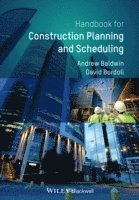
    Handbook for Construction Planning and Scheduling

    AvAndrew Baldwin,David Bordoli

    Häftad, Engelska, 2014

    697 kr

    Skickas . Fri frakt över 249 kr.

    Beskrivning

    The authoritative industry guide on good practice for planning and scheduling in constructionThis handbook acts as a guide to good practice, a text to accompany learning and a reference document for those needing information on background, best practice, and methods for practical application. A Handbook for Construction Planning & Scheduling presents the key issues of planning and programming in scheduling in a clear, concise and practical way. The book divides into four main sections: Planning and Scheduling within the Construction Context; Planning and Scheduling Techniques and Practices; Planning and Scheduling Methods; Delay and Forensic Analysis. The authors include both basic concepts and updates on current topics demanding close attention from the construction industry, including planning for sustainability, waste, health and safety and Building Information Modelling (BIM).The book is especially useful for early career practitioners - engineers, quantity surveyors, construction managers, project managers - who may already have a basic grounding in civil engineering, building and general construction but lack extensive planning and scheduling experience. Students will find the website helpful with worked examples of the methods and calculations for typical construction projects plus other directed learning material.This authoritative industry guide on good practice for planning and scheduling in construction is written in a direct, informative style with a clear presentation enabling easy access of the relevant information with a companion website providing additional resources and learning support material. the authoritative industry guide on construction planning and schedulingdirect informative writing style and clear presentation enables easy access of the relevant informationcompanion website provides additional learning material.

    Produktinformation

    • Utgivningsdatum:2014-06-13
    • Mått:170 x 241 x 23 mm
    • Vikt:816 g
    • Format:Häftad
    • Språk:Engelska
    • Antal sidor:432
    • Förlag:John Wiley & Sons Inc
    • ISBN:9780470670323

    Utforska kategorier

    • Byggnadsteknik inom Naturvetenskap och teknik

    Mer om författaren

    Andrew Baldwin, BSc(Hons), MSc, PhD, CEng, FICE, Eur Ing, has extensive construction industry and academic experience. Following a career in the civil engineering and construction industries that included planning and scheduling for a number of major construction projects, he commenced an academic career at Loughborough University, UK, where he is now Emeritus Professor in Construction Management. He is also a Distinguished Visiting Professor at Chongqing University, China, where he is a Co-Director of the National Centre for International Research of Low-Carbon and Green Buildings, a position funded under the national ‘One Thousand Experts’ programme.David Bordoli, BSc, MSc, FCIOB, MAPM, ACIArb, is an extremely experienced planning professional who began his career as a planning engineer with construction contractors then worked as a consultant, providing contractual advice, preparing time delay claims, reports for adjudications, arbitrations and litigation, and undertaking expert witness appointments in delay and disruption disputes in construction and engineering. He is now a Director of Driver Trett and has recently spent most of his time working on overseas projects, particularly in South Africa.

    Innehållsförteckning

    • Notes on Contributors xivForeword xviiPreface xviiiAcknowledgements xxiAbout the Companion Website xxiiSection I Planning and Scheduling within the Construction Context 1Introduction 11 An Introduction to Planning and Scheduling 3A brief history of planning and scheduling 3Critical path methods 4The impact of the PC 5New systems and new thinking 6New information and communication technologies 6Planning 7Who plans? 8Planning, programming and scheduling 8The cost and benefits of planning 10Types of plans 11An activity of the mind 11Planning for construction 12The planning process in the project cycle 13PRINCE2 14CIOB code of practice for project management for construction and development 15The RIBA plan of work 17The process protocol map 19Summary 23How is the planning process affected by procurement? 24The context of construction project planning 27Procurement and the performance of the UK construction industry 28The Egan report (1998) 29Partnering 30Public sector construction procurement: The private finance initiative (PFI) 31What do construction planners do? 31Construction planning practice: a summary 33Key points 342 Managing Construction Projects 36Li Baiyi and Simon AustinProject management body of knowledge (PMBOK) 36Simultaneous management 41Lean construction 42A theory of construction as production by projects 44Collaborative working 46Morris’ perspective 47Summary 47Key points 50Section II Planning and Scheduling Techniques and Practices 51Introduction 513 Planning and Scheduling Techniques 53To-do lists 53Bar charts 55Flow diagrams 56Flow charts 56Work study 57Network analysis 59Activity-on-arrow networks 60Drawing the network 60Precedence diagrams 63Drawing the network-precedence diagrams 63Linked bar charts 65Space diagrams 65Time chainage charts 65Multiple activity charts 69Line of balance 71Line of balance – resource scheduling 73ADePT 74Data flow diagrams 75A generic model for detailed building design 75Dependency structure matrix analysis 76Producing project and departmental schedules 794D CAD 79Key points 804 Planning and Scheduling Practices 81Schedule design and structure 81Level 1 schedule report 81Level 2 schedule report 82Level 3 schedule report 82Level 4 schedule report 83Level 5 schedule report 83What is required on smaller projects? 83Creating these schedules 84Work Breakdown Structure 84Pre-tender planning, pre-contract planning, contract planning 86Pre-tender planning 86Pre-contract planning 92Contract planning 94Activities: selection, sequencing and duration 96Activity selection 96Sequencing 98Assessing the duration of each activity 99Links, dependencies and constraints 100Float and contingency 102Total float 103Free float 104Interfering float 105Independent float 105Intermittent float 106Negative float 107Terminal float 108Internal float 108Contingency 109Manipulation of float 110Who owns the float? 111Monitoring progress and managing the time model 112Reviewing the assumptions used to produce the schedule 113Collecting and reviewing production records and progress reports 114Reviewing the activities currently in progress 114Updating the schedule 115Identifying intervening events 117Assessing progress and forecasting completion 119Reviewing contingencies and revising the working schedule to effect a recovery 119Other methods of monitoring progress 119Milestone monitoring 119Cash flow monitoring 120Activity schedules 120Planned progress monitoring 120Earned value analysis 121Resources and cost optimisation 122Resources 122Method statements 127Format of the method statement 127The tender method statement (for submission to the client) 127The tender method statement (for internal use) 129The construction or work method statement 129The health and safety method statement 129Planning method statement 130Site layout plans 132At the tender stage 132At the pre-contract stage 134At the contract stage 134Site waste management plans 134Contractors’ cash flow 135Bank borrowings 136Head office overheads 136Working capital 136Uncertainty and risk 139Risk management 140How do contractors price risk in bids? 143Key points 146Section III Planning and Scheduling Methods 149Introduction 1495 Critical Chain Project Management 151Background 151How does CCPM differ from accepted best practice in project management? 152Establishing the critical chain 152Monitoring and controlling the critical chain 153A critical review of CCPM 155Key points 1576 Earned Value Analysis 158Terminology and definitions 158Cost Performance Index (CPI) 159Cost variance 159Earned value analysis (EVA) 159Earned value management (EVM) 159Earned value management system (EVMS) 159Budgeted cost of work scheduled 159Budget at completion (BAC) 159Actual cost of work performed (ACWP) 160Budgeted cost of work performed (BCWP) 160Earned value (EV) 160Performance measurement baseline 160Schedule Performance Index (SPI) 160Schedule variance (SV) 160The basis of the EVA 160Earned value analysis calculations and their interpretation 163Forecasting 164An example of EVA calculations 164Earned value management systems 167Problems and pitfalls of EVA and how to overcome them 168Key points 1707 Last Planner® 171Background 171The development of Last Planner® 172Principles of the Last Planner System® (LPS) 174Implementing the Last Planner System® (LPS) 175Improving production performance 179Benefits of the Last Planner® System 179Barriers to the adoption of Last Planner® 180Key points 1818 ADePT–Planning, Managing and Controlling the Design Process 182Background 182A new way of working 183Defining the scope of the design process 185Process sequencing 185Scheduling 185Controlling the design workflow 186Practical implementation 186A facilitated approach to planning 186Integrating design with procurement and construction 188Managing constraints and measuring progress 189Summary 191Key points 1919 Building Information Modelling (BIM) 192What is building information modelling (BIM)? 192BIM is not new 193Why now? 194BIM maturity levels 195Level 0 195Level 1 195Level 2 196Level 3 196The development of 4D CAD 197Virtual construction 200The requirement collection phase 200The model building phase 200The process simulation phase 202How will BIM change construction planning and scheduling? 202BIM and the law 203Key points 20310 Planning for Sustainability with BREEAM 204Samuel EwuoshoBackground 204The need for sustainable construction 204Drivers of sustainable construction 205Legislative drivers 205Client (market-led) requirements 206Professional responsibility 206Competitors 206BREEAM 207BREEAM sections 209Management 209Health and wellbeing 209Energy 209Transport 210Water section 210Materials 211Waste 211Land use and ecology 211Pollution section 211Innovation 211Industry response to BREEAM 212Case study analysis 213Different projects produce different management situations 213Individual perceptions of sustainability and BREEAM 214Key points 21511 Planning for Waste Management 216Sarah-Jane Holmes and Mohamed OsmaniBackground 216Construction waste causes and origins 217Materials procurement 217Design 218Site operations 218On-site waste management practices 219On-site waste management techniques 220Site Waste Management Plan (SWMP) requirements 221How the research was undertaken 222Research results 222Construction waste origins 222Waste production and potential waste minimisation across projects’ life cycle 223Discussion 225Key challenges associated with implementing SWMPs 226Key points 22712 Planning for Safety, Health and Environment 228Alastair GibbBackground 228SHE management model: An overview 228Planning 230Hazard/risk identification and control 231Risk control measures 231Developing the SHE plan 239Programme for occupational health 242Right info, right people, right time 243Construction risk assessments 243Constructability reviews 243Method statements 244Job safety analysis (JSA) 244Environment 245Emergency preparedness 245Key points 246Section IV Delay and Forensic Analysis 247Introduction 24713 Delays 249Delay and disruption: Definitions 249Delays 250Categories of delay 251Types of delay 251Date 251Total 252Extended 252Additional 254Progress 254Sequence 255Fragnets 256Prospective versus retrospective delay and other concepts 256Key points 25914 Factual Information 260The As-Planned schedule 260Correcting the As-Planned schedule 261Key contract dates 262Missing logic links 262Constraints 263Activity durations 264Sequence of activities 264Missing activities 265Additional activities 265Scope change 266Software 266Bar chart to network 267As-built/progress records 269As-built schedule 272Key points 27515 Protocols and Methods of Analysis 276The Society of Construction Law Delay and Disruption Protocol 276AACEI recommended practice no. 29R-03 – Forensic schedule analysis 279Methods of analysis 280Global claims 286As-planned versus as-built 289Impacted as-planned 291Time impact analysis 300Collapsed as-built 317Windows 319As-Planned versus As-Built 325Time impact analysis 325As-Planned versus As- Built #2 Or Time Slice Analysis 326Key points 32716 Disruption 328Definitions and background 328Methods of analysis 329Measured mile 329Leonard/Ibbs curves 332Indices and statistics 335Key points 33617 Other Issues 337Out-of-Sequence progress 337Progress override 338Retained logic 338Omissions 340Calendars 341Weather 345Concurrent delay 348Pacing 352Mitigation 352Acceleration 354Employer/contractor/subcontractor schedules 355Key points 356AppendicesAppendix 1 BIM Case Study: One Island East 358Appendix 2 The Shepherd Way and Collaborative Planning 362Appendix 3 Building Information Modelling (BIM) and English Law 367Stacy SinclairGlossary 371References 389Index 399