• Fri frakt över 249 kr
  • •
  • Snabba leveranser
  • •
  • Billiga böcker
Kundservice

Du är på sajten för privatpersoner.

Företag, bibliotek eller offentlig verksamhet?

Du handlar på classic.bokus.com, där alla dina funktioner finns intakta.
Till classic.bokus.com
Bokus logotyp. Gå till startsidan.
  • Erbjudanden
  • Nyheter
  • Student
  • Topplistor
  • Barn & ungdom
  • Bokus Play
  • E-böcker
  • Pocketböcker
  • Spel & pussel

10% rabatt på allt med kod NYSTART10 →

Sidfot

Mina sidor

    Hjälp

    • Kundservice
    • Vanliga frågor och svar
    • Frakt och leverans
    • Retur vid ångerrätt
    • Reklamera vara
    • Betalning
    • Köpvillkor
    • Allmänna villkor
    • Information om webbplatsens tillgänglighet

    Om Bokus

    • Om oss
    • Pressrum
    • För studenter
    • För företag
    • För bibliotek och offentlig verksamhet
    • För leverantörer
    • Hållbarhet

    Populärt

    • Aktuella erbjudanden
    • Presentkort
    • Studentlitteratur
    • Nya böcker
    • Topplistor
    • Signerade böcker
    • Engelska böcker

    Inspiration

    • Boktips
    • BookTok
    • Populära bokserier
    • Barnbokskaraktärer
    • Populära författare
    Logotyp för Bokus
    Följ oss på Facebook (extern länk)Följ oss på Instagram (extern länk)Följ oss på YouTube (extern länk)Följ oss på TikTok (extern länk)
    bokus @ CookiesAnpassa cookiesIntegritetspolicyKöpvillkor
    Till Citymail hemsida (extern länk)Till Budbee hemsida (extern länk)Till Postnord hemsida (extern länk)Till Schenker hemsida (extern länk)Till Early Bird hemsida (extern länk)Till Walleys hemsida (extern länk)
    1. Naturvetenskap och teknik
    2. Teknik och industri
    3. Elektronik och kommunikationer

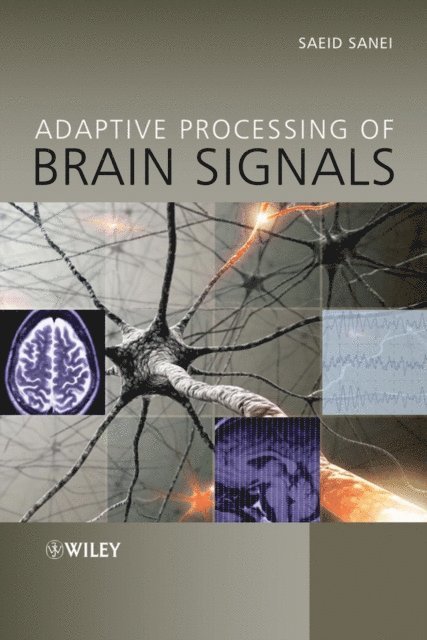
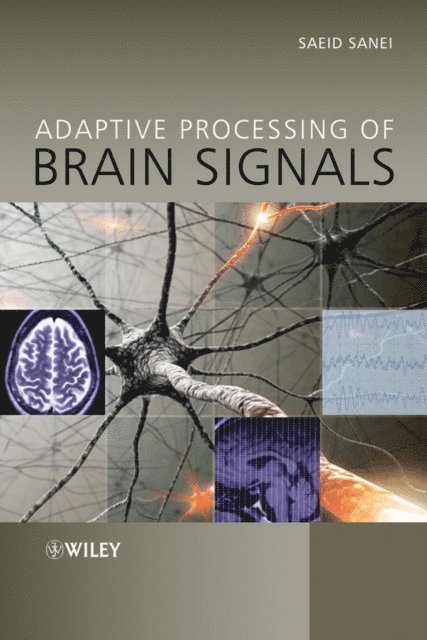
    Adaptive Processing of Brain Signals

    AvSaeid Sanei

    Inbunden, Engelska, 2013

    1 042 kr

    Tillfälligt slut

    Fler format och utgåvor

    E-bok

    1 592 kr

    E-bok

    1 592 kr

    Beskrivning

    In this book, the field of adaptive learning and processing is extended to arguably one of its most important contexts which is the understanding and analysis of brain signals. No attempt is made to comment on physiological aspects of brain activity; instead, signal processing methods are developed and used to assist clinical findings. Recent developments in detection, estimation and separation of diagnostic cues from different modality neuroimaging systems are discussed.These include constrained nonlinear signal processing techniques which incorporate sparsity, nonstationarity, multimodal data, and multiway techniques.Key features: Covers advanced and adaptive signal processing techniques for the processing of electroencephalography (EEG) and magneto-encephalography (MEG) signals, and their correlation to the corresponding functional magnetic resonance imaging (fMRI)Provides advanced tools for the detection, monitoring, separation, localising and understanding of functional, anatomical, and physiological abnormalities of the brainPuts a major emphasis on brain dynamics and how this can be evaluated for the assessment of brain activity in various states such as for brain-computer interfacing emotions and mental fatigue analysisFocuses on multimodal and multiway adaptive processing of brain signals, the new direction of brain signal research

    Produktinformation

    • Utgivningsdatum:2013-07-05
    • Mått:175 x 252 x 28 mm
    • Vikt:898 g
    • Format:Inbunden
    • Språk:Engelska
    • Antal sidor:472
    • Förlag:John Wiley & Sons Inc
    • ISBN:9780470686133

    Utforska kategorier

    • Elektronik och kommunikationer inom Naturvetenskap och teknik
    • Medicinsk bildbehandling inom Medicin
    • Neurologi och klinisk neurofysiologi inom Medicin

    Mer om författaren

    Dr Saeid Sanei, Reader in Biomedical Signal Processing and Deputy Head of Computing Department, Faculty of Engineering and Physical Sciences, University of Surrey, Guildford, Surrey, United Kingdom. Dr Sanei received his PhD from Imperial College of Science, Technology and Medicine, London, in Biomedical Signal and Image Processing in 1991. He has made a major contribution to Electroencephalogram (EEG) analysis; blind source separation, sparse component analysis and compressive sensing; parallel factor analysis and tensor factorization; particle filtering; chaos and time series analysis; support vector machines; hidden Markov models; and brain computer interfacing (BCI).He has published over 180 papers in refereed journals and conference proceedings, and a book on EEG Signal Processing. He has served as an editor, member of the technical committee, and reviewer for a number of journals and conferences, and has recently been selected as the Biomedical Signal Processing Track Chair for the IEEE Engineering in Medicine and Biology Conference 2009. His international collaborations involve both educational and industrial organizations, including the RIKEN Brain Science Research Institute in Japan. He also teaches extensively at both undergraduate and postgraduate level.

    Innehållsförteckning

    • Preface xiii1 Brain Signals, Their Generation, Acquisition and Properties 11.1 Introduction 11.2 Historical Review of the Brain 11.3 Neural Activities 51.4 Action Potentials 51.5 EEG Generation 81.6 Brain Rhythms 101.7 EEG Recording and Measurement 141.8 Abnormal EEG Patterns 191.9 Aging 221.10 Mental Disorders 231.11 Memory and Content Retrieval 301.12 MEG Signals and Their Generation 321.13 Conclusions 32References 332 Fundamentals of EEG Signal Processing 372.1 Introduction 372.2 Nonlinearity of the Medium 382.3 Nonstationarity 392.4 Signal Segmentation 402.5 Other Properties of Brain Signals 432.6 Conclusions 44References 443 EEG Signal Modelling 453.1 Physiological Modelling of EEG Generation 453.2 Mathematical Models 543.3 Generating EEG Signals Based on Modelling the Neuronal Activities 613.4 Electronic Models 643.5 Dynamic Modelling of the Neuron Action Potential Threshold 683.6 Conclusions 68References 684 Signal Transforms and Joint Time–Frequency Analysis 724.1 Introduction 724.2 Parametric Spectrum Estimation and Z-Transform 734.3 Time–Frequency Domain Transforms 744.4 Ambiguity Function and the Wigner–Ville Distribution 824.5 Hermite Transform 854.6 Conclusions 88References 885 Chaos and Dynamical Analysis 905.1 Entropy 915.2 Kolmogorov Entropy 915.3 Lyapunov Exponents 925.4 Plotting the Attractor Dimensions from Time Series 935.5 Estimation of Lyapunov Exponents from Time Series 945.6 Approximate Entropy 985.7 Using Prediction Order 985.8 Conclusions 99References 1006 Classification and Clustering of Brain Signals 1016.1 Introduction 1016.2 Linear Discriminant Analysis 1026.3 Support Vector Machines 1036.4 k-Means Algorithm 1096.5 Common Spatial Patterns 1126.6 Conclusions 115References 1167 Blind and Semi-Blind Source Separation 1187.1 Introduction 1187.2 Singular Spectrum Analysis 1197.3 Independent Component Analysis 1217.4 Instantaneous BSS 1257.5 Convolutive BSS 1307.6 Sparse Component Analysis 1337.7 Nonlinear BSS 1347.8 Constrained BSS 1357.9 Application of Constrained BSS; Example 1367.10 Nonstationary BSS 1377.11 Tensor Factorization for Underdetermined Source Separation 1517.12 Tensor Factorization for Separation of Convolutive Mixtures in the Time Domain 1537.13 Separation of Correlated Sources via Tensor Factorization 1537.14 Conclusions 154References 1548 Connectivity of Brain Regions 1598.1 Introduction 1598.2 Connectivity Through Coherency 1618.3 Phase-Slope Index 1638.4 Multivariate Directionality Estimation 1638.5 Modelling the Connectivity by Structural Equation Modelling 1668.6 EEG Hyper-Scanning and Inter-Subject Connectivity 1688.7 State-Space Model for Estimation of Cortical Interactions 1738.8 Application of Adaptive Filters 1758.9 Tensor Factorization Approach 1828.10 Conclusions 184References 1859 Detection and Tracking of Event-Related Potentials 1889.1 ERP Generation and Types 1889.2 Detection, Separation, and Classification of P300 Signals 1929.3 Brain Activity Assessment Using ERP 2169.4 Application of P300 to BCI 2179.5 Conclusions 218References 21910 Mental Fatigue 22310.1 Introduction 22310.2 Measurement of Brain Synchronization and Coherency 22410.3 Evaluation of ERP for Mental Fatigue 22710.4 Separation of P3a and P3b 23410.5 A Hybrid EEG-ERP-Based Method for Fatigue Analysis Using an Auditory Paradigm 23810.6 Conclusions 243References 24311 Emotion Encoding, Regulation and Control 24511.1 Theories and Emotion Classification 24611.2 The Effects of Emotions 24811.3 Psychology and Psychophysiology of Emotion 25111.4 Emotion Regulation 25211.5 Emotion-Provoking Stimuli 25711.6 Change in the ERP and Normal Brain Rhythms 25911.7 Perception of Odours and Emotion: Why Are They Related? 26211.8 Emotion-Related Brain Signal Processing 26311.9 Other Neuroimaging Modalities Used for Emotion Study 26411.10 Applications 26711.11 Conclusions 268References 26812 Sleep and Sleep Apnoea 27412.1 Introduction 27412.2 Stages of Sleep 27512.3 The Influence of Circadian Rhythms 27812.4 Sleep Deprivation 27912.5 Psychological Effects 28012.6 Detection and Monitoring of Brain Abnormalities During Sleep by EEG Analysis 28112.7 EEG and Fibromyalgia Syndrome 29012.8 Sleep Disorders of Neonates 29112.9 Dreams and Nightmares 29112.10 Conclusions 292References 29213 Brain–Computer Interfacing 29513.1 Introduction 29513.2 State of the Art in BCI 29613.3 BCI-Related EEG Features 30013.4 Major Problems in BCI 30313.5 Multidimensional EEG Decomposition 30613.6 Detection and Separation of ERP Signals 31013.7 Estimation of Cortical Connectivity 31113.8 Application of Common Spatial Patterns 31413.9 Multiclass Brain–Computer Interfacing 31613.10 Cell-Cultured BCI 31813.11 Conclusions 319References 32014 EEG and MEG Source Localization 32514.1 Introduction 32514.2 General Approaches to Source Localization 32614.3 Most Popular Brain Source Localization Approaches 32914.4 Determination of the Number of Sources from the EEG/MEG Signals 35314.5 Conclusions 355References 35615 Seizure and Epilepsy 36015.1 Introduction 36015.2 Types of Epilepsy 36215.3 Seizure Detection 36515.4 Chaotic Behaviour of EEG Sources 37615.5 Predictability of Seizure from the EEGs 37815.6 Fusion of EEG – fMRI Data for Seizure Detection and Prediction 39115.7 Conclusions 391References 39216 Joint Analysis of EEG and fMRI 39716.1 Fundamental Concepts 39716.2 Model-Based Method for BOLD Detection 40316.3 Simultaneous EEG-fMRI Recording: Artefact Removal from EEG 40516.4 BOLD Detection in fMRI 41316.5 Fusion of EEG and fMRI 41916.6 Application to Seizure Detection 42516.7 Conclusions 427References 427Index 433