• Fri frakt över 249 kr
  • •
  • Snabba leveranser
  • •
  • Billiga böcker
Kundservice

Du är på sajten för privatpersoner.

Företag, bibliotek eller offentlig verksamhet?

Du handlar på classic.bokus.com, där alla dina funktioner finns intakta.
Till classic.bokus.com
Bokus logotyp. Gå till startsidan.
  • Erbjudanden
  • Nyheter
  • Student
  • Topplistor
  • Barn & ungdom
  • Bokus Play
  • E-böcker
  • Pocketböcker
  • Spel & pussel

10% rabatt på allt med kod NYSTART10 →

Sidfot

Mina sidor

    Hjälp

    • Kundservice
    • Vanliga frågor och svar
    • Frakt och leverans
    • Retur vid ångerrätt
    • Reklamera vara
    • Betalning
    • Köpvillkor
    • Allmänna villkor
    • Information om webbplatsens tillgänglighet

    Om Bokus

    • Om oss
    • Pressrum
    • För studenter
    • För företag
    • För bibliotek och offentlig verksamhet
    • För leverantörer
    • Hållbarhet

    Populärt

    • Aktuella erbjudanden
    • Presentkort
    • Studentlitteratur
    • Nya böcker
    • Topplistor
    • Signerade böcker
    • Engelska böcker

    Inspiration

    • Boktips
    • BookTok
    • Populära bokserier
    • Barnbokskaraktärer
    • Populära författare
    Logotyp för Bokus
    Följ oss på Facebook (extern länk)Följ oss på Instagram (extern länk)Följ oss på YouTube (extern länk)Följ oss på TikTok (extern länk)
    bokus @ CookiesAnpassa cookiesIntegritetspolicyKöpvillkor
    Till Citymail hemsida (extern länk)Till Budbee hemsida (extern länk)Till Postnord hemsida (extern länk)Till Schenker hemsida (extern länk)Till Early Bird hemsida (extern länk)Till Walleys hemsida (extern länk)
    1. Naturvetenskap och teknik
    2. Teknik och industri
    3. Elektronik och kommunikationer

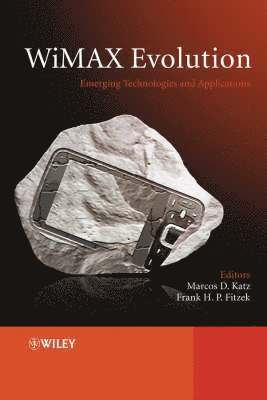
    WiMAX Evolution

    Emerging Technologies and Applications

    AvMarcos Katz,Frank H. P. Fitzek

    Inbunden, Engelska, 2009

    1 553 kr

    Beställningsvara. Skickas inom 11-20 vardagar. Fri frakt över 249 kr.

    Beskrivning

    This book presents the evolutionary and visionary developments of WiMAX! WiMAX Evolution: Emerging Technologies and Applications focuses on the future developments of WiMAX technology. The book discusses the evolutionary aspects of WiMAX, from the physical to the application layer, including visions from industry, standardization and research communities. Several chapters of the book will present very new and unique information as editors and their respective organizations are involved in ongoing international projects on WiMAX, developing advanced WiMAX techniques. The Editors’ in-house WiMAX test-beds enhance the book with privileged and seldom published information on practical issues.Key features: Presents evolutionary and visionary developments of WiMAX, motivating and inspiring readers to join and continue the developing workContains chapters with previously unpublished material, including  measurements on real WiMAX equipment and their validation, and introduction of robust header compression in WiMAX, and moreUnique results on real WiMAX test-bedsCovers WiMAX validation, novel scenarios, applications and business, advanced WiMAX architectures, WiMAX extensions, and WiMAX evolution and future developmentsExpert authorship with a balanced mix of contributions from highly regarded professionals from top research institutes, industry and academiaThis book is an invaluable resource for product developers, research and standardization engineers in industry, professors, research scientists and advanced students in academia. Technology managers and CTOs will also find this book insightful.

    Produktinformation

    • Utgivningsdatum:2009-01-28
    • Mått:178 x 254 x 34 mm
    • Vikt:971 g
    • Format:Inbunden
    • Språk:Engelska
    • Antal sidor:502
    • Förlag:John Wiley & Sons Inc
    • ISBN:9780470696804

    Utforska kategorier

    • Elektronik och kommunikationer inom Naturvetenskap och teknik

    Mer om författaren

    Dr Marcos Katz, VTT, FinlandDr Katz received his PhD from University of Oulu, Finland in 2002. He has 20 years of experience in the field of wireless communications (industry, academia and, research institutions). He has edited 2 books and published widely in journals and conferences. He is currently a Technical Manager of EU FP6 Integrated Project dealing with new WiMAX scenarios, technical solutions and test-beds. He is developing multiantenna solutions for new WiMAX scenarios (environmental monitoring), and is also involved in exploring novel WiMAX architectures exploiting cooperation. Professor Frank Fitzek, Aalborg University, DenmarkFrank Fitzek is an Associate Professor in the Dept. of Communication Technology, University of Aalborg, Denmark, heading the Future Vision and Mobile Device group. His current research interests are in the areas of wireless and mobile communication networks, mobile phone programming, cross layer as well as energy efficient protocol design and cooperative networking. Currently Dr. Fitzek is working on robust header compression (ROHC) techniques for WiMAX as well as exploring cooperative networking concepts in WiMAX

    Innehållsförteckning

    • Contents List of ContributorsForewordPrefaceAcknowledgementsList of AcronymsI Introduction1 Introduction to WiMAX TechnologyWonil Roh and Vladimir Yanover1.1 Overview of State-of-the-artWiMAX Technology1.2 WiMAXEvolutionPathReferencesII WiMAX Validation: Validating Current Fixed andMobileWiMAX Through Advanced Testbeds2 WiMAX Performance in PracticeKostas Pentikousis, Esa Piri, Jarno Pinola and Ilkka Harjula2.1 EmpiricalEvaluationsofWiMAX2.2 FixedWiMAXTestbedEvaluation2.3 VoIPOverFixedWiMAX2.4 IPTVoverfixedWiMAX2.5 MobileWiMAXTestbedEvaluation2.6 Summary2.7 FurtherReadingReferences .III Novel Scenarios3 NovelWiMAX Scenarios for Future BroadbandWireless Access NetworksPedro Neves, Kostas Pentikousis, Susana Sargento, Marília Curado, Paulo Simõesand Francisco Fontes3.1 Introduction3.2 WMANNetworkProvider3.3 TelemedicineApplications3.4 EnvironmentalMonitoring .3.5 ConclusionsReferences4 Pricing in WiMAX NetworksIoannis Papapanagiotou, Jie Hui and Michael Devetsikiotis4.1 Introduction4.2 Economics in Network Engineering4.3 BuildingthePricingSchemes4.4 Pricing in DifferentWiMAX Topologies4.5 ConclusionReferencesIV Advanced WiMAX Architectures5 WiMAX FemtocellsChris Smart, Clare Somerville and Doug Pulley5.1 Introduction5.2 Architectureof aWiMAXFemtocell5.3 Femtocell Fundamentals5.4 Femtocell–Macrocell InterferenceReferences6 Cooperative Principles in WiMAXQi Zhang, Frank H.P. Fitzek and Marcos D. Katz6.1 Introduction6.2 Cooperative Diversity Schemes in Mobile Multihop Relay Based WiMAX(802.16j)6.3 Cooperative Schemes for Multicast Broadcast Services in WiMAX .6.4 Network Coding Implementation in the CommercialWiMAX Mobile Device6.5 ConclusionReferencesviii CONTENTS7 The Role of WiMAX Technology in Distributed Wide Area MonitoringApplicationsFrancesco Chiti, Romano Fantacci, Leonardo Maccari, Dania Marabissi andDaniele Tarchi7.1 MonitoringwiththeWSNParadigm7.2 OverallSystemArchitecture7.3 Efficient Access Management Schemes7.4 SecureCommunicationsApproachesReferences8 WiMAX Mesh Architectures and Network CodingParag S. Mogre, Matthias Hollick, Christian Schwingenschloegl, Andreas Zillerand Ralf Steinmetz8.1 Introduction8.2 Background on the IEEE 802.16 MeSH Mode8.3 Design Principles for Network Coding in the IEEE 802.16 MeSH Mode8.4 EnablingWNC for the IEEE 802.16 MeSH Mode8.5 RelatedWork8.6 ConclusionsandOutlookReferences9 ASN-GWHigh Availability through Cooperative Networking in MobileWiMAX DeploymentsAlexander Bachmutsky9.1 Introduction9.2 ClassicHAImplementation9.3 Network-based Resiliency Solutions for Routing9.4 WiMAXNetworkElementsR4/R6HealthManagement 9.5 R6LoadBalancing9.6 ASN-GWFailure andRecovery9.7 N:N Redundancy9.8 Multi-instance ASN-GW9.9 The Proposal Summary9.10 ConclusionsV WiMAX Extensions10 Robust Header Compression forWiMAX Femto CellsFrank H.P. Fitzek, Gerrit Schulte, Esa Piri, Jarno Pinola, Marcos D. Katz,Jyrki Huusko, Kostas Pentikousis and Patrick SeelingCONTENTS10.1 Introduction10.2 ROHCinaNutshell10.3 ScenarioUnder Investigation10.4 WiMAXandROHCMeasurementSetup10.5 WiMAXandROHCMeasurementsResults10.6 ConclusionReferences11 A WiMAX Cross-layer Framework for Next Generation NetworksPedro Neves, Susana Sargento, Ricardo Matos, Giada Landi, Kostas Pentikousis,Marília Curado and Francisco Fontes11.1 Introduction11.2 IEEE 802.16 Reference Model11.3 Cross-layerDesignforWiMAXNetworks11.4 WEIRD:APracticalCase ofWiMAXCross-layerDesign11.5 WEIRDFrameworkPerformanceEvaluation11.6 SummaryReferences12 Speech Quality Aware Resource Control for Fixed and Mobile WiMAXThomas Michael Bohnert, Dirk Staehle and Edmundo Monteiro12.1 Introduction12.2 Quality of Experience versus Quality of Service Assessment12.3 Methods for Speech Quality Assessment12.4 Continuous Speech Quality Assessment for VoIP12.5 Speech Quality Aware Admission Control for Fixed IEEE 802.16Wireless12.6 The Idea of an R-score-basedScheduler12.7 ConclusionReferences13 VoIP overWiMAXRath Vannithamby and Roshni Srinivasan13.1 Introduction13.2 Features to Support VoIP overWiMAX13.3 EnhancedFeatures for ImprovedVoIPCapacity13.4 SimulationResults13.5 ConclusionReferences14 WiMAX User Data Load BalancingAlexander Bachmutsky14.1 Introduction14.2 LocalBreakoutUse forLoadBalancing14.3 Network-level Load Balancing over Tunneled Interfaces14.4 Conclusions .15 Enabling Per-flow and System-wide QoS and QoE in Mobile WiMAXThomas Casey, Xiongwen Zhao, Nenad Veselinovic, Jari Nurmi and Riku Jäntti15.1 Introduction15.2 Overview15.3 Per-flow-basedQoSandQoE15.4 System-wideTools forEnablingQoSandQoE 15.5 ConclusionsReferencesVI WiMAX Evolution and Future Developments16 MIMO Technologies forWiMAX Systems: Present and FutureChan-Byoung Chae, Kaibin Huang and Takao Inoue16.1 Introduction16.2 IEEE802.16e: Single-user MIMO Technologies6.3 IEEE802.16m: Evolution Towards Multiuser MIMO Technologies – Part I.NonlinearProcessing16.4 IEEE802.16m: Evolution Towards Multiuser MIMO Technologies – Part II.LinearProcessing16.5 ConclusionReferences17 Hybrid Strategies for Link Adaptation Exploiting Several Degrees ofFreedom inWiMAX SystemsSuvra Sekhar Das, Muhammad Imadur Rahman and Yuanye Wang17.1 Introduction17.2 LinkAdaptationPreliminaries17.3 LinkAdaptationAlgorithms17.4 LinkAdaptationScenario17.5 PowerAdaptationwithBitAdaptation17.6 LinkAdaptationConsideringSeveralSystemIssues17.7 SummaryReferences18 ApplyingWiMAX in New Scenarios: Limitations of the Physical Layerand Possible SolutionsIlkka Harjula, Paola Cardamone, Matti Weissenfelt, Mika Lasanen,Sandrine Boumard, Aaron Byman and Marcos D. Katz18.1 WiMAXinNewScenarios18.2 Channel Model for Mountainous Environments18.3 Mountainous Scenario and Channel Modeling18.4 BeamformingAlgorithmsandSimulation18.5 A Timing Synchronization Study in a Mountain Environment .18.6 Analysis andConclusionsReferences19 Application of Radio-over-Fiber in WiMAX: Results and ProspectsJuan Luis Corral, Roberto Llorente, Valentín Polo, Borja Vidal, Javier Martí,Jonás Porcar, David Zorrilla and Antonio José Ramírez19.1 Introduction19.2 OpticalTransmissionofWiMAXSignals 19.3 WiMAX-on-FiberApplications19.4 ConclusionsReferences .CONTENTS20 Network Planning and its Part in FutureWiMAX Systems 399Avraham Freedman and Moshe Levin20.1 Introduction20.2 TheNetworkPlanningProcess20.3 The ImpactofWiMAXonNetworkPlanning20.4 PlanningofFutureWiMAXNetworks20.5 Modeling: theKeytoIntegrationofPlanningInformation20.6 ConclusionsReferences21 WiMAX Network Automation: Neighbor Discovery, CapabilitiesNegotiation, Auto-configuration and Network Topology LearningAlexander Bachmutsky21.1 Introduction 21.2 WiMAXNetworkElementsAuto-discovery21.3 Automatic Learning of the WiMAX Network Topology21.4 Capabilities Exchange21.5 AutomaticWiMAXVersionManagement21.6 AutomatedRoaming21.7 Conclusion:NetworkAutomationas aWiMAXDifferentiatorReferences22 An Overview of Next GenerationMobile WiMAX: Technology and ProspectsSassan Ahmadi22.1 Introduction22.2 Summary of IEEE 802.16m System Requirements22.3 Areasof ImprovementandExtensioninMobileWiMAX22.4 IEEE 802.16m Architecture and Protocol Structure22.5 IEEE 802.16m Mobile Station State Diagram22.6 IEEE 802.16m Physical Layer22.7 IEEE 802.16m MAC Layer22.8 ConclusionsReferencesIndex