• Fri frakt över 249 kr
  • •
  • Snabba leveranser
  • •
  • Billiga böcker
Kundservice

Du är på sajten för privatpersoner.

Företag, bibliotek eller offentlig verksamhet?

Du handlar på classic.bokus.com, där alla dina funktioner finns intakta.
Till classic.bokus.com
Bokus logotyp. Gå till startsidan.
  • Erbjudanden
  • Nyheter
  • Student
  • Topplistor
  • Barn & ungdom
  • Bokus Play
  • E-böcker
  • Pocketböcker
  • Spel & pussel

10% rabatt på allt med kod: NYSTART10 →

Sidfot

Mina sidor

    Hjälp

    • Kundservice
    • Vanliga frågor och svar
    • Frakt och leverans
    • Retur vid ångerrätt
    • Reklamera vara
    • Betalning
    • Köpvillkor
    • Allmänna villkor
    • Information om webbplatsens tillgänglighet

    Om Bokus

    • Om oss
    • Pressrum
    • För studenter
    • För företag
    • För bibliotek och offentlig verksamhet
    • För leverantörer
    • Hållbarhet

    Populärt

    • Aktuella erbjudanden
    • Presentkort
    • Studentlitteratur
    • Nya böcker
    • Topplistor
    • Signerade böcker
    • Engelska böcker

    Inspiration

    • Boktips
    • BookTok
    • Populära bokserier
    • Barnbokskaraktärer
    • Populära författare
    Logotyp för Bokus
    Följ oss på Facebook (extern länk)Följ oss på Instagram (extern länk)Följ oss på YouTube (extern länk)Följ oss på TikTok (extern länk)
    bokus @ CookiesAnpassa cookiesIntegritetspolicyKöpvillkor
    Till Citymail hemsida (extern länk)Till Budbee hemsida (extern länk)Till Postnord hemsida (extern länk)Till Schenker hemsida (extern länk)Till Early Bird hemsida (extern länk)Till Walleys hemsida (extern länk)
    1. Naturvetenskap och teknik
    2. Teknik och industri
    3. Energiteknik

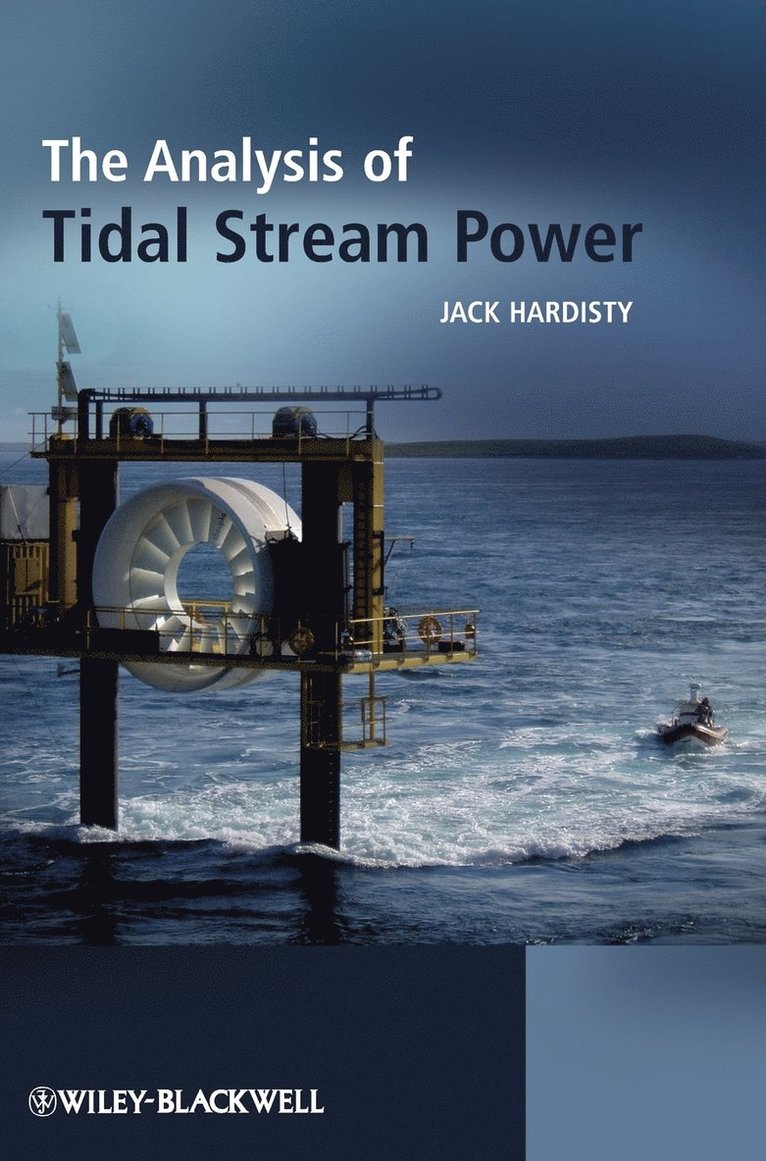
    Analysis of Tidal Stream Power

    AvJack Hardisty

    Inbunden, Engelska, 2009

    1 726 kr

    Beställningsvara. Skickas inom 5-8 vardagar. Fri frakt över 249 kr.

    Fler format och utgåvor

    E-bok

    2 019 kr

    Beskrivning

    This text integrates a wide range of research and tidal resource theory and data to present a detailed analysis of the physics and oceanography of tidal stream power devices together with a world wide resource analysis. Clearly structured throughout the book is divided into two distinct parts. Part One provides the theoretical background to the subject and deals with the historical development of the harmonic method for the synthesis of tidal currents; the principles of fluid and tidal flow and the principles of device ducts, turbines and electrical systems. A review and analysis of more than forty tidal stream power proposals is also discussed.Part Two provides a comprehensive overview of current practice. The economic modelling of tidal stream power installations is covered with more than three hundred current meter records from around the world used to analyse the potential and cost of tidal stream power on a global basis.Hallmark Features: reviews the tidal resources around the worldcomplete analysis of tidal stream power systemsincludes historical information on tidal science and biographical information on major figuresconcentrates on engineering physical geography rather than engineering specificsincludes a website with a wide range of computer models, data and simulations

    Produktinformation

    • Utgivningsdatum:2009-02-27
    • Mått:175 x 249 x 24 mm
    • Vikt:737 g
    • Format:Inbunden
    • Språk:Engelska
    • Antal sidor:344
    • Förlag:John Wiley & Sons Inc
    • ISBN:9780470724514

    Utforska kategorier

    • Energiteknik inom Naturvetenskap och teknik
    • Hydrologi inom Naturvetenskap och teknik

    Mer om författaren

    Jack Hardisty is Professor of Environmental Physics at the University of Hull with research interests in sediment flux and wave and tidal renewable energy.

    Innehållsförteckning

    • Preface. Website contents.Origin of online images.Copyright acknowledgements.Symbols.Part I Theory.1 History of tidal and turbine science.1.1 Introduction.Part 1 Tidal science.1.2 Antiquity: Aristotle and Ptolemy.1.3 Middle Ages: Copernicus to Galileo.1.4 Isaac Newton and the equilibrium theory.1.5 Measurement after Moray.1.6 Eighteenth and nineteenth centuries: Laplace to Kelvin.1.7 Tide-predicting machines.1.8 Tidal currents.Part 2 Turbine science.1.9 Antiquity: the Romans and Chinese.1.10 Middle Ages: the Syrians and Agricola.1.11 Eighteenth and nineteenth centuries: Smeaton to Kaplan.1.12 Modern turbines.1.13 Summary.1.14 Bibliography.2 Tidal hydraulics.2.1 Introduction.2.2 Elementary fluid flow.2.3 Hydraulic power.2.4 Turbulence and the Reynolds number.2.5 Critical flow and the Froude number.2.6 Bernoulli’s equation.2.7 von Kármán’s equation.2.8 Properties of the Airy wave. 2.9 Tides in estuaries.2.10 Harmonic prediction of tidal currents.2.11 Turbulent characteristics of tidal currents.2.12 Redundancy and intermittency.2.13 Summary.2.14 Bibliography.3 Principles of tidal power devices.3.1 Introduction.3.2 Tidal wheels, mills, and barrages.3.3 Efficiency, capacity factor, and solidity ratio.3.4 Hydraulic processes, Part I: Tidal stream power.3.5 Hydraulic processes, Part II: Ducts and diffusers.3.6 Turbine processes, Part I: Drag and lift forces.3.7 Turbine processes, Part II: Shaft power.3.8 Electrical processes, Part I: Overview and generators.3.9 Electrical processes, Part II: Cabling and grid connection.3.10 Categories of turbines.3.11 Horizontal-axis devices.3.12 Vertical-axis devices (crossflow turbines).3.13 Summary.3.14 Bibliography.4 Tidal power technologies.4.1 Introduction.4.2 Blue Energy.4.3 Clean Current.4.4 Engineering Business.4.5 Gorlov helical turbine.4.6 Hammerfest Strøm.4.7 Lunar Energy.4.8 Marine Current Turbines.4.9 Neptune Renewable Energy.4.10 OpenHydro.4.11 Ponte di Archimede (Kobold).4.12 Pulse Generation.4.13 SeaPower.4.14 SMD Hydrovision.4.15 Underwater electric kite.4.16 Verdant Power.4.17 Other proposals.4.18 Early-stage proposals.4.19 Bibliography.5 Modelling tidal stream power.5.1 Introduction.5.2 Global tidal streams.5.3 Tidal datum and tidal heights.5.4 British Admiralty tidal diamonds.5.5 Harmonic decomposition.5.6 STEM display screen. 5.7 Running STEM.5.8 Case study at Flat Holm in the Bristol Channel.5.9 Case study at Hull St Andrews in the Humber Estuary.5.10 Summary.5.11 Bibliography.Part II Practice.6 Economics and finance.6.1 Introduction.6.2 The Renewable Energy Business.6.3 Costs.6.4 Revenue.6.5 Economic result.6.6 Conclusions.6.7 Bibliography.7 North-west Europe.7.1 Introduction.7.2 Geography of north-west Europe.7.3 Oceanography of north-west Europe.7.4 Mediterranean.7.5 Spain and Portugal.7.6 France.7.7 Belgium, the Netherlands, and Germany.7.8 Denmark and Norway.7.9 United Kingdom.7.10 The estuaries.7.11 Bibliography.7.12 Appendix: STEM outputs for north-west Europe.8 North America.8.1 Introduction.8.2 Geography of North America.8.3 Oceanography of North America.8.4 East coast of Canada.8.5 East coast of the United States.8.6 West coast of Canada.8.7 West coast of the United States.8.8 Bibliography.8.9 Appendix.9 Australia and New Zealand.9.1 Introduction.9.2 Timor Sea.9.3 Arafura Sea.9.4 Coral Sea.9.5 Bass Strait.9.6 New Zealand.9.7 Bibliography. 9.8 Appendix: STEM outputs for Australia and New Zealand.10 Rest of the world.10.1 Introduction.10.2 Barents Sea.10.3 Western South Atlantic.10.4 Western Indian Ocean.10.5 East Arabian Sea.10.6 Indonesia and the Java Sea.10.7 East China and Yellow Seas.10.8 Bibliography.10.9 Appendix.Glossary.Index.