• Fri frakt över 249 kr
  • •
  • Snabba leveranser
  • •
  • Billiga böcker
Kundservice

Du är på sajten för privatpersoner.

Företag, bibliotek eller offentlig verksamhet?

Du handlar på classic.bokus.com, där alla dina funktioner finns intakta.
Till classic.bokus.com
Bokus logotyp. Gå till startsidan.
  • Erbjudanden
  • Nyheter
  • Student
  • Topplistor
  • Barn & ungdom
  • Bokus Play
  • E-böcker
  • Pocketböcker
  • Spel & pussel

10% rabatt på allt med kod NYSTART10 →

Sidfot

Mina sidor

    Hjälp

    • Kundservice
    • Vanliga frågor och svar
    • Frakt och leverans
    • Retur vid ångerrätt
    • Reklamera vara
    • Betalning
    • Köpvillkor
    • Allmänna villkor
    • Information om webbplatsens tillgänglighet

    Om Bokus

    • Om oss
    • Pressrum
    • För studenter
    • För företag
    • För bibliotek och offentlig verksamhet
    • För leverantörer
    • Hållbarhet

    Populärt

    • Aktuella erbjudanden
    • Presentkort
    • Studentlitteratur
    • Nya böcker
    • Topplistor
    • Signerade böcker
    • Engelska böcker

    Inspiration

    • Boktips
    • BookTok
    • Populära bokserier
    • Barnbokskaraktärer
    • Populära författare
    Logotyp för Bokus
    Följ oss på Facebook (extern länk)Följ oss på Instagram (extern länk)Följ oss på YouTube (extern länk)Följ oss på TikTok (extern länk)
    bokus @ CookiesAnpassa cookiesIntegritetspolicyKöpvillkor
    Till Citymail hemsida (extern länk)Till Budbee hemsida (extern länk)Till Postnord hemsida (extern länk)Till Schenker hemsida (extern länk)Till Early Bird hemsida (extern länk)Till Walleys hemsida (extern länk)
    1. Ekonomi och Ledarskap
    2. Företagsekonomi
    3. Redovisning och finansiering
    4. Finansiering

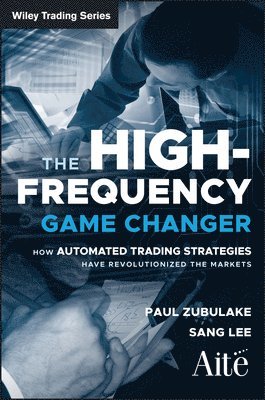
    High Frequency Game Changer

    How Automated Trading Strategies Have Revolutionized the Markets

    AvPaul Zubulake,Sang Lee

    Inbunden, Engelska, 2011

    Del 486 i serien Wiley Trading

    565 kr

    Beställningsvara. Skickas inom 5-8 vardagar. Fri frakt över 249 kr.

    Beskrivning

    The financial industry's leading independent research firm's forward-looking assessment into high frequency trading Once regarded as a United States-focused trend, today, high frequency trading is gaining momentum around the world. Yet, while high frequency trading continues to be one of the hottest trends in the markets, due to the highly proprietary nature of the computer transactions, financial firms and institutions have made very little available in terms of information or "how-to" techniques. That's all changed with The High Frequency Game Changer: How Automated Trading Strategies Have Revolutionized the Markets. In the book, Zubulake and Lee present an overview of how high frequency trading is changing the face of the market. The book Explains how we got here and what it means to traders and investorsDetails how to build a high frequency trading firm, including the relevant tools, strategies, and trading talentDefines key components common to HFT such as algorithms, low latency trading infrastructure, collocation etc.The High Frequency Game Changer takes a highly controversial and extremely complicated subject and makes it accessible to anyone with an interest or stake in financial markets.

    Produktinformation

    • Utgivningsdatum:2011-04-12
    • Mått:160 x 236 x 18 mm
    • Vikt:354 g
    • Format:Inbunden
    • Språk:Engelska
    • Serie:Wiley Trading
    • Antal sidor:176
    • Förlag:John Wiley & Sons Inc
    • ISBN:9780470770382

    Utforska kategorier

    • Finansiering inom Ekonomi och Ledarskap

    Mer om författaren

    PAUL ZUBULAKE is a senior analyst at Aite Group, LLC, specializing in financial, energy and commodities futures, and options markets. His expertise includes how the application of technology, such as algorithmic trading and FIX protocol, is playing an ever-increasing role in futures and options trading. SANG LEE is a cofounder of Aite Group, LLC and currently serves as the managing partner. Mr. Lee's expertise lies in the securities and investments vertical and has advised many global financial institutions, software/hardware vendors, and professional services firms in sell-side and buy-side electronic trading technology and market structure. Lee and Zubulake have both been quoted extensively in the media, including in the Wall Street Journal, New York Times, the Washington Post, Financial Times, Business Week, Reuters, the Chicago Tribune, and other publications.

    Innehållsförteckning

    • Introduction xiAcknowledgments xiiiChapter 1 Birth of High Frequency Trading: Equity Markets Go Electronic 1Defining High Frequency Trading 2Who are the High Frequency Traders? 6Impact of High Frequency Trading 9Building a High Frequency Trading Team 13Chapter 2 Market Structure 15Order Handling Rules of 1997 16Growth of Electronic Communication Networks 17Regulation National Market System 22Market Fragmentation versus Competition 28Dark Pools 32Chapter 3 Trading Infrastructure 47Rise of High Performance Technology Vendors 49Key Components of High Performance Infrastructure 52Feed Handlers 52Ticker Plant 54Messaging Middleware 55Storage 58Networking 59Colocation 60Sponsored Access 61Chapter 4 Liquidity 71HFT as Liquidity Providers 71Flash Crash 72Chapter 5 Trading Strategies 75Examples of Algorithms 77Order Types 78Flash Orders 79High Frequency Trading and Predatory Strategies 79Chapter 6 Expansion in High Frequency Trading 81Futures 81Fixed Income 84Foreign Exchange Market 85Equity Options 92Over the Counter Derivatives 94Expansion into Global Markets 94Chapter 7 Positives and Possibilities 105Commoditizing High Frequency Trading 106Trading Technology Demands and Preferences 108Internal Focus 109Choosing Vendors 110Finding the Next Opportunity 111Issues and Risks 114Order Routing Gets Smart 115Smart Order Routing’s Future 118Is Artificial Intelligence Next? 121Economic Indicators 121News 122Securities and Exchange Commission Filings 123The Pseudo-Semantic Web 125Going Global 128The Next Wave 129Chapter 8 Credit Crisis of 2008: The Blame Game 131U.S. Federal Reserve 131Regulatory Agencies 132Credit Agencies 132Politicians 132End-Users of Derivative Products 133Recent Regulatory History 134Financial Modernization Act of 1999 134Commodity Futures Modernization Act of 2000 134Dodd Frank Wall Street Reform Act of 2010 135Ending Too Big to Fail Bailouts 136Creating Transparency and Accountability for Derivatives 137Hedge Funds 137Credit Rating Agencies 138Executive Compensation and Corporate Governance 138Impact of Potential Regulations and RuleChanges—Securities and Exchange CommissionConcept Release 139Chapter 9 Conclusion 141Glossary 143About the Authors 149Index 151