• Fri frakt över 249 kr
  • •
  • Snabba leveranser
  • •
  • Billiga böcker
Kundservice

Du är på sajten för privatpersoner.

Företag, bibliotek eller offentlig verksamhet?

Du handlar på classic.bokus.com, där alla dina funktioner finns intakta.
Till classic.bokus.com
Bokus logotyp. Gå till startsidan.
  • Erbjudanden
  • Nyheter
  • Student
  • Topplistor
  • Barn & ungdom
  • Bokus Play
  • E-böcker
  • Pocketböcker
  • Spel & pussel

10% rabatt på allt med kod: NYSTART10 →

Sidfot

Mina sidor

    Hjälp

    • Kundservice
    • Vanliga frågor och svar
    • Frakt och leverans
    • Retur vid ångerrätt
    • Reklamera vara
    • Betalning
    • Köpvillkor
    • Allmänna villkor
    • Information om webbplatsens tillgänglighet

    Om Bokus

    • Om oss
    • Pressrum
    • För studenter
    • För företag
    • För bibliotek och offentlig verksamhet
    • För leverantörer
    • Hållbarhet

    Populärt

    • Aktuella erbjudanden
    • Presentkort
    • Studentlitteratur
    • Nya böcker
    • Topplistor
    • Signerade böcker
    • Engelska böcker

    Inspiration

    • Boktips
    • BookTok
    • Populära bokserier
    • Barnbokskaraktärer
    • Populära författare
    Logotyp för Bokus
    Följ oss på Facebook (extern länk)Följ oss på Instagram (extern länk)Följ oss på YouTube (extern länk)Följ oss på TikTok (extern länk)
    bokus @ CookiesAnpassa cookiesIntegritetspolicyKöpvillkor
    Till Citymail hemsida (extern länk)Till Budbee hemsida (extern länk)Till Postnord hemsida (extern länk)Till Schenker hemsida (extern länk)Till Early Bird hemsida (extern länk)Till Walleys hemsida (extern länk)
    1. Naturvetenskap och teknik
    2. Teknik och industri
    3. Elektronik och kommunikationer

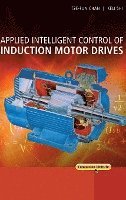
    Applied Intelligent Control of Induction Motor Drives

    AvTze Fun Chan,Keli Shi

    Inbunden, Engelska, 2011

    Del i serien IEEE Press

    1 607 kr

    Beställningsvara. Skickas inom 5-8 vardagar. Fri frakt över 249 kr.

    Beskrivning

    Induction motors are the most important workhorses in industry. They are mostly used as constant-speed drives when fed from a voltage source of fixed frequency. Advent of advanced power electronic converters and powerful digital signal processors, however, has made possible the development of high performance, adjustable speed AC motor drives. This book aims to explore new areas of induction motor control based on artificial intelligence (AI) techniques in order to make the controller less sensitive to parameter changes. Selected AI techniques are applied for different induction motor control strategies. The book presents a practical computer simulation model of the induction motor that could be used for studying various induction motor drive operations. The control strategies explored include expert-system-based acceleration control, hybrid-fuzzy/PI two-stage control, neural-network-based direct self control, and genetic algorithm based extended Kalman filter for rotor speed estimation. There are also chapters on neural-network-based parameter estimation, genetic-algorithm-based optimized random PWM strategy, and experimental investigations. A chapter is provided as a primer for readers to get started with simulation studies on various AI techniques. Presents major artificial intelligence techniques to induction motor drivesUses a practical simulation approach to get interested readers started on drive developmentAuthored by experienced scientists with over 20 years of experience in the fieldProvides numerous examples and the latest research resultsSimulation programs available from the book's Companion WebsiteThis book will be invaluable to graduate students and research engineers who specialize in electric motor drives, electric vehicles, and electric ship propulsion. Graduate students in intelligent control, applied electric motion, and energy, as well as engineers in industrial electronics, automation, and electrical transportation, will also find this book helpful.Simulation materials available for download at www.wiley.com/go/chanmotor

    Produktinformation

    • Utgivningsdatum:2011-03-04
    • Mått:170 x 246 x 3 mm
    • Vikt:86 g
    • Format:Inbunden
    • Språk:Engelska
    • Serie:IEEE Press
    • Antal sidor:432
    • Förlag:John Wiley & Sons Inc
    • ISBN:9780470825563

    Utforska kategorier

    • Elektronik och kommunikationer inom Naturvetenskap och teknik
    • Energiteknik inom Naturvetenskap och teknik

    Mer om författaren

    Tze-Fun Chan is an associate professor of electrical engineering at the Hong Kong Polytechnic University, where he has been working for over 30 years since 1978. Chan’s research interests are self-excited induction generators, brushless AC generators, permanent-magnet machines, finite element analysis of electric machines, and electric motor drives control. In June 2006, Chan was awarded a Prize Paper by IEEE Power Engineering Society Power Generation and Energy Development Committee. In 2007, Chan co-authored a book published by Wiley. He received the B.Sc. and M.Phil degrees in electrical engineering from the University of Hong Kong in 1974 and 1980 respectively. He received his PhD degree in electrical engineering from City University London in 2005. Keli Shi is a Research Engineer of Netpower Technologies Inc.. His research interests are DSP applications and intelligent control of induction and permanent magnet machines. He received his BS degree in electronics and electrical engineering from Chengdu University of Science and Technology and MS degree in electrical engineering from Harbin Institute of Technology in 1983 and 1989 respectively. He received his PhD in electrical engineering from The Hong Kong Polytechnic University in 2001.

    Innehållsförteckning

    • Preface xiii Acknowledgments xviiAbout the Authors xxiList of Symbols xxiii1 Introduction 11.1 Induction Motor 11.2 Induction Motor Control 21.3 Review of Previous Work 21.3.1 Scalar Control 31.3.2 Vector Control 31.3.3 Speed Sensorless Control 41.3.4 Intelligent Control of Induction Motor 41.3.5 Application Status and Research Trends of Induction Motor Control 41.4 Present Study 42 Philosophy of Induction Motor Control 92.1 Introduction 92.2 Induction Motor Control Theory 102.2.1 Nonlinear Feedback Control 102.2.2 Induction Motor Models 112.2.3 Field-Oriented Control 132.2.4 Direct Self Control 142.2.5 Acceleration Control Proposed 152.2.6 Need for Intelligent Control 162.2.7 Intelligent Induction Motor Control Schemes 172.3 Induction Motor Control Algorithms 192.4 Speed Estimation Algorithms 232.5 Hardware 253 Modeling and Simulation of Induction Motor 313.1 Introduction 313.2 Modeling of Induction Motor 323.3 Current-Input Model of Induction Motor 343.3.1 Current (3/2) Rotating Transformation Sub-Model 353.3.2 Electrical Sub-Model 353.3.3 Mechanical Sub-Model 373.3.4 Simulation of Current-Input Model of Induction Motor 373.4 Voltage-Input Model of Induction Motor 403.4.1 Simulation Results of ‘Motor 1’ 433.4.2 Simulation Results of ‘Motor 2’ 433.4.3 Simulation Results of ‘Motor 3’ 443.5 Discrete-State Model of Induction Motor 453.6 Modeling and Simulation of Sinusoidal PWM 493.7 Modeling and Simulation of Encoder 513.8 Modeling of Decoder 543.9 Simulation of Induction Motor with PWM Inverter and Encoder/Decoder 543.10 MATLAB/Simulink Programming Examples 553.11 Summary 734 Fundamentals of Intelligent Control Simulation 754.1 Introduction 754.2 Getting Started with Fuzzy Logical Simulation 754.2.1 Fuzzy Logic Control 754.2.2 Example: Fuzzy PI Controller 774.3 Getting Started with Neural-Network Simulation 834.3.1 Artificial Neural Network 834.3.2 Example: Implementing Park’s Transformation Using ANN 854.4 Getting Started with Kalman Filter Simulation 904.4.1 Kalman Filter 924.4.2 Example: Signal Estimation in the Presence of Noise by Kalman Filter 944.5 Getting Started with Genetic Algorithm Simulation 984.5.1 Genetic Algorithm 984.5.2 Example: Optimizing a Simulink Model by Genetic Algorithm 1004.6 Summary 1075 Expert-System-based Acceleration Control 1095.1 Introduction 1095.2 Relationship between the Stator Voltage Vector and Rotor Acceleration 1105.3 Analysis of Motor Acceleration of the Rotor 1135.4 Control Strategy of Voltage Vector Comparison and Voltage Vector Retaining 1145.5 Expert-System Control for Induction Motor 1185.6 Computer Simulation and Comparison 1225.6.1 The First Simulation Example 1235.6.2 The Second Simulation Example 1255.6.3 The Third Simulation Example 1265.6.4 The Fourth Simulation Example 1275.6.5 The Fifth Simulation Example 1295.7 Summary 1316 Hybrid Fuzzy/PI Two-Stage Control 1336.1 Introduction 1336.2 Two-Stage Control Strategy for an Induction Motor 1356.3 Fuzzy Frequency Control 1366.3.1 Fuzzy Database 1386.3.2 Fuzzy Rulebase 1396.3.3 Fuzzy Inference 1416.3.4 Defuzzification 1426.3.5 Fuzzy Frequency Controller 1426.4 Current Magnitude PI Control 1436.5 Hybrid Fuzzy/PI Two-Stage Controller for an Induction Motor 1456.6 Simulation Study on a 7.5 kW Induction Motor 1456.6.1 Comparison with Field-Oriented Control 1466.6.2 Effects of Parameter Variation 1486.6.3 Effects of Noise in the Measured Speed and Input Current 1496.6.4 Effects of Magnetic Saturation 1496.6.5 Effects of Load Torque Variation 1506.7 Simulation Study on a 0.147 kW Induction Motor 1526.8 MATLAB/Simulink Programming Examples 1586.8.1 Programming Example 1: Voltage-Input Model of an Induction Motor 1586.8.2 Programming Example 2: Fuzzy/PI Two-Stage Controller 1636.9 Summary 1657 Neural-Network-based Direct Self Control 1677.1 Introduction 1677.2 Neural Networks 1687.3 Neural-Network Controller of DSC 1707.3.1 Flux Estimation Sub-Net 1707.3.2 Torque Calculation Sub-Net 1717.3.3 Flux Angle Encoder and Flux Magnitude Calculation Sub-Net 1737.3.4 Hysteresis Comparator Sub-Net 1787.3.5 Optimum Switching Table Sub-Net 1807.3.6 Linking of Neural Networks 1837.4 Simulation of Neural-Network-based DSC 1847.5 MATLAB/Simulink Programming Examples 1877.5.1 Programming Example 1: Direct Self Controller 1877.5.2 Programming Example 2: Neural-Network-based Optimum Switching Table 1927.6 Summary 1968 Parameter Estimation Using Neural Networks 1998.1 Introduction 1998.2 Integral Equations Based on the ‘T’ Equivalent Circuit 2008.3 Integral Equations based on the ‘G’ Equivalent Circuit 2038.4 Parameter Estimation of Induction Motor Using ANN 2058.4.1 Estimation of Electrical Parameters 2068.4.2 ANN-based Mechanical Model 2088.4.3 Simulation Studies 2108.5 ANN-based Induction Motor Models 2148.6 Effect of Noise in Training Data on Estimated Parameters 2178.7 Estimation of Load, Flux and Speed 2188.7.1 Estimation of Load 2188.7.2 Estimation of Stator Flux 2228.7.3 Estimation of Rotor Speed 2268.8 MATLAB/Simulink Programming Examples 2318.8.1 Programming Example 1: Field-Oriented Control (FOC) System 2318.8.2 Programming Example 2: Sensorless Control of Induction Motor 2348.9 Summary 2409 GA-Optimized Extended Kalman Filter for Speed Estimation 2439.1 Introduction 2439.2 Extended State Model of Induction Motor 2449.3 Extended Kalman Filter Algorithm for Rotor Speed Estimation 2459.3.1 Prediction of State 2459.3.2 Estimation of Error Covariance Matrix 2459.3.3 Computation of Kalman Filter Gain 2459.3.4 State Estimation 2469.3.5 Update of the Error Covariance Matrix 2469.4 Optimized Extended Kalman Filter 2479.5 Optimizing the Noise Matrices of EKF Using GA 2509.6 Speed Estimation for a Sensorless Direct Self Controller 2539.7 Speed Estimation for a Field-Oriented Controller 2559.8 MATLAB/Simulink Programming Examples 2609.8.1 Programming Example 1: Voltage-Frequency Controlled (VFC) Drive 2609.8.2 Programming Example 2: GA-Optimized EKF for Speed Estimation 2649.8.3 Programming Example 3: GA-based EKF Sensorless Voltage-Frequency Controlled Drive 2689.8.4 Programming Example 4: GA-based EKF Sensorless FOC Induction Motor Drive 2699.9 Summary 27010 Optimized Random PWM Strategies Based On Genetic Algorithms 27310.1 Introduction 27310.2 PWM Performance Evaluation 27410.2.1 Fourier Analysis of PWM Waveform 27610.2.2 Harmonic Evaluation of Typical Waveforms 27710.3 Random PWM Methods 28310.3.1 Random Carrier-Frequency PWM 28310.3.2 Random Pulse-Position PWM 28510.3.3 Random Pulse-Width PWM 28510.3.4 Hybrid Random Pulse-Position and Pulse-Width PWM 28610.3.5 Harmonic Evaluation Results 28710.4 Optimized Random PWM Based on Genetic Algorithm 28810.4.1 GA-Optimized Random Carrier-Frequency PWM 28910.4.2 GA-Optimized Random-Pulse-Position PWM 29010.4.3 GA-Optimized Random-Pulse-Width PWM 29210.4.4 GA-Optimized Hybrid Random Pulse-Position and Pulse-Width PWM 29310.4.5 Evaluation of Various GA-Optimized Random PWM Inverters 29510.4.6 Switching Loss of GA-Optimized Random Single-Phase PWM Inverters 29610.4.7 Linear Modulation Range of GA-Optimized Random Single-Phase PWM Inverters 29710.4.8 Implementation of GA-Optimized Random Single-Phase PWM Inverter 29810.4.9 Limitations of Reference Sinusoidal Frequency of GA-Optimized Random PWM Inverters 29810.5 MATLAB/Simulink Programming Examples 29910.5.1 Programming Example 1: A Single-Phase Sinusoidal PWM 29910.5.2 Programming Example 2: Evaluation of a Four-Pulse Wave 30210.5.3 Programming Example 3: Random Carrier-Frequency10.6 Experiments on Various PWM Strategies 30510.6.1 Implementation of PWM Methods Using DSP 30510.6.2 Experimental Results 30710.7 Summary 31011 Experimental Investigations 31311.1 Introduction 31311.2 Experimental Hardware Design for Induction Motor Control 31411.2.1 Hardware Description 31411.3 Software Development Method 32011.4 Experiment 1: Determination of Motor Parameters 32111.5 Experiment 2: Induction Motor Run Up 32111.5.1 Program Design 32211.5.2 Program Debug 32411.5.3 Experimental Investigations 32711.6 Experiment 3: Implementation of Fuzzy/PI Two-Stage Controller 33011.6.1 Program Design 33011.6.2 Program Debug 33811.6.3 Performance Tests 33911.7 Experiment 4: Speed Estimation Using a GA-Optimized Extended Kalman Filter 34411.7.1 Program Design 34511.7.2 GA-EKF Experimental Method 34511.7.3 GA-EKF Experiments 34611.7.4 Limitations of GA-EKF 34911.8 DSP Programming Examples 35211.8.1 Generation of 3-Phase Sinusoidal PWM 35411.8.2 RTDX Programming 35911.8.3 ADC Programming 36111.8.4 CAP Programming 36411.9 Summary 37012 Conclusions and Future Developments 37312.1 Main Contributions of the Book 37412.2 Industrial Applications of New Induction Motor Drives 37512.3 Future Developments 37712.3.1 Expert-System-based Acceleration Control 37812.3.2 Hybrid Fuzzy/PI Two-Stage Control 37812.3.3 Neural-Network-based Direct Self Control 37812.3.4 Genetic Algorithm for an Extended Kalman Filter 37812.3.5 Parameter Estimation Using Neural Networks 37812.3.6 Optimized Random PWM Strategies Based on Genetic Algorithms 37812.3.7 AI-Integrated Algorithm and Hardware 379Appendix A Equivalent Circuits of an Induction Motor 381Appendix B Parameters of Induction Motors 383Appendix C M-File of Discrete-State Induction Motor Model 385Appendix D Expert-System Acceleration Control Algorithm 387Appendix E Activation Functions of Neural Network 391Appendix F M-File of Extended Kalman Filter 393Appendix G ADMC331-based Experimental System 395Appendix H Experiment 1: Measuring the Electrical Parameters of Motor 3 397Appendix I DSP Source Code for the Main Program of Experiment 2 403Appendix J DSP Source Code for the Main Program of Experiment 3 407Index.