• Fri frakt över 249 kr
  • •
  • Snabba leveranser
  • •
  • Billiga böcker
Kundservice

Du är på sajten för privatpersoner.

Företag, bibliotek eller offentlig verksamhet?

Du handlar på classic.bokus.com, där alla dina funktioner finns intakta.
Till classic.bokus.com
Bokus logotyp. Gå till startsidan.
  • Erbjudanden
  • Nyheter
  • Student
  • Topplistor
  • Barn & ungdom
  • Bokus Play
  • E-böcker
  • Pocketböcker
  • Spel & pussel

10% rabatt på allt med kod NYSTART10 →

Sidfot

Mina sidor

    Hjälp

    • Kundservice
    • Vanliga frågor och svar
    • Frakt och leverans
    • Retur vid ångerrätt
    • Reklamera vara
    • Betalning
    • Köpvillkor
    • Allmänna villkor
    • Information om webbplatsens tillgänglighet

    Om Bokus

    • Om oss
    • Pressrum
    • För studenter
    • För företag
    • För bibliotek och offentlig verksamhet
    • För leverantörer
    • Hållbarhet

    Populärt

    • Aktuella erbjudanden
    • Presentkort
    • Studentlitteratur
    • Nya böcker
    • Topplistor
    • Signerade böcker
    • Engelska böcker

    Inspiration

    • Boktips
    • BookTok
    • Populära bokserier
    • Barnbokskaraktärer
    • Populära författare
    Logotyp för Bokus
    Följ oss på Facebook (extern länk)Följ oss på Instagram (extern länk)Följ oss på YouTube (extern länk)Följ oss på TikTok (extern länk)
    bokus @ CookiesAnpassa cookiesIntegritetspolicyKöpvillkor
    Till Citymail hemsida (extern länk)Till Budbee hemsida (extern länk)Till Postnord hemsida (extern länk)Till Schenker hemsida (extern länk)Till Early Bird hemsida (extern länk)Till Walleys hemsida (extern länk)
    1. Naturvetenskap och teknik
    2. Teknik och industri
    3. Elektronik och kommunikationer

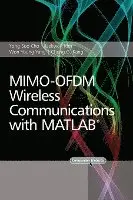
    MIMO-OFDM Wireless Communications with MATLAB

    AvYong Soo Cho,Jaekwon Kim

    Inbunden, Engelska, 2010

    Del i serien IEEE Press

    1 457 kr

    Beställningsvara. Skickas inom 5-8 vardagar. Fri frakt över 249 kr.

    Beskrivning

    MIMO-OFDM is a key technology for next-generation cellular communications (3GPP-LTE, Mobile WiMAX, IMT-Advanced) as well as wireless LAN (IEEE 802.11a, IEEE 802.11n), wireless PAN (MB-OFDM), and broadcasting (DAB, DVB, DMB). In MIMO-OFDM Wireless Communications with MATLAB, the authors provide a comprehensive introduction to the theory and practice of wireless channel modeling, OFDM, and MIMO, using MATLAB programs to simulate the various techniques on MIMO-OFDM systems. One of the only books in the area dedicated to explaining simulation aspectsCovers implementation to help cement the key conceptsUses materials that have been classroom-tested in numerous universitiesProvides the analytic solutions and practical examples with downloadable MATLAB codesSimulation examples based on actual industry and research projectsPresentation slides with key equations and figures for instructor useMIMO-OFDM Wireless Communications with MATLAB is a key text for graduate students in wireless communications. Professionals and technicians in wireless communication fields, graduate students in signal processing, as well as senior undergraduates majoring in wireless communications will find this book a practical introduction to the MIMO-OFDM techniques.Instructor materials and MATLAB code examples available for download at www.wiley.com/go/chomimo

    Produktinformation

    • Utgivningsdatum:2010-10-19
    • Mått:173 x 252 x 28 mm
    • Vikt:943 g
    • Format:Inbunden
    • Språk:Engelska
    • Serie:IEEE Press
    • Antal sidor:544
    • Förlag:John Wiley & Sons Inc
    • ISBN:9780470825617

    Utforska kategorier

    • Elektronik och kommunikationer inom Naturvetenskap och teknik

    Mer om författaren

    Yong Soo Cho is a Professor of Electronic Engineering at Chung-Ang University in Seoul, Korea. He has taught OFDM for 10 years and MIMO for 5. His research interests are in the areas of digital communication, digital signal processing, and FPGA Implementation. Cho has held positions at LG Electronics, the ETRI Mobile Communication Group, the WiBro Project Group, and was Chairman of the Wireless Access Working Group in Korea. He holds a BS from Chung-Ang University, an MS from Yonsei University, and a PhD from the University of Texas at Austin, all in electronic engineering.Jaekwon Kim is an Assistant Professor of Computer and Telecommunications Engineering at Yonsei University. Prior to that he worked at Samsung Advanced Institute of Technology with the 4G System Team. He holds a BS and MS from Chung-Ang University and a PhD from the University of Texas at Austin, all in electronic engineering.Won Y. Yang is a Professor of Electronic Engineering at Chung-Ang University. He has written two books on MATLAB in English, and two in Korean. Yang holds a BS and MS in Electrical Engineering from Seoul National University, an MS in Applied Math and a PhD in Electrical Engineering from the University of Southern California.Chung Gu Kang is a Professor of Radio Communication and Engineering at Korea University. Previous work experience inlcudes time in the US spent at the Aerospace Corporation and Rockwell International, where he worked on telecommunications systems development. He was also a Visiting Associate Professor at the UC San Diego. His research interests are focesed on the cross layer design issues for MIMO/multiple access schemes for mobile broadband wireless access systems and MAC/routing protocols for mobile ad hoc networks. Kang holds a BS from UC San Diego and an MS and PhD in Electrical Engineering and Computer Engineering from UC Irvine.

    Innehållsförteckning

    • Preface xiiiLimits of Liability and Disclaimer of Warranty of Software xv1 The Wireless Channel: Propagation and Fading 11.1 Large-Scale Fading 41.1.1 General Path Loss Model 41.1.2 Okumura/Hata Model 81.1.3 IEEE 802.16d Model 101.2 Small-Scale Fading 151.2.1 Parameters for Small-Scale Fading 151.2.2 Time-Dispersive vs. Frequency-Dispersive Fading 161.2.3 Statistical Characterization and Generation of Fading Channel 192 SISO Channel Models 252.1 Indoor Channel Models 252.1.1 General Indoor Channel Models 262.1.2 IEEE 802.11 Channel Model 282.1.3 Saleh-Valenzuela (S-V) Channel Model 302.1.4 UWB Channel Model 352.2 Outdoor Channel Models 402.2.1 FWGN Model 412.2.2 Jakes Model 502.2.3 Ray-Based Channel Model 542.2.4 Frequency-Selective Fading Channel Model 612.2.5 SUI Channel Model 653 MIMO Channel Models 713.1 Statistical MIMO Model 713.1.1 Spatial Correlation 733.1.2 PAS Model 763.2 I-METRA MIMO Channel Model 843.2.1 Statistical Model of Correlated MIMO Fading Channel 843.2.2 Generation of Correlated MIMO Channel Coefficients 883.2.3 I-METRA MIMO Channel Model 903.2.4 3GPP MIMO Channel Model 943.3 SCM MIMO Channel Model 973.3.1 SCM Link-Level Channel Parameters 983.3.2 SCM Link-Level Channel Modeling 1023.3.3 Spatial Correlation of Ray-Based Channel Model 1054 Introduction to OFDM 1114.1 Single-Carrier vs. Multi-Carrier Transmission 1114.1.1 Single-Carrier Transmission 1114.1.2 Multi-Carrier Transmission 1154.1.3 Single-Carrier vs. Multi-Carrier Transmission 1204.2 Basic Principle of OFDM 1214.2.1 OFDM Modulation and Demodulation 1214.2.2 OFDM Guard Interval 1264.2.3 OFDM Guard Band 1324.2.4 BER of OFDM Scheme 1364.2.5 Water-Filling Algorithm for Frequency-Domain Link Adaptation 1394.3 Coded OFDM 1424.4 OFDMA: Multiple Access Extensions of OFDM 1434.4.1 Resource Allocation – Subchannel Allocation Types 1454.4.2 Resource Allocation – Subchannelization 1464.5 Duplexing 1505 Synchronization for OFDM 1535.1 Effect of STO 1535.2 Effect of CFO 1565.2.1 Effect of Integer Carrier Frequency Offset (IFO) 1595.2.2 Effect of Fractional Carrier Frequency Offset (FFO) 1605.3 Estimation Techniques for STO 1625.3.1 Time-Domain Estimation Techniques for STO 1625.3.2 Frequency-Domain Estimation Techniques for STO 1685.4 Estimation Techniques for CFO 1705.4.1 Time-Domain Estimation Techniques for CFO 1705.4.2 Frequency-Domain Estimation Techniques for CFO 1735.5 Effect of Sampling Clock Offset 1775.5.1 Effect of Phase Offset in Sampling Clocks 1775.5.2 Effect of Frequency Offset in Sampling Clocks 1785.6 Compensation for Sampling Clock Offset 1785.7 Synchronization in Cellular Systems 1805.7.1 Downlink Synchronization 1805.7.2 Uplink Synchronization 1836 Channel Estimation 1876.1 Pilot Structure 1876.1.1 Block Type 1876.1.2 Comb Type 1886.1.3 Lattice Type 1896.2 Training Symbol-Based Channel Estimation 1906.2.1 LS Channel Estimation 1906.2.2 MMSE Channel Estimation 1916.3 DFT-Based Channel Estimation 1956.4 Decision-Directed Channel Estimation 1996.5 Advanced Channel Estimation Techniques 1996.5.1 Channel Estimation Using a Superimposed Signal 1996.5.2 Channel Estimation in Fast Time-Varying Channels 2016.5.3 EM Algorithm-Based Channel Estimation 2046.5.4 Blind Channel Estimation 2067 PAPR Reduction 2097.1 Introduction to PAPR 2097.1.1 Definition of PAPR 2107.1.2 Distribution of OFDM Signal 2167.1.3 PAPR and Oversampling 2187.1.4 Clipping and SQNR 2227.2 PAPR Reduction Techniques 2247.2.1 Clipping and Filtering 2247.2.2 PAPR Reduction Code 2317.2.3 Selective Mapping 2337.2.4 Partial Transmit Sequence 2347.2.5 Tone Reservation 2387.2.6 Tone Injection 2397.2.7 DFT Spreading 2418 Inter-Cell Interference Mitigation Techniques 2518.1 Inter-Cell Interference Coordination Technique 2518.1.1 Fractional Frequency Reuse 2518.1.2 Soft Frequency Reuse 2548.1.3 Flexible Fractional Frequency Reuse 2558.1.4 Dynamic Channel Allocation 2568.2 Inter-Cell Interference Randomization Technique 2578.2.1 Cell-Specific Scrambling 2578.2.2 Cell-Specific Interleaving 2588.2.3 Frequency-Hopping OFDMA 2588.2.4 Random Subcarrier Allocation 2608.3 Inter-Cell Interference Cancellation Technique 2608.3.1 Interference Rejection Combining Technique 2608.3.2 IDMA Multiuser Detection 2629 MIMO: Channel Capacity 2639.1 Useful Matrix Theory 2639.2 Deterministic MIMO Channel Capacity 2659.2.1 Channel Capacity when CSI is Known to the Transmitter Side 2669.2.2 Channel Capacity when CSI is Not Available at the Transmitter Side 2709.2.3 Channel Capacity of SIMO and MISO Channels 2719.3 Channel Capacity of Random MIMO Channels 27210 Antenna Diversity and Space-Time Coding Techniques 28110.1 Antenna Diversity 28110.1.1 Receive Diversity 28310.1.2 Transmit Diversity 28710.2 Space-Time Coding (STC): Overview 28710.2.1 System Model 28710.2.2 Pairwise Error Probability 28910.2.3 Space-Time Code Design 29210.3 Space-Time Block Code (STBC) 29410.3.1 Alamouti Space-Time Code 29410.3.2 Generalization of Space-Time Block Coding 29810.3.3 Decoding for Space-Time Block Codes 30210.4 Space-Time Trellis Code 30710.4.1 Space-Time Trellis Encoder 30710.4.2 Space-Time Trellis Code: Illustrative Example 31011 Signal Detection for Spatially Multiplexed MIMO Systems 31911.1 Linear Signal Detection 31911.1.1 ZF Signal Detection 32011.1.2 MMSE Signal Detection 32111.2 OSIC Signal Detection 32211.3 ML Signal Detection 32711.4 Sphere Decoding Method 32911.5 QRM-MLD Method 33911.6 Lattice Reduction-Aided Detection 34411.6.1 Lenstra-Lenstra-Lovasz (LLL) Algorithm 34511.6.2 Application of Lattice Reduction 34911.7 Soft Decision for MIMO Systems 35211.7.1 Log-Likelihood-Ratio (LLR) for SISO Systems 35311.7.2 LLR for Linear Detector-Based MIMO System 35811.7.3 LLR for MIMO System with a Candidate Vector Set 36111.7.4 LLR for MIMO System Using a Limited Candidate Vector Set 364Appendix 11.A Derivation of Equation (11.23) 37012 Exploiting Channel State Information at the Transmitter Side 37312.1 Channel Estimation on the Transmitter Side 37312.1.1 Using Channel Reciprocity 37412.1.2 CSI Feedback 37412.2 Precoded OSTBC 37512.3 Precoded Spatial-Multiplexing System 38112.4 Antenna Selection Techniques 38312.4.1 Optimum Antenna Selection Technique 38412.4.2 Complexity-Reduced Antenna Selection 38612.4.3 Antenna Selection for OSTBC 39013 Multi-User MIMO 39513.1 Mathematical Model for Multi-User MIMO System 39613.2 Channel Capacity of Multi-User MIMO System 39713.2.1 Capacity of MAC 39813.2.2 Capacity of BC 39913.3 Transmission Methods for Broadcast Channel 40113.3.1 Channel Inversion 40113.3.2 Block Diagonalization 40413.3.3 Dirty Paper Coding (DPC) 40813.3.4 Tomlinson-Harashima Precoding 412References 419Index 431