• Fri frakt över 249 kr
  • •
  • Snabba leveranser
  • •
  • Billiga böcker
Kundservice

Du är på sajten för privatpersoner.

Företag, bibliotek eller offentlig verksamhet?

Du handlar på classic.bokus.com, där alla dina funktioner finns intakta.
Till classic.bokus.com
Bokus logotyp. Gå till startsidan.
  • Erbjudanden
  • Nyheter
  • Student
  • Topplistor
  • Barn & ungdom
  • Bokus Play
  • E-böcker
  • Pocketböcker
  • Spel & pussel

10% rabatt på allt med kod NYSTART10 →

Sidfot

Mina sidor

    Hjälp

    • Kundservice
    • Vanliga frågor och svar
    • Frakt och leverans
    • Retur vid ångerrätt
    • Reklamera vara
    • Betalning
    • Köpvillkor
    • Allmänna villkor
    • Information om webbplatsens tillgänglighet

    Om Bokus

    • Om oss
    • Pressrum
    • För studenter
    • För företag
    • För bibliotek och offentlig verksamhet
    • För leverantörer
    • Hållbarhet

    Populärt

    • Aktuella erbjudanden
    • Presentkort
    • Studentlitteratur
    • Nya böcker
    • Topplistor
    • Signerade böcker
    • Engelska böcker

    Inspiration

    • Boktips
    • BookTok
    • Populära bokserier
    • Barnbokskaraktärer
    • Populära författare
    Logotyp för Bokus
    Följ oss på Facebook (extern länk)Följ oss på Instagram (extern länk)Följ oss på YouTube (extern länk)Följ oss på TikTok (extern länk)
    bokus @ CookiesAnpassa cookiesIntegritetspolicyKöpvillkor
    Till Citymail hemsida (extern länk)Till Budbee hemsida (extern länk)Till Postnord hemsida (extern länk)Till Schenker hemsida (extern länk)Till Early Bird hemsida (extern länk)Till Walleys hemsida (extern länk)
    1. Naturvetenskap och teknik
    2. Teknik och industri
    3. Byggnadsteknik

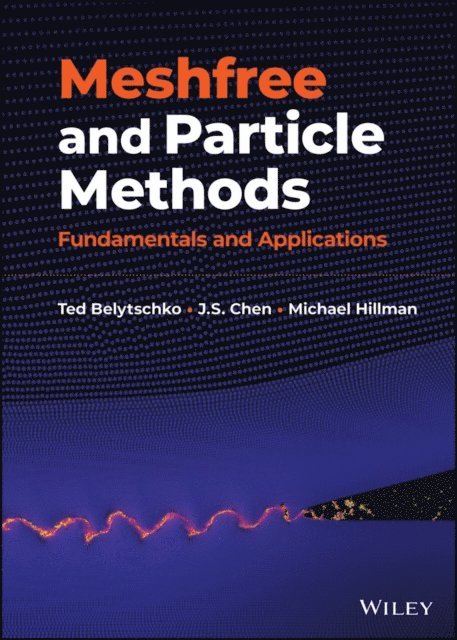
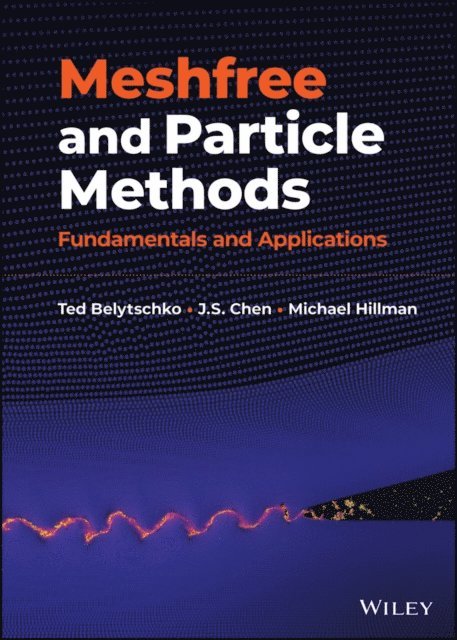
    Meshfree and Particle Methods

    Fundamentals and Applications

    AvTed Belytschko,J. S. Chen

    Inbunden, Engelska, 2024

    1 533 kr

    Beställningsvara. Skickas inom 5-8 vardagar. Fri frakt över 249 kr.

    Beskrivning

    Meshfree and Particle Methods Provides thorough coverage of essential concepts and state-of-the-art developments in the field Meshfree and Particle Methods is the first book of its kind to combine comprehensive, up-to-date information on the fundamental theories and applications of meshfree methods with systematic guidance on practical coding implementation. Broad in scope and content, this unique volume provides readers with the knowledge necessary to perform research and solve challenging problems in nearly all fields of science and engineering using meshfree computational techniques. The authors provide detailed descriptions of essential issues in meshfree methods, as well as specific techniques to address them, while discussing a wide range of subjects and use cases. Topics include approximations in meshfree methods, nonlinear meshfree methods, essential boundary condition enforcement, quadrature in meshfree methods, strong form collocation methods, and more. Throughout the book, topics are integrated with descriptions of computer implementation and an open-source code (with a dedicated chapter for users) to illustrate the connection between the formulations discussed in the text and their real-world implementation and application. This authoritative resource: Explains the fundamentals of meshfree methods, their constructions, and their unique capabilities as compared to traditional methodsFeatures an overview of the open-source meshfree code RKPM2D, including code and numerical examplesDescribes all the variational concepts required to solve scientific and engineering problems using meshfree methods such as Nitsche’s method and the Lagrange multiplier methodIncludes comprehensive reviews of essential boundary condition enforcement, quadrature in meshfree methods, and nonlinear aspects of meshfree analysisDiscusses other Galerkin meshfree methods, strong form meshfree methods, and their comparisonsMeshfree and Particle Methods: Fundamentals and Applications is the perfect introduction to meshfree methods for upper-level students in advanced numerical analysis courses, and is an invaluable reference for professionals in mechanical, aerospace, civil, and structural engineering, and related fields, who want to understand and apply these concepts directly, or effectively use commercial and other production meshfree and particle codes in their work.

    Produktinformation

    • Utgivningsdatum:2024-02-02
    • Mått:178 x 254 x 15 mm
    • Vikt:934 g
    • Format:Inbunden
    • Språk:Engelska
    • Antal sidor:352
    • Förlag:John Wiley & Sons Inc
    • ISBN:9780470848005

    Utforska kategorier

    • Byggnadsteknik inom Naturvetenskap och teknik

    Mer om författaren

    Ted Belytschko, the former Walter P. Murphy and McCormick Institute Professor of Northwestern University, was one of the world’s most renowned researchers in computational mechanics and meshfree methods. He was the originator of the Element-Free Galerkin (EFG) Methods, and his paper Element-Free Galerkin Methods published in 1994 remains the most widely cited paper on the subject. J.S. Chen is Distinguished Professor and William Prager Chair Professor in the Department of Structural Engineering & Department of Mechanical and Aerospace Engineering at The University of California, San Diego. His research interests are in computational solid mechanics and multiscale materials modeling, with focus on meshfree methods and advanced finite element methods. Michael Hillman is a Principal Scientist at Karagozian and Case Inc., and the former L. Robert and Mary L. Kimball Professor and Associate Professor of Civil Engineering at The Pennsylvania State University. His research interests are in computational solid mechanics, fundamental advancement of meshfree methods, and enhanced and novel meshfree methods.

    Innehållsförteckning

    • Preface xiGlossary of Notation xvii1 Introduction to Meshfree and Particle Methods 11.1 Definition of Meshfree Method 11.2 Key Approximation Characteristics 21.3 Meshfree Computational Model 31.4 A Demonstration of Meshfree Analysis 41.5 Classes of Meshfree Methods 41.6 Applications of Meshfree Methods 8References 112 Preliminaries: Strong and Weak Forms of Diffusion, Elasticity, and Solid Continua 172.1 Diffusion Equation 172.1.1 Strong Form of the Diffusion Equation 172.1.2 The Variational Principle for the Diffusion Equation 192.1.2.1 The Standard Variational Principle 202.1.2.2 The Variational Equation 202.1.2.3 Equivalence of the Variational Equation and the Strong Form 212.1.3 Constrained Variational Principles for the Diffusion Equation 252.1.3.1 The Penalty Method 252.1.3.2 The Lagrange Multiplier Method 262.1.3.3 Nitsche’s Method 282.1.4 Weak Form of the Diffusion Equation by the Method of Weighted Residuals 292.2 Elasticity 322.2.1 Strong Form of Elasticity 322.2.2 The Variational Principle for Elasticity 342.2.3 Constrained Variational Principles for Elasticity 352.2.3.1 The Penalty Method 352.2.3.2 The Lagrange Multiplier Method 352.2.3.3 Nitsche’s Method 362.3 Nonlinear Continuum Mechanics 372.3.1 Strong Form for General Continua 372.3.2 Principle of Stationary Potential Energy 392.3.3 Standard Weak Form for Nonlinear Continua 402.A Appendix 422.A.1 Elasticity with Discontinuities 422.A.2 Continuum Mechanics with Discontinuities 44References 443 Meshfree Approximations 453.1 MLS Approximation 453.1.1 Weight Functions 503.1.2 MLS Approximation of Vectors in Multiple Dimensions 533.1.3 Reproducing Properties 563.1.4 Continuity of Shape Functions 573.2 Reproducing Kernel Approximation 583.2.1 Continuous Reproducing Kernel Approximation 583.2.2 Discrete RK Approximation 623.3 Differentiation of Meshfree Shape Functions and Derivative Completeness Conditions 673.4 Properties of the MLS and Reproducing Kernel Approximations 683.5 Derivative Approximations in Meshfree Methods 733.5.1 Direct Derivatives 733.5.2 Diffuse Derivatives 743.5.3 Implicit Gradients and Synchronized Derivatives 743.5.4 Generalized Finite Difference Methods 793.5.5 Non-ordinary State-based Peridynamics under the Correspondence Principle, and RK Peridynamics 80References 834 Solving PDEs with Galerkin Meshfree Methods 874.1 Linear Diffusion Equation 874.1.1 Penalty Method for the Diffusion Equation 904.1.2 The Lagrange Multiplier Method for the Diffusion Equation 924.1.3 Nitsche’s Method for the Diffusion Equation 954.2 Elasticity 984.2.1 The Lagrange Multiplier Method for Elasticity 1014.2.2 Nitsche’s Method for Elasticity 1024.3 Numerical Integration 1054.4 Further Discussions on Essential Boundary Conditions 107References 1085 Construction of Kinematically Admissible Shape Functions 1115.1 Strong Enforcement of Essential Boundary Conditions 1115.2 Basic Ideas, Notation, and Formal Requirements 1125.2.1 Basic Ideas 1125.2.2 Formal Requirements 1125.2.3 Comment on Procedures 1145.3 Transformation Methods 1145.3.1 Full Transformation Method: Matrix Implementation 1145.3.2 Full Transformation Method: Row-Swap Implementation 1175.3.3 Mixed Transformation Method 1205.3.4 The Sparsity of Transformation Methods 1215.3.5 Preconditioners in Transformation Methods 1215.4 Boundary Singular Kernel Method 1235.5 RK with Nodal Interpolation 1255.6 Coupling with Finite Elements on the Boundary 1265.7 Comparison of Strong Methods 1275.8 Higher-Order Accuracy and Convergence in Strong Methods 1305.8.1 Standard Weak Form 1305.8.2 Consistent Weak Formulation One (CWF I) 1315.8.3 Consistent Weak Formulation Two (CWF II) 1345.9 Comparison Between Weak Methods and Strong Methods 135References 1366 Quadrature in Meshfree Methods 1376.1 Nomenclature and Acronyms 1376.2 Gauss Integration: An Introduction to Quadrature in Meshfree Methods 1386.3 Issues with Quadrature in Meshfree Methods 1406.4 Introduction to Nodal integration 1426.5 Integration Constraints and the Linear Patch Test 1446.6 Stabilized Conforming Nodal Integration 1486.7 Variationally Consistent Integration 1546.7.1 Variational Consistency Conditions 1546.7.2 Petrov–Galerkin Correction: VCI 1576.8 Quasi-Conforming SNNI for Extreme Deformations: Adaptive Cells 1596.9 Instability in Nodal Integration 1606.10 Stabilization of Nodal Integration 1616.10.1 Notation for Stabilized Nodal Integration 1636.10.2 Modified Strain Smoothing 1646.10.3 Naturally Stabilized Nodal Integration 1666.10.4 Naturally Stabilized Conforming Nodal Integration 168Notes 168References 1697 Nonlinear Meshfree Methods 1737.1 Lagrangian Description of the Strong Form 1747.2 Lagrangian Reproducing Kernel Approximation and Discretization 1777.3 Semi-Lagrangian Reproducing Kernel Approximation and Discretization 1807.4 Stability of Lagrangian and Semi-Lagrangian Discretizations 1857.4.1 Stability Analysis for the Lagrangian RK Equation of Motion 1857.4.2 Stability Analysis for the Semi-Lagrangian RK Equation of Motion 1877.4.3 Critical Time Step Estimation for the Lagrangian Formulation 1897.4.4 Critical Time Step Estimation for the Semi-Lagrangian Formulation 1917.4.5 Numerical Tests of Critical Time Step Estimation 1927.5 Neighbor Search Algorithms 1967.6 Smooth Contact Algorithm 1987.6.1 Continuum-Based Contact Formulation 1987.6.2 Meshfree Smooth Curve Representation 2017.6.3 Three-Dimensional Meshfree Smooth Contact Surface Representation and Contact Detection by a Nonparametric Approach 2047.7 Natural Kernel Contact Algorithm 2077.7.1 A Friction-like Plasticity Model 2097.7.2 Semi-Lagrangian RK Discretization and Natural Kernel Contact Algorithms 210Notes 212References 2158 Other Galerkin Meshfree Methods 2198.1 Smoothed Particle Hydrodynamics 2198.1.1 Kernel Estimate 2208.1.2 SPH Conservation Equations 2248.1.2.1 Mass Conservation (Continuity Equation) 2248.1.2.2 Equation of Motion 2258.1.2.3 Energy Conservation Equation 2278.1.3 Stability of SPH 2288.2 Partition of Unity Finite Element Method and h-p Clouds 2328.3 Natural Element Method 2348.3.1 First-Order Voronoi Diagram and Delaunay Triangulation 2348.3.2 Second-Order Voronoi Cell and Sibson Interpolation 2358.3.3 Laplace Interpolant (Non-Sibson Interpolation) 236References 2379 Strong Form Collocation Meshfree Methods 2419.1 The Meshfree Collocation Method 2429.2 Approximations and Convergence for Strong Form Collocation 2459.2.1 Radial Basis Functions 2459.2.2 Moving Least Squares and Reproducing Kernel Approximations 2469.2.3 Reproducing Kernel Enhanced Local Radial Basis 2479.3 Weighted Collocation Methods and Optimal Weights 2489.4 Gradient Reproducing Kernel Collocation Method 2519.5 Subdomain Collocation for Heterogeneity and Discontinuities 2539.6 Comparison of Nodally-Integrated Galerkin Meshfree Methods and Nodally Collocated Strong Form Meshfree Methods 2559.6.1 Performance of Galerkin and Collocation Methods 2559.6.2 Stability of Node-Based Galerkin and Collocation Methods 256References 25810 RKPM2D: A Two-Dimensional Implementation of RKPM 26110.1 Reproducing Kernel Particle Method: Approximation and Weak Form 26110.1.1 Reproducing Kernel Approximation 26110.1.2 Galerkin Formulation 26210.2 Domain Integration 26410.2.1 Gauss Integration 26410.2.2 Variationally Consistent Nodal Integration 26510.2.3 Stabilized Nodal Integration Schemes 26610.2.3.1 Modified Stabilized Nodal Integration 26710.2.3.2 Naturally Stabilized Nodal Integration 26810.3 Computer Implementation 26910.3.1 Domain Discretization 26910.3.2 Quadrature Point Generation 27210.3.3 RK Shape Function Generation 27310.3.4 Stabilization Methods 27810.3.5 Matrix Evaluation and Assembly 28110.3.6 Description of subroutines in RKPM2D 28510.4 Getting Started 28710.4.1 Input File Generation 28810.4.1.1 Model 29010.4.1.2 RK 29410.4.1.3 Quadrature 29510.4.2 Executing RKPM2D 29510.4.3 Post-Processing 29510.5 Numerical Examples 29710.5.1 Plotting the RK Shape Functions 29710.5.2 Patch Test 29810.5.3 Cantilever Beam Problem 30010.5.4 Plate With a Hole Problem 30310.A Appendix 310References 313Index 315