• Fri frakt över 249 kr
  • •
  • Snabba leveranser
  • •
  • Billiga böcker
Kundservice

Du är på sajten för privatpersoner.

Företag, bibliotek eller offentlig verksamhet?

Du handlar på classic.bokus.com, där alla dina funktioner finns intakta.
Till classic.bokus.com
Bokus logotyp. Gå till startsidan.
  • Erbjudanden
  • Nyheter
  • Student
  • Topplistor
  • Barn & ungdom
  • Bokus Play
  • E-böcker
  • Pocketböcker
  • Spel & pussel

10% rabatt på allt med kod NYSTART10 →

Sidfot

Mina sidor

    Hjälp

    • Kundservice
    • Vanliga frågor och svar
    • Frakt och leverans
    • Retur vid ångerrätt
    • Reklamera vara
    • Betalning
    • Köpvillkor
    • Allmänna villkor
    • Information om webbplatsens tillgänglighet

    Om Bokus

    • Om oss
    • Pressrum
    • För studenter
    • För företag
    • För bibliotek och offentlig verksamhet
    • För leverantörer
    • Hållbarhet

    Populärt

    • Aktuella erbjudanden
    • Presentkort
    • Studentlitteratur
    • Nya böcker
    • Topplistor
    • Signerade böcker
    • Engelska böcker

    Inspiration

    • Boktips
    • BookTok
    • Populära bokserier
    • Barnbokskaraktärer
    • Populära författare
    Logotyp för Bokus
    Följ oss på Facebook (extern länk)Följ oss på Instagram (extern länk)Följ oss på YouTube (extern länk)Följ oss på TikTok (extern länk)
    bokus @ CookiesAnpassa cookiesIntegritetspolicyKöpvillkor
    Till Citymail hemsida (extern länk)Till Budbee hemsida (extern länk)Till Postnord hemsida (extern länk)Till Schenker hemsida (extern länk)Till Early Bird hemsida (extern länk)Till Walleys hemsida (extern länk)
    1. Naturvetenskap och teknik
    2. Matematik och naturvetenskap
    3. Kemi

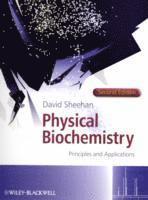
    Physical Biochemistry

    Principles and Applications

    AvDavid Sheehan

    Häftad, Engelska, 2009

    904 kr

    Beställningsvara. Skickas inom 11-20 vardagar. Fri frakt över 249 kr.

    Fler format och utgåvor

    E-bok

    2 619 kr

    E-bok

    1 073 kr

    Beskrivning

    "As will be seen, there is not much missing here. I thought that the sections were well balanced, with rarely too much or too little on a given topic...This is a text to be welcomed by both teachers and students." BIOCHEMISTRY & MOLECULAR BIOLOGY EDUCATION (on the first edition) The second edition of this successful textbook explains the basic principles behind the key techniques currently used in the modern biochemical laboratory and describes the pros and cons of each technique and compares one to another. It is non-mathematical, comprehensive and approachable for students who are not physical chemists. A major update of this comprehensive, accessible introduction to physical biochemistry.Includes two new chapters on proteomics and bioinformatics.Introduces experimental approaches with a minimum of mathematics and numerous practical examples.Provides a bibliography at the end of each chapter.Written by an author with many years teaching and research experience, this text is a must-have for students of biochemistry, biophysics, molecular and life sciences and food science.

    Produktinformation

    • Utgivningsdatum:2009-03-27
    • Mått:191 x 246 x 25 mm
    • Vikt:826 g
    • Format:Häftad
    • Språk:Engelska
    • Antal sidor:432
    • Upplaga:2
    • Förlag:John Wiley & Sons Inc
    • ISBN:9780470856031

    Utforska kategorier

    • Kemi inom Naturvetenskap och teknik

    Mer om författaren

    DAVID SHEEHAN, University College Cork, Ireland.

    Innehållsförteckning

    • Preface. Chapter 1 Introduction.1.1 Special Chemical Requirements of Biomolecules.1.2 Factors Affecting Analyte Structure and Stability.1.3 Buffering Systems Used in Biochemistry.1.4 Quantitation, Units and Data Handling.1.5 The Worldwide Web as a Resource in Physical Biochemistry.1.6 Objectives of this Volume.References.Chapter 2 Chromatography.2.1 Principles of Chromatography.2.2 Performance Parameters Used in Chromatography.2.3 Chromatography Equipment.2.4 Modes of Chromatography.2.5 Open Column Chromatography.2.6 High Performance Liquid Chromatography (HPLC).2.7 Fast Protein Liquid Chromatography.2.8 Perfusion Chromatography.2.9 Membrane-Based Chromatography Systems.2.10 Chromatography of a Sample Protein.References.Chapter 3 Spectroscopic Techniques.3.1 The Nature of Light.3.2 The Electromagnetic Spectrum.3.3 Ultraviolet/Visible Absorption Spectroscopy.3.4 Fluorescence Spectroscopy.3.5 Spectroscopic Techniques Using Plane-Polarized Light.3.6 Infrared Spectroscopy.3.7 Nuclear Magnetic Resonance (NMR) Spectroscopy.3.8 Electron Spin Resonance (ESR) Spectroscopy.3.9 Lasers.3.10 Surface Plasmon Resonance.References.Chapter 4 Mass Spectrometry.4.1 Principles of Mass Spectrometry.4.2 Mass Spectrometry of Proteins/Peptides.4.3 Interfacing MS with other Methods.4.4 Uses of Mass Spectrometry in Biochemistry.References.Chapter 5 Electrophoresis.5.1 Principles of Electrophoresis.5.2 Nondenaturing Electrophoresis.5.3 Denaturing Electrophoresis.5.4 Electrophoresis in DNA Sequencing.5.5 Isoelectric Focusing (IEF).5.6 Immunoelectrophoresis.5.7 Agarose Gel Electrophoresis of Nucleic Acids.5.8 Pulsed Field Gel Electrophoresis.5.9 Capillary Electrophoresis.5.10 Electroblotting Procedures.5.11 Electroporation.References.Chapter 6 Three-Dimensional Structure Determination of Macromolecules.6.1 The Protein-Folding Problem.6.2 Structure Determination by NMR.6.3 Crystallization of Biomacromolecules.6.4 X-Ray Diffraction by Crystals.6.5 Calculation of Electron Density Maps.6.6 Other Diffraction Methods.6.7 Comparison of X-Ray Crystallography with Multi-Dimensional NMR.6.8 Structural Databases.References.Chapter 7 Hydrodynamic Methods.7.1 Viscosity.7.2 Sedimentation.7.3 Methods for Varying Buffer Conditions.7.4 Flow Cytometry.References.Chapter 8 Biocalorimetry.8.1 The Main Thermodynamic Parameters.8.2 Isothermal Titration Calorimetry.8.3 Differential Scanning Calorimetry.8.4 Determination of Thermodynamic Parameters by Non-Calorimetric Means.References.Chapter 9 Bioinformatics.9.1 Overview of Bioinformatics.9.2 Sequence Databases.9.3 Tools for Analysis of Primary Structures.9.4 Tertiary Structure Databases.9.5 Programs for Analysis and Visualization of Tertiary Structure Databases.9.6 Homology Modelling.References.Chapter 10 Proteomics.10.1 Electrophoresis in Proteomics.10.2 Mass Spectrometry in Proteomics.10.3 Chip Technologies in Proteomics.10.4 Post-Translational Modification Proteomics.Further Reading.References.Appendix 1 SI Units.Appendix 2 The Fourier Transform.Index.