• Fri frakt över 249 kr
  • •
  • Snabba leveranser
  • •
  • Billiga böcker
Kundservice

Du är på sajten för privatpersoner.

Företag, bibliotek eller offentlig verksamhet?

Du handlar på classic.bokus.com, där alla dina funktioner finns intakta.
Till classic.bokus.com
Bokus logotyp. Gå till startsidan.
  • Erbjudanden
  • Student
  • Topplistor
  • Barn & ungdom
  • Bokus Play
  • E-böcker
  • Ljudböcker
  • Pocketböcker
  • Spel & pussel

10% rabatt på allt med kod NYSTART10 →

Sidfot

Mina sidor

    Hjälp

    • Kundservice
    • Vanliga frågor och svar
    • Frakt och leverans
    • Retur vid ångerrätt
    • Reklamera vara
    • Betalning
    • Köpvillkor
    • Allmänna villkor
    • Information om webbplatsens tillgänglighet

    Om Bokus

    • Om oss
    • Pressrum
    • För studenter
    • För företag
    • För bibliotek och offentlig verksamhet
    • För leverantörer
    • Hållbarhet

    Populärt

    • Aktuella erbjudanden
    • Presentkort
    • Studentlitteratur
    • Nya böcker
    • Topplistor
    • Signerade böcker
    • Engelska böcker

    Inspiration

    • Boktips
    • BookTok
    • Populära bokserier
    • Barnbokskaraktärer
    • Populära författare
    Logotyp för Bokus
    Följ oss på Facebook (extern länk)Följ oss på Instagram (extern länk)Följ oss på YouTube (extern länk)Följ oss på TikTok (extern länk)
    bokus @ CookiesAnpassa cookiesIntegritetspolicyKöpvillkor
    Till Citymail hemsida (extern länk)Till Budbee hemsida (extern länk)Till Postnord hemsida (extern länk)Till Schenker hemsida (extern länk)Till Early Bird hemsida (extern länk)Till Walleys hemsida (extern länk)
    1. Ekonomi och Ledarskap
    2. Ledarskapsböcker

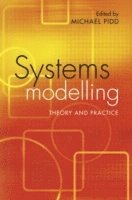
    Systems Modelling

    Theory and Practice

    AvPidd,Michael Pidd

    Häftad, Engelska, 2004

    769 kr

    Beställningsvara. Skickas inom 5-8 vardagar. Fri frakt över 249 kr.

    Beskrivning

    Systems Modelling: Theory and Practice brings together some of the leading minds in the fields of Systems Modelling and Operational Research, to produce a book which addresses issues that are of both practical importance and theoretical significance. This union of the theory and practice of Systems Modelling incorporates both ‘hard’ and ‘soft’ aspects of Operational Research, creating a complementary approach that requires more than common sense and results in significant organizational benefits. The contributors are from organizations and academic departments that are major users of systems modelling, meaning their experience will be vital to readers who are seeking to expand their level of understanding in the development of these models. This book will appeal to students of computing, management science and operational research, and to practitioners who understand the many possibilities and applications that this complementary approach could have in industry.

    Produktinformation

    • Utgivningsdatum:2004-02-20
    • Mått:154 x 232 x 13 mm
    • Vikt:340 g
    • Format:Häftad
    • Språk:Engelska
    • Antal sidor:240
    • Förlag:John Wiley & Sons Inc
    • ISBN:9780470867310

    Utforska kategorier

    • Ledarskapsböcker inom Ekonomi och Ledarskap

    Mer om författaren

    Mchael Pidd is Professor of Management Science at Lancaster University and a Past President of the Operational Research Society. His research interests focus on the development of usable models in management science and computer simulation and he has published widely in many academic journals and books. His authored books include the highly regarded Tools for Thinking: Modelling in Management Science, now in its second edition, and Computer Simulation in Management Science, now in its fourth edition, (both published by John Wiley & Sons).

    Innehållsförteckning

    • List of contributors. Preface.Acknowledgements.CHAPTER 1. Complementarity in systems modelling (Michael Pidd).1.1 Systems modelling.1.2 Messes and wicked problems.1.3 Hard and soft approaches.1.4 What do we mean by complementarity?References.CHAPTER 2. Insights from complexity: organisational change and systems modelling (Michael Lyons).2.1 Introduction.2.2 Complex adaptive systems and complexity.2.3 Complexity and management.2.4 Working with systemic problems.2.5 The simulation of complexity.2.6 Conclusion: complementarity intrinsic to complexity?References.CHAPTER 3. ‘Classic’ OR and ‘soft’ OR - an asymmetric complementarity (Peter Checkland and Sue Holwell).3.1 Introduction.3.2 Classic OR methodology.3.3 Soft systems methodology.3.4 ‘Hard’ and ‘soft’ perspectives.3.5 The relation between ‘ha rd’ and ‘soft’ perspectives: an asymmetric complementarity.3.6 Conclusion.References.CHAPTER 4. The effectiveness of high-dependency care (Roth Kowalczyk).4.1 Introduction.4.2 The issues.4.3 Effective high dependency care provision.4.4 Methods and methodology.4.5 Analysing the introduction of high dependency care.4.6 Effects.4.7 Conclusions.References.CHAPTER 5. Complementarity in practice (George Paterson).5.1 Introduction.5.2 Organisational setting for or/ms practice.5.3 Types of assistance available.5.4 OR/MS in relation to other consulting offerings.5.5 Models and modelling.5.6 Examples from the oil and gas industry.5.7 Complementarity of hard and soft.References.CHAPTER 6. The complementary use of hard and soft OR in developing tax policy (Joyce Brown and Ceri Cooper).6.1 Introduction.6.2 Background.6.3 The hard OR in the tax study.6.4 The soft OR.6.5 Complementarity.Acknowledgements.References.CHAPTER 7. Mental models and learning in system dynamics practice (John Morecroft).7.1 Introduction.7.2 Mental models, transitional objects and formal models.7.3 Models of business and social systems.7.4 The BBC world service modelling project.7.5 The impact on managerial thinking of the world service project.7.6 Discussion.References.CHAPTER 8. Using causal mapping - individual and group, traditional and new (Fran Ackermann and Colin Eden).8.1 Background to mapping.8.2 Modes of use.8.3 Applications of mapping.8.4 Some considerations in usage for problem ‘solving’ and strategy development.8.5 Organizational learning and forensic analysis through mapping.8.6 Some considerations in usage for organisational learning.8.7 Summary.References.CHAPTER 9. Use of 'soft-or' models by clients - what do they want from them? (Colin Eden and Fran Ackermann).9.1 Introduction.9.2 The nature of clients.9.4 Delivering ‘added value’: problem structuring in groups - modelling as "structuring", negotiating, and agreeing.9.5 Flexibility of tools and techniques – having a wide range and being able to use them contingently.9.6 Visual interactive modelling means workshops which means facilitation.9.7 Issues of closure.9.8 Summary.References.CHAPTER 10. The status of models in defence systems engineering (Sean Price and Philip John).10.1 Introduction.10.2 What is systems engineering?10.3 The nature of modern systems challenges.10.4 Traditional problem domain boundaries.10.5 The uses of models.10.6 The status of models in systems engineering.10.7 Conclusions.References.CHAPTER 11. Complementarity in ministry of defence or practice (Alan P Robinson, George A Pickburn and Roger A Forder).11.1 Introduction.11.2 A high-level study.11.3 Equipment acquisition studies.11.4 The falcon communication system.11.5 Defence logistics: "from factory to foxhole".11.6 The strategic assessment method.11.7 OA in the MoD.11.8 Models, methods and strategy in mod OA.11.9 Complementarity in MoD OA.11.10 Final thoughts.References.CHAPTER 12. Bringing it all together (Michael Pidd).12.1 A personal reprise.12.2 So, what can we learn?References.Index.