• Fri frakt över 249 kr
  • •
  • Snabba leveranser
  • •
  • Billiga böcker
Kundservice

Du är på sajten för privatpersoner.

Företag, bibliotek eller offentlig verksamhet?

Du handlar på classic.bokus.com, där alla dina funktioner finns intakta.
Till classic.bokus.com
Bokus logotyp. Gå till startsidan.
  • Erbjudanden
  • Nyheter
  • Student
  • Topplistor
  • Barn & ungdom
  • Bokus Play
  • E-böcker
  • Pocketböcker
  • Spel & pussel

10% rabatt på allt med kod: NYSTART10 →

Sidfot

Mina sidor

    Hjälp

    • Kundservice
    • Vanliga frågor och svar
    • Frakt och leverans
    • Retur vid ångerrätt
    • Reklamera vara
    • Betalning
    • Köpvillkor
    • Allmänna villkor
    • Information om webbplatsens tillgänglighet

    Om Bokus

    • Om oss
    • Pressrum
    • För studenter
    • För företag
    • För bibliotek och offentlig verksamhet
    • För leverantörer
    • Hållbarhet

    Populärt

    • Aktuella erbjudanden
    • Presentkort
    • Studentlitteratur
    • Nya böcker
    • Topplistor
    • Signerade böcker
    • Engelska böcker

    Inspiration

    • Boktips
    • BookTok
    • Populära bokserier
    • Barnbokskaraktärer
    • Populära författare
    Logotyp för Bokus
    Följ oss på Facebook (extern länk)Följ oss på Instagram (extern länk)Följ oss på YouTube (extern länk)Följ oss på TikTok (extern länk)
    bokus @ CookiesAnpassa cookiesIntegritetspolicyKöpvillkor
    Till Citymail hemsida (extern länk)Till Budbee hemsida (extern länk)Till Postnord hemsida (extern länk)Till Schenker hemsida (extern länk)Till Early Bird hemsida (extern länk)Till Walleys hemsida (extern länk)
    1. Ekonomi och Ledarskap
    2. Företagsekonomi
    3. Redovisning och finansiering
    4. Finansiering

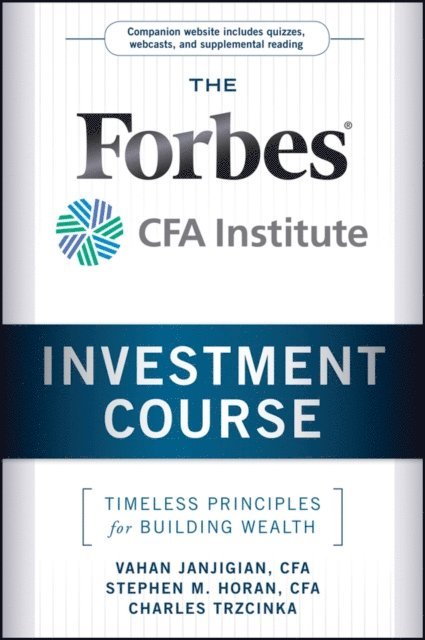
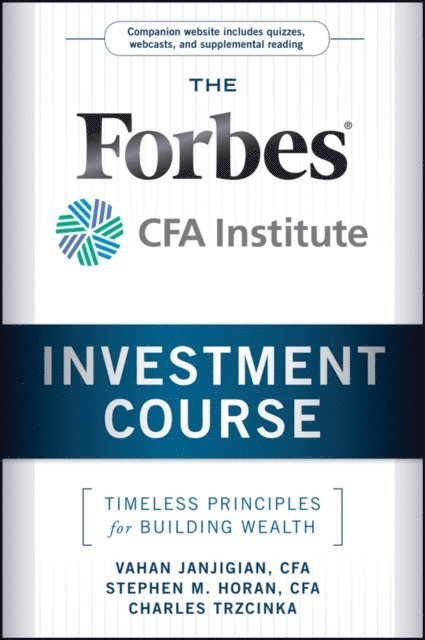
    Forbes / CFA Institute Investment Course

    Timeless Principles for Building Wealth

    AvVahan Janjigian,Stephen M. Horan

    Inbunden, Engelska, 2011

    310 kr

    Beställningsvara. Skickas inom 5-8 vardagar. Fri frakt över 249 kr.

    Beskrivning

    The most up-to-date and all encompassing guide to investing in today's markets From Forbes and the CFA Institute-two of the most highly respected and recognized names in the investment industry-The Forbes/CFA Institute Investment Course is an interactive roadmap to investing in today's challenging stock markets. From building capital and asset allocation and diversification to choosing a broker and reading a financial statement, The Forbes/CFA Institute Investment Course has offered investors step-by-step guidance since 1948. The course Includes advice for novices, but also accommodates those who are more familiar with marketsProvides important information on fundamental analysis versus technical analysisDetails different asset classes: fixed income securities, derivatives, mutual funds, and equitiesWith Q&A, links to videos, expert advice, interviews with top money managers, and much more, The Forbes/CFAInstitute Investment Course is the perfect resource for anyone looking to learn about investing in today's markets.

    Produktinformation

    • Utgivningsdatum:2011-03-01
    • Mått:162 x 229 x 27 mm
    • Vikt:513 g
    • Format:Inbunden
    • Språk:Engelska
    • Antal sidor:288
    • Förlag:John Wiley & Sons Inc
    • ISBN:9780470919651

    Utforska kategorier

    • Finansiering inom Ekonomi och Ledarskap

    Mer om författaren

    VAHAN JANJIGIAN is Chief Investment Officer at Greenwich Wealth Management, LLC, a SEC registered investment advisor. He is a Forbes magazine columnist and Editor of the Forbes Special Situation Survey, widely regarded as one of the best performing investment newsletters. He previously served on the faculties of several leading universities. He is a frequent guest on popular television and radio business programs and is the author of Even Buffett Isn't Perfect. STEPHEN M. HORAN is the head of professional educational content for CFA Institute and specializes in private wealth management. Prior to joining CFA Institute, he was a professor of finance at St. Bonaventure University, principal of Alesco Advisors LLC, and a financial analyst and forensic economist in private practice. He is editor of Private Wealth: Wealth Management in Practice and the author of numerous articles in leading peer-reviewed journals. Dr. Horan is a frequent columnist in the Financial Times. CHARLES TRZCINKA is the James W. & Virginia E. Cozad Chair in Finance at the Kelley School of Business, Indiana University, Bloomington. Previous positions have included the faculties of SUNY Buffalo and New York University; director of the U.S. Commerce Department's MBA program in the People's Republic of China; and senior economist with the United States Securities and Exchange Commission.

    Innehållsförteckning

    • Preface xiiiAcknowledgments xviiChapter 1 Building Capital 1Role of the Stock Market in Building Wealth 2Determining Your Financial Position 3Your Financial Inventory Guide 4Investment Margin 11Defining Your Goals 12Return Requirements 13Risk Profile 14Life Cycle and the Risk/Return mix 15Other Considerations 16Asset Classes 17Asset Allocation 20Active versus Passive Investing 22Diversification 23Dollar Cost Averaging 24Chapter Takeaways 31Chapter 2 How Securities Markets Function 33Role of Securities Markets 33The Securities Exchanges 36Over-the-Counter Markets 37NASDAQ 38Electronic Communication Networks 39Stock Quotes 39The Third Market 40Other Markets 40How the New York Stock Exchange Operates 41How the NASDAQ Operates 43From SOES to SuperMontage 44OTC Bulletin Board and Pink Sheets 45How the ECNs Operate 45Crossing Systems 46Electronic versus Floor Trading 46Preferencing 48Internalization 49Chapter Takeaways 49Chapter 3 Selecting a Broker and Trading 51Structure of a Brokerage Firm 52Activities of a Brokerage Firm 53Services Offered by All Brokers 54Full-Service versus Discount Brokers 55Online Brokers 58Choosing a Brokerage Firm 58Commissions 60Direct Purchase of Securities 62Placing Orders 63Odd-Lot Trading 66Margin 67Transaction Example 68Settlement 69Stock Symbols and the Ticker Tape 70Questions to Ask Your Broker 71Chapter Takeaways 73Chapter 4 Tax-Favored Investment Strategies 75Capital Gains and Dividends 75Traditional IRAs 77Roth IRAs 79401(k) Plans 80Education Savings Accounts and 529 Plans 82Other Pension Plans 83Mutual Funds and Taxes 85Using Tax-Advantaged Accounts 86Chapter Takeaways 87Chapter 5 Reading Financial Statements 89Income Statements 91Balance Sheet 95Statement of Cash Flows 99Making Sense of the Numbers 102Profitability Ratios 102Asset Utilization Ratios 105Leverage Ratios 108Revisiting ROE 110Liquidity Ratios 110Market Multiples 112Look Beyond the Numbers 114Read the Footnotes 115Can You Trust Financial Statements? 115Chapter Takeaways 119Chapter 6 Sources for Investment Information 121Where to Obtain Information 123Securities and Exchange Commission 124Earnings Releases and Regulation Fair Disclosure 125Investment Brokers and Dealers 127Can You Trust Brokerage House Reports? 128Investment Newsletters and Other Publications 129Corporate Reports 130Reading the Annual Report 130Government Reports 131Chapter Takeaways 131Chapter 7 Common Stocks and Economic Indicators 133Another Look at the Balance Sheet 133Why Common Shares Have Value 136Macroeconomic Factors 136Industry-Specific Factors 140Other Barometers 141Evaluating Data 141Chapter Takeaways 143Chapter 8 Fundamental Analysis 145Investing versus Trading 145Passive Investing 146Active Investing 147Business Focus 153Industry Outlook 154Company Status 155Major Trends 157Earnings History and Outlook 158Dividends 159Price-Earnings and Price-Book Ratios Revisited 161Discounted Cash Flow 163Evaluating Management 164Some Final Thoughts on Fundamental Analysis 165Chapter Takeaways 165Chapter 9 Technical Analysis 167The Value of Charts 169Reading Charts 171Dow Theory 171Head and Shoulders 175Support and Resistance Levels 176Trading Ranges 177Breakaway Gaps 178Importance of Volume 179Other Technical Indicators 182Time to Grow Bullish 184Chapter Takeaways 187Chapter 10 Fixed-Income Securities 189Bonds 189Understanding Bonds 190Understanding Bond Prices 191Bond Prices and Interest Rates 192Call Feature 194Credit Quality of Bonds 194Other Issues Concerning Bonds 196How to Buy Bonds 199Money Market Securities 200Preferred Stock 201Understanding Preferred Stock 202Tax Treatment 203Trust Preferred Securities 204Final Thoughts on Bonds and Preferred Stocks 204Chapter Takeaways 205Chapter 11 Derivatives 207Defining Derivative Instruments 207Futures 209Spot Asset 209The Futures Market 210Delivery 211Hedging 212Stock Index Futures 212Single-Stock Futures 214Options 215Definition of Options 216Options Markets 216Important Terms to Know 216Listed Options 217What an Option Is Worth 219Commissions 221To Sell or to Exercise 222Some Popular Option Strategies 222A Warning about Naked Option Writing 225Chapter Takeaways 226Chapter 12 Mutual Funds 229An Investment Company 229Closed-End or Open-End 230A Short History of the Mutual Fund Industry 232Categories of Mutual Funds 232Advantages of Mutual Funds 237Disadvantages of Mutual Funds 238Mutual Fund Expenses 239How to Choose a Fund 242Some Final Thoughts about Mutual Funds 243Hedge Funds 243Chapter Takeaways 247Chapter 13 Rules of Thumb and Key Phrases 249Final Comments 254Suggested Readings 255About the Authors 257Index 259