• Fri frakt över 249 kr
  • •
  • Snabba leveranser
  • •
  • Billiga böcker
Kundservice

Du är på sajten för privatpersoner.

Företag, bibliotek eller offentlig verksamhet?

Du handlar på classic.bokus.com, där alla dina funktioner finns intakta.
Till classic.bokus.com
Bokus logotyp. Gå till startsidan.
  • Erbjudanden
  • Nyheter
  • Student
  • Topplistor
  • Barn & ungdom
  • Bokus Play
  • E-böcker
  • Pocketböcker
  • Spel & pussel

10% studentrabatt med kod TERM26

Sidfot

Mina sidor

    Hjälp

    • Kundservice
    • Vanliga frågor och svar
    • Frakt och leverans
    • Retur vid ångerrätt
    • Reklamera vara
    • Betalning
    • Köpvillkor
    • Allmänna villkor
    • Information om webbplatsens tillgänglighet

    Om Bokus

    • Om oss
    • Pressrum
    • För studenter
    • För företag
    • För bibliotek och offentlig verksamhet
    • För leverantörer
    • Hållbarhet

    Populärt

    • Aktuella erbjudanden
    • Presentkort
    • Studentlitteratur
    • Nya böcker
    • Topplistor
    • Signerade böcker
    • Engelska böcker

    Inspiration

    • Boktips
    • BookTok
    • Populära bokserier
    • Barnbokskaraktärer
    • Populära författare
    Logotyp för Bokus
    Följ oss på Facebook (extern länk)Följ oss på Instagram (extern länk)Följ oss på YouTube (extern länk)Följ oss på TikTok (extern länk)
    bokus @ CookiesAnpassa cookiesIntegritetspolicyKöpvillkor
    Till Citymail hemsida (extern länk)Till Budbee hemsida (extern länk)Till Postnord hemsida (extern länk)Till Schenker hemsida (extern länk)Till Early Bird hemsida (extern länk)Till Walleys hemsida (extern länk)
    1. Ekonomi och Ledarskap
    2. Företagsekonomi
    3. Redovisning och finansiering
    4. Finansiering

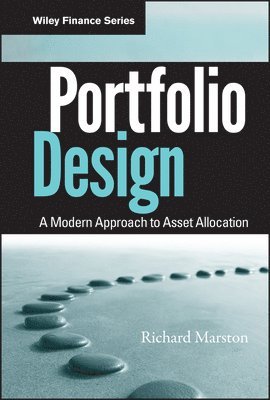
    Portfolio Design

    A Modern Approach to Asset Allocation

    AvRichard C. Marston

    Inbunden, Engelska, 2011

    Del 641 i serien Wiley Finance

    440 kr

    Beställningsvara. Skickas inom 5-8 vardagar. Fri frakt över 249 kr.

    Fler format och utgåvor

    E-bok

    581 kr

    E-bok

    579 kr

    Beskrivning

    Portfolio Design – choosing the right mix of assets appropriate to a particular investor – is the key to successful investing. It can help you accumulate wealth over time, while cushioning the blow of possible economic downturns. But in order to successfully achieve this goal, you need to be familiar with all of the major asset classes that go into modern portfolios and learn how much they add to portfolio diversification. Thoughtful asset allocation provides discipline to the investment process and gives you the best chance of building and safeguarding wealth. Wharton Professor Richard C. Marston, 2014 recipient of the Investment Management Consultants Association’s  prestigious Matthew R. McArthur Award, will guide you through the major decisions that need to be made when designing a portfolio and will put you in the best position to balance the risk-reward relationship that is part of this endeavor. Portfolio Design is to be read by investment advisors. The book is rich in information about individual asset classes, including both traditional assets like stocks and bonds as well as alternative assets such as hedge funds, private equity, real estate, and commodities. So it should appeal to all sophisticated advisors whether or not they are trying to qualify for one of the major investment designations. In fact, the book is designed to be read by any advisor who is as fascinated as Marston by the investment process.

    Produktinformation

    • Utgivningsdatum:2011-04-05
    • Mått:158 x 224 x 31 mm
    • Vikt:590 g
    • Format:Inbunden
    • Språk:Engelska
    • Serie:Wiley Finance
    • Antal sidor:368
    • Förlag:John Wiley & Sons Inc
    • ISBN:9780470931233

    Utforska kategorier

    • Finansiering inom Ekonomi och Ledarskap

    Mer om författaren

    RICHARD C. MARSTON is currently James R.F. Guy Professor of Finance and Director, George Weiss Center for International Financial Research at the Wharton School, University of Pennsylvania. He was a recipient of the Rhodes Scholarship, Fulbright Fellowship, and the Sanwa Bank Prize in International Finance. He has been a research associate for the National Bureau of Economic Research since 1979, a visiting professor at London Business School, ESSEC in Paris, and the Sasin Institute at Chulalongkorn University in Bangkok, and Visiting Scholar at the Bank of Japan. Since 1999, he has been Academic Director of the Private Wealth Management Program at Wharton, a week-long program for ultra-high-net-worth investors, and he is a long-standing faculty member in the Certified Investment Management Analyst program at Wharton, having taught asset allocation to over 5000 financial advisors.

    Innehållsförteckning

    • Preface xiiiAcknowledgements xvAbout the Author xviiAbout the Book xixDisclaimers xxiCHAPTER 1 Asset Allocation 1Ingredients of Asset Allocation 3Lessons of the Recent Downturn 6So Are Bonds the Place to Invest? 10So What Happens When the Economy Turns Up? 13Some Necessary Tools for Analysis 15Appendix: Description of the Statistical Tools 16CHAPTER 2 Long-Run Returns on Stocks and Bonds 21Stocks and Bonds Since 1951 22How Much More Attractive Are Stocks than Bonds? 24Real Returns 25Reconsidering Bond Returns 27Reconsidering Stock Returns 30Alternative Estimates of Long-Run Stock Returns 32Upper and Lower Bounds for Equity Returns 35Appendix: Alternative Estimates of Stock Returns 36CHAPTER 3 Small-Cap Stocks 41What Do We Mean by Small-Cap Stocks? 43Relative Performance of Large-Cap and Small-Cap Stocks—Russell Series 45Relative Performance of Large-Cap and Small-Cap Stocks—SBBI Series 48Relative Performance of Large-Cap and Small-Cap Stocks—Broader Analysis 50Large-Cap and Small-Cap Stocks in a Portfolio Context 52Summary—Key Features of Small-Cap Stocks 55CHAPTER 4 Value and Growth Investing 57Description of the Russell 1000 Indexes 57Relative Performance of Growth and Value Indexes 59Value and Growth Indexes for Earlier Periods 64Relative Performance of Small-Cap Growth and Value Stocks 65Portfolios with Growth and Value 69Summary—Key Features of Growth and Value Stocks 71CHAPTER 5 Foreign Stocks 73Returns on Foreign and U.S. Stocks 75Currency Capital Gains and Foreign Stock Returns 79Diversification Benefits of Foreign Stock Investing 85Are There Shortcuts to Owning Foreign Stocks? 90Summary—Key Features of Foreign Stocks 93CHAPTER 6 Emerging Markets 97What Is An Emerging Market? 98Emerging Stock Market Indexes 101Emerging Stock Market Returns 103Risks of Investing in Emerging Stock Markets 107Emerging Market Bonds—A Brief History 113Returns on Emerging Market Bonds 114Summary—Key Features of Emerging Market Stocks and Bonds 117CHAPTER 7 Bonds 121Treasury Bonds 122The Wider U.S. Bond Market 127Returns on U.S. Bonds 131Bond Markets Outside the United States 133Summary—Key Features of Bonds 140CHAPTER 8 Strategic Asset Allocation 143Expanding the Portfolio to Include Other Bonds and Stocks 145Expanding the Portfolio to Include Foreign Stocks 147The Dirty Secret of Optimization 150Alternative Approaches to Optimization 154Estimating Portfolio Returns—the Premium Method 155Portfolios in Practice—Example of MarketWatch.com’s Lazy Portfolios 159Beyond the Traditional Efficient Frontier 163CHAPTER 9 Hedge Funds 167Investment Strategies 169Hedge Fund Returns 172Hedge Fund Biases 178Performance Across Managers 181Fund of Funds 182Hedge Funds in a Portfolio 186Summary—Key Features of Hedge Funds 187CHAPTER 10 Venture Capital and Private Equity 191Common Features of Venture Capital and Buyout Funds 192Venture Capital 195Returns on Venture Capital 198Buyout Funds 205Returns on Buyout Funds 207Key Features of Private Equity 211CHAPTER 11 Real Assets—Real Estate 213Real Estate Investment Trusts 214Direct Ownership of Real Estate 220Home Ownership 223Concluding Remarks 231CHAPTER 12 Real Assets—Commodities 235Sources of Return on Commodity Futures 236Returns on Commodity Futures 239Performance in a Portfolio 245Does Gold Belong in the Portfolio? 249Active Investment in Commodities—Managed Futures 251Summary—Key Features of Commodity Investments 253CHAPTER 13 Asset Allocation with Alternative Investments 257Diversifying into Real Estate—Alternatives for Ordinary Investors 258Expanding the Menu of Alternative Assets 262High Net Worth (HNW) Portfolios 264Ultra HNW Portfolios 266Lessons about Alternatives from the Yale Endowment 269Lessons about Alternative Investments Learned in the Financial Crisis 277Verdict on Alternative Investments 280CHAPTER 14 Investing and Spending by Foundations 285Spending Rules 286Estimating Future Bond and Stock Returns 288Volatility and Uncertainty 288Portfolios of Stocks and Bonds 290Description of the Spending Plan 291Using Historical Returns Since 1951 to Set Spending Rules 292Effect of Lower Stock Returns on Spending Rules 294Effects of Different Stock/Bond Allocations 296Concluding Comments 299CHAPTER 15 Investing and Spending in Retirement 303Longevity 306Spending Rules for Retirement 308Portfolios of Stocks and Bonds 309Baseline Case: Can Two Live More Cheaply Than One? 310Effects of Bequests and Variable Spending Rules 311How Can I Turn a Defined Contribution Plan into a Defined Benefit Plan? 313Concluding Comments—Postpone Retirement? 314CHAPTER 16 The Discipline of Asset Allocation—Rebalancing 319Rebalancing Defined 320Rebalancing When Times Are Good 321Rebalancing When Times Are Bad 323References 325Index 331