• Fri frakt över 249 kr
  • •
  • Snabba leveranser
  • •
  • Billiga böcker
Kundservice

Du är på sajten för privatpersoner.

Företag, bibliotek eller offentlig verksamhet?

Du handlar på classic.bokus.com, där alla dina funktioner finns intakta.
Till classic.bokus.com
Bokus logotyp. Gå till startsidan.
  • Erbjudanden
  • Student
  • Topplistor
  • Barn & ungdom
  • Bokus Play
  • E-böcker
  • Ljudböcker
  • Pocketböcker
  • Spel & pussel

10% rabatt på allt med kod NYSTART10 →

Sidfot

Mina sidor

    Hjälp

    • Kundservice
    • Vanliga frågor och svar
    • Frakt och leverans
    • Retur vid ångerrätt
    • Reklamera vara
    • Betalning
    • Köpvillkor
    • Allmänna villkor
    • Information om webbplatsens tillgänglighet

    Om Bokus

    • Om oss
    • Pressrum
    • För studenter
    • För företag
    • För bibliotek och offentlig verksamhet
    • För leverantörer
    • Hållbarhet

    Populärt

    • Aktuella erbjudanden
    • Presentkort
    • Studentlitteratur
    • Nya böcker
    • Topplistor
    • Signerade böcker
    • Engelska böcker

    Inspiration

    • Boktips
    • BookTok
    • Populära bokserier
    • Barnbokskaraktärer
    • Populära författare
    Logotyp för Bokus
    Följ oss på Facebook (extern länk)Följ oss på Instagram (extern länk)Följ oss på YouTube (extern länk)Följ oss på TikTok (extern länk)
    bokus @ CookiesAnpassa cookiesIntegritetspolicyKöpvillkor
    Till Citymail hemsida (extern länk)Till Budbee hemsida (extern länk)Till Postnord hemsida (extern länk)Till Schenker hemsida (extern länk)Till Early Bird hemsida (extern länk)Till Walleys hemsida (extern länk)
    1. Data och IT
    2. Grafik och bildbehandling
    3. 3D-grafik och modellering

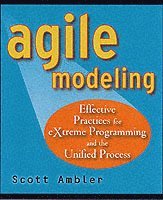
    Agile Modeling

    Effective Practices for eXtreme Programming and the Unified Process

    AvScott Ambler

    Häftad, Engelska, 2002

    401 kr

    Beställningsvara. Skickas inom 5-8 vardagar. Fri frakt över 249 kr.

    Fler format och utgåvor

    E-bok

    518 kr

    Beskrivning

    The first book to cover Agile Modeling, a new modeling technique created specifically for XP projects eXtreme Programming (XP) has created a buzz in the software development community-much like Design Patterns did several years ago. Although XP presents a methodology for faster software development, many developers find that XP does not allow for modeling time, which is critical to ensure that a project meets its proposed requirements. They have also found that standard modeling techniques that use the Unified Modeling Language (UML) often do not work with this methodology. In this innovative book, Software Development columnist Scott Ambler presents Agile Modeling (AM)-a technique that he created for modeling XP projects using pieces of the UML and Rational's Unified Process (RUP). Ambler clearly explains AM, and shows readers how to incorporate AM, UML, and RUP into their development projects with the help of numerous case studies integrated throughout the book. AM was created by the author for modeling XP projects-an element lacking in the original XP designThe XP community and its creator have embraced AM, which should give this book strong market acceptanceCompanion Web site at www.agilemodeling.com features updates, links to XP and AM resources, and ongoing case studies about agile modeling.

    Produktinformation

    • Utgivningsdatum:2002-04-12
    • Mått:192 x 235 x 23 mm
    • Vikt:692 g
    • Format:Häftad
    • Språk:Engelska
    • Antal sidor:400
    • Förlag:John Wiley & Sons Inc
    • ISBN:9780471202820

    Utforska kategorier

    • 3D-grafik och modellering inom Data och IT
    • Programmeringsböcker inom Data och IT

    Mer om författaren

    SCOTT W. AMBLER is President and a senior consultant of Ronin International (www.ronin-intl.com), a software services consulting firm that specializes in software process mentoring and object/component-based software architecture and development. Scott is the author and/or coauthor of numerous books and also coeditor, with Larry Constantine, of the Unified Process series from CMP Books. Scott is a contributing editor with Software Development magazine and a columnist with IBM developerWorks. Scott has spoken at UML World, Software Development, OOPSLA, Object Expo, Java Expo, and Application Development.

    Recensioner i media

    “…I would not hesitate in recommending this book…” (CVu, October 2004) “…easy-to-follow…enjoyable writing style…overall the book is impressive…valuable reading…” (Software Testing, Verification & Reliability, March 2003)

    Innehållsförteckning

    • Foreword xiPreface xiiiPart One Introduction to Agile Modeling 1Chapter 1 Introduction 3Enter Agile Software Development 6Agile Modeling 8The SWA Online Case Study 17A Brief Overview of this Book 18Chapter 2 Agile Modeling Values 19Communication 20Simplicity 21Feedback 22Courage 23Humility 25Beyond Motherhood and Apple Pie 26Chapter 3 Core Principles 27Software Is Your Primary Goal 28Enabling the Next Effort Is Your Secondary Goal 28Travel Light 29Assume Simplicity 29Embrace Change 30Incremental Change 31Model with a Purpose 31Multiple Models 32Quality Work 34Rapid Feedback 35Maximize Stakeholder Investment 37Why Core Principles? 37Chapter 4 Supplementary Principles 38Content Is More Important Than Representation 38Everyone Can Learn from Everyone Else 41Know Your Models 41Local Adaptation 42Open and Honest Communication 42Work with People’s Instincts 42Benefiting from These Principles 43Chapter 5 Core Practices 44Practices for Iterative and Incremental Modeling 45Practices for Effective Teamwork 52Practices That Enable Simplicity 56Practices for Validating Your Work 58Chapter 6 Supplementary Practices 60Practices to Improve Your Productivity 61Practices for Agile Documentation 64Practices Concerning Your Motivation 68Really Good Ideas 71How to Schedule AM Practices on Your Project 72Chapter 7 Order from Chaos: How the AM Practices Fit Together 73The Core Practices 73The Supplementary Practices 76How the Categories Relate to One Another 77Chaos and Order: Chaordic 79Looking Ahead 80Part Two Agile Modeling in Practice 81Chapter 8 Communication 83How Do We Communicate? 84Factors That Affect Communication 85Communication and Agile Modeling 86Effective Communication 87Chapter 9 Nurturing an Agile Culture 89Overcome the Misconceptions That Surround Modeling 89Think Small 95Loosen Up a Bit 96Rigidly Support Rights and Responsibilities 97Rethink Presentations to Project Stakeholders 98Chapter 10 Using the Simplest Tools Possible? 101Agile Modeling with Simple Tools? 102The Evolution of a Model 107Agile Modeling with CASE Tools 111Use the Media 115The Effect of Tools on Models 116Using the Simplest Tools In Practice 117Chapter 11 Agile Work Areas 118Agile Modeling Room 118Effective Work Areas 122Making This Work in the Real World 122Chapter 12 Agile Modeling Teams 124Recruit a Few Good Developers 124Recognize That There Is No “I” in Agile 128Require that Everyone Actively Participates 130Model in Teams 130Making This Work in the Real World 132Chapter 13 Agile Modeling Sessions 134Modeling Session Duration 134Types of Modeling Sessions 136Participants in Modeling Sessions 138The Formality of Modeling Sessions 140How to Make This Work in the Real World 142Chapter 14 Agile Documentation 143Why Do People Document? 144When Does a Model Become Permanent? 147Chapter 15 The UML and Beyond 168The UML Is Not Sufficient 169The UML Is Too Complex 171The UML Is Not a Methodology or Process 171Forget about Executable UML (for Now) 172Making the UMLWork in Practice 173Part Three Agile Modeling and eXtreme Programming (XP) 175Chapter 16 Setting the Record Straight 177Modeling Is a Part of XP 178Documentation Happens 179XP and the UML? 181And the Verdict Is? 183Chapter 17 Agile Modeling and eXtreme Programming 184The Potential Fit between AM and XP 185Refactoring and AM 185Test-First Development and AM 188Which AM Practices Should You Adopt? 189Chapter 18 Agile Modeling Throughout the XP Lifecycle 190Exploration Phase 191Planning Phase 192Iterations to Release Phase 194Productionizing 196Maintenance 197How Do You Make This Work? 198Chapter 19 Modeling During the XP Exploration Phase 199Initial Requirements Up Front (IRUF) 199Metaphors, Architectures, and Spikes 203Setting the Foundation for Your Project 206Chapter 20 Modeling During an XP Iteration: Searching for Items 207The Task 208Modeling the Physical Database Schema 209Observations 212Chapter 21 Modeling During an XP Iteration: Totaling an Order 214The Task 214Requirements Modeling to the Rescue 215Help from an Outside Expert 217A Quick Design Session 218Formalizing a Contract Model 220What about Changes in the Future? 220Observations 222How to Make This Work in the Real World 222Part Four Agile Modeling and the Unified Process 223Chapter 22 Agile Modeling and the Unified Process 225How Modeling Works in the Unified Process 226How Good Is the Fit? 227Choose To Be Agile 231Chapter 23 Agile Modeling throughout the Unified Process Lifecycle 232The Modeling Disciplines 232Non-Modeling Disciplines 242How Do You Make This Work? 245Chapter 24 Agile Business Modeling 246A Business/Essential Use Case Model 247A Simple Business Object Model 248An Agile Supplementary Business Specification 249A Business Vision 252How to Make This Work in Practice 253Chapter 25 Agile Requirements 254The Context Model 255Use Case Model 258Use Case Story Board 262Supplementary Specification 265How to Make This Work in Practice 267Chapter 26 Agile Analysis and Design 269Rethinking Analysis and Design Models in the UP 270Architectural Modeling 272Creating Use Case Realizations 277Time to Update Our Use Case? 281Time to Use a CASE Tool? 284Design Class Modeling 284Data Modeling 287Embracing Change 290How Does This Work in Practice? 291Chapter 27 Agile Infrastructure Management 292Infrastructure Models 293Infrastructure Modeling 294Setting Modeling Standards and Guidelines 297Core Infrastructure Teams 299Scaling AM with Core Architecture Teams 301How to Make This Work in the Real World 302Chapter 28 Adopting AM on an UP Project 304How Does This Work? 308Part Five Looking Ahead 309Chapter 29 Adopting Agile Modeling or Overcoming Adversity 311Evaluate the Fit 312Keep It Simple 315Overcome Organizational and Cultural Challenges 316Consider Alternatives to Full Adoption of AM 324How to Make This Work in Practice 324Chapter 30 Conclusion: Choose to Succeed 325Common Misconceptions Regarding Agile Modeling 325When Is(n’t) it Agile Modeling? 326Agile Modeling Resources 328A Few Parting Thoughts . . . 329Appendix A Modeling Techniques 330Glossary of Definitions and Abbreviations 358References and Suggested Reading 369Index 375

    Betyg & recensioner

    2/5