• Fri frakt över 249 kr
  • •
  • Snabba leveranser
  • •
  • Billiga böcker
Kundservice

Du är på sajten för privatpersoner.

Företag, bibliotek eller offentlig verksamhet?

Du handlar på classic.bokus.com, där alla dina funktioner finns intakta.
Till classic.bokus.com
Bokus logotyp. Gå till startsidan.
  • Erbjudanden
  • Nyheter
  • Student
  • Topplistor
  • Barn & ungdom
  • Bokus Play
  • E-böcker
  • Pocketböcker
  • Spel & pussel

10% studentrabatt med kod TERM26

Sidfot

Mina sidor

    Hjälp

    • Kundservice
    • Vanliga frågor och svar
    • Frakt och leverans
    • Retur vid ångerrätt
    • Reklamera vara
    • Betalning
    • Köpvillkor
    • Allmänna villkor
    • Information om webbplatsens tillgänglighet

    Om Bokus

    • Om oss
    • Pressrum
    • För studenter
    • För företag
    • För bibliotek och offentlig verksamhet
    • För leverantörer
    • Hållbarhet

    Populärt

    • Aktuella erbjudanden
    • Presentkort
    • Studentlitteratur
    • Nya böcker
    • Topplistor
    • Signerade böcker
    • Engelska böcker

    Inspiration

    • Boktips
    • BookTok
    • Populära bokserier
    • Barnbokskaraktärer
    • Populära författare
    Logotyp för Bokus
    Följ oss på Facebook (extern länk)Följ oss på Instagram (extern länk)Följ oss på YouTube (extern länk)Följ oss på TikTok (extern länk)
    bokus @ CookiesAnpassa cookiesIntegritetspolicyKöpvillkor
    Till Citymail hemsida (extern länk)Till Budbee hemsida (extern länk)Till Postnord hemsida (extern länk)Till Schenker hemsida (extern länk)Till Early Bird hemsida (extern länk)Till Walleys hemsida (extern länk)
    1. Naturvetenskap och teknik
    2. Matematik och naturvetenskap
    3. Kemi
    4. Organisk kemi

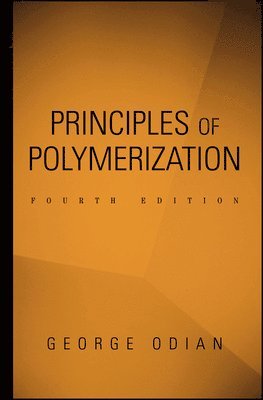
    Principles of Polymerization

    AvGeorge Odian

    Inbunden, Engelska, 2004

    1 841 kr

    Beställningsvara. Skickas inom 5-8 vardagar. Fri frakt över 249 kr.

    Fler format och utgåvor

    E-bok

    2 114 kr

    Inbunden

    Kommande

    Beskrivning

    The new edition of a classic text and referenceThe large chains of molecules known as polymers are currently used in everything from "wash and wear" clothing to rubber tires to protective enamels and paints. Yet the practical applications of polymers are only increasing; innovations in polymer chemistry constantly bring both improved and entirely new uses for polymers onto the technological playing field.Principles of Polymerization, Fourth Edition presents the classic text on polymer synthesis, fully updated to reflect today's state of the art. New and expanded coverage in the Fourth Edition includes: Metallocene and post-metallocene polymerization catalystsLiving polymerizations (radical, cationic, anionic)Dendrimer, hyperbranched, brush, and other polymer architectures and assembliesGraft and block copolymersHigh-temperature polymersInorganic and organometallic polymersConducting polymersRing-opening polymerizationIn vivo and in vitro polymerizationAppropriate for both novice and advanced students as well as professionals, this comprehensive yet accessible resource enables the reader to achieve an advanced, up-to-date understanding of polymer synthesis. Different methods of polymerization, reaction parameters for synthesis, molecular weight, branching and crosslinking, and the chemical and physical structure of polymers all receive ample coverage. A thorough discussion at the elementary level prefaces each topic, with a more advanced treatment following. Yet the language throughout remains straightforward and geared towards the student.Extensively updated, Principles of Polymerization, Fourth Edition provides an excellent textbook for today's students of polymer chemistry, chemical engineering, and materials science, as well as a current reference for the researcher or other practitioner working in these areas.

    Produktinformation

    • Utgivningsdatum:2004-03-05
    • Mått:165 x 244 x 45 mm
    • Vikt:1 306 g
    • Format:Inbunden
    • Språk:Engelska
    • Antal sidor:848
    • Upplaga:4
    • Förlag:John Wiley & Sons Inc
    • ISBN:9780471274001

    Utforska kategorier

    • Organisk kemi inom Naturvetenskap och teknik

    Mer om författaren

    GEORGE ODIAN received his PhD from Columbia University. He is currently Emeritus Professor of Chemistry at the College of Staten Island of the City University of New York. He has previously served as professor of chemistry and chairman, Division of Pure and Applied Sciences at Richmond College of CUNY, assistant professor at Columbia University, research director of RAI Research Company, and research chemist at Thiokol Chemical Company. He has written over sixty research publications and authored both taped and short courses for the American Chemical Society. He is also the coauthor of four books in general, organic, and biochemistry.

    Recensioner i media

    "…this book would be useful…as a reference tool…" (IEEE Electrical Insulation Magazine, March/April 2006) "Chemists, chemical engineers, and material scientists who want to know more about the chemistry and structural control of polymers would find extensive information in this book…" (MRS Bulletin, February 2006)“…the most comprehensive treatment of this topic that I have encountered … an essential component of the book collection of any research group involved in polymer synthesis.” (Advanced Materials, 2005; Vol., 17; 16)“…an excellent textbook for today’s students of polymer chemistry, chemical engineering and materials science, as well as a current reference for the researcher….” (Apollit, 2005)"This is the fourth edition of what has not only become a classic textbook but is most useful as a reference book...the author...writes clear and precise sentences and makes what can be a dry subject interesting to read.” (E-STREAMS, October 2004)"...an admirable text for teaching...and also serves as a valuable reference...a real investment and an important desk reference for polymer synthesis chemists." (Polymer News)

    Innehållsförteckning

    • Preface xxiii1 Introduction 11-1 Types of Polymers and Polymerizations 11-2 Nomenclature of Polymers 91-3 Linear, Branched, and Crosslinked Polymers 171-4 Molecular Weight 191-5 Physical State 241-6 Applications of Polymers 322 Step Polymerization 392-1 Reactivity of Functional Groups 402-2 Kinetics of Step Polymerization 442-3 Accessibility of Functional Groups 632-4 Equilibrium Considerations 652-5 Cyclization versus Linear Polymerization 692-6 Molecular Weight Control in Linear Polymerization 742-7 Molecular Weight Distribution in Linear Polymerization 802-8 Process Conditions 872-9 Multichain Polymerization 1012-10 Crosslinking 1032-11 Molecular Weight Distributions in Nonlinear Polymerizations 1142-12 Crosslinking Technology 1172-13 Step Copolymerization 1352-14 High-Performance Polymers 1442-15 Inorganic and Organometallic Polymers 1682-16 Dendritic (Highly Branched) Polymers 1742-17 Miscellaneous Topics 1803 Radical Chain Polymerization 1983-1 Nature of Radical Chain Polymerization 1993-2 Structural Arrangement of Monomer Units 2023-3 Rate of Radical Chain Polymerization 2043-4 Initiation 2093-5 Molecular Weight 2363-6 Chain Transfer 2383-7 Inhibition and Retardation 2553-8 Determination of Absolute Rate Constants 2643-9 Energetic Characteristics 2713-10 Autoacceleration 2823-11 Molecular Weight Distribution 2893-12 Effect of Pressure 2923-13 Process Conditions 2963-14 Specific Commercial Polymers 3003-15 Living Radical Polymerization 3133-16 Other Polymerizations 3304 Emulsion Polymerization 3504-1 Description of Process 3504-2 Quantitative Aspects 3564-3 Other Characteristics of Emulsion Polymerization 3635 Ionic Chain Polymerization 3725-1 Comparison of Radical and Ionic Polymerizations 3725-2 Cationic Polymerization of the Carbon–Carbon Double Bond 3745-3 Anionic Polymerization of the Carbon–Carbon Double Bond 4125-4 Block and Other Polymer Architectures 4365-5 Distinguishing Between Radical, Cationic, and Anionic Polymerizations 4435-6 Carbonyl Polymerization 4445-7 Miscellaneous Polymerizations 4496 Chain Copolymerization 4646-1 General Considerations 4656-2 Copolymer Composition 4666-3 Radical Copolymerization 4876-4 Ionic Copolymerization 5066-5 Deviations from Terminal Copolymerization Model 5126-6 Copolymerizations Involving Dienes 5216-7 Other Copolymerizations 5286-8 Applications of Copolymerization 5297 Ring-Opening Polymerization 5447-1 General Characteristics 5457-2 Cyclic Ethers 5487-3 Lactams 5697-4 N-Carboxy-a-Amino Acid Anhydrides 5787-5 Lactones 5817-6 Nitrogen Heterocyclics 5867-7 Sulfur Heterocyclics 5887-8 Cycloalkenes 5897-9 Miscellaneous Oxygen Heterocyclics 5927-10 Other Ring-Opening Polymerizations 5947-11 Inorganic and Partially Inorganic Polymers 5957-12 Copolymerization 6008 Stereochemistry of Polymerization 6198-1 Types of Stereoisomerism in Polymers 6208-2 Properties of Stereoregular Polymers 6338-3 Forces of Stereoregulation in Alkene Polymerizations 6378-4 Traditional Ziegler–Natta Polymerization of Nonpolar Alkene Monomers 6448-5 Metallocene Polymerization of Nonpolar Alkene Monomers 6658-6 Other Hydrocarbon Monomers 6828-7 Copolymerization 6848-8 Postmetallocene: Chelate Initiators 6858-9 Living Polymerization 6898-10 Polymerization of 1,3-Dienes 6898-11 Commerical Applications 6958-12 Polymerization of Polar Vinyl Monomers 6998-13 Aldehydes 7038-14 Optical Activity in Polymers 7048-15 Ring-Opening Polymerization 7078-16 Statistical Models of Propagation 7089 Reactions of Polymers 7299-1 Principles of Polymer Reactivity 7299-2 Crosslinking 7379-3 Reactions of Cellulose 7459-4 Reactions of Poly(vinyl acetate) 7489-5 Halogenation 7489-6 Aromatic Substitution 7509-7 Cyclization 7519-8 Other Reactions 7529-9 Graft Copolymers 7529-10 Block Copolymers 7599-11 Polymers as Carriers or Supports 7609-12 Polymer Reagents 7659-13 Polymer Catalysts 7689-14 Polymer Substrates 771References 777Index 789