• Fri frakt över 249 kr
  • •
  • Snabba leveranser
  • •
  • Billiga böcker
Kundservice

Du är på sajten för privatpersoner.

Företag, bibliotek eller offentlig verksamhet?

Du handlar på classic.bokus.com, där alla dina funktioner finns intakta.
Till classic.bokus.com
Bokus logotyp. Gå till startsidan.
  • Erbjudanden
  • Nyheter
  • Student
  • Topplistor
  • Barn & ungdom
  • Bokus Play
  • E-böcker
  • Pocketböcker
  • Spel & pussel

10% rabatt på allt med kod: NYSTART10 →

Sidfot

Mina sidor

    Hjälp

    • Kundservice
    • Vanliga frågor och svar
    • Frakt och leverans
    • Retur vid ångerrätt
    • Reklamera vara
    • Betalning
    • Köpvillkor
    • Allmänna villkor
    • Information om webbplatsens tillgänglighet

    Om Bokus

    • Om oss
    • Pressrum
    • För studenter
    • För företag
    • För bibliotek och offentlig verksamhet
    • För leverantörer
    • Hållbarhet

    Populärt

    • Aktuella erbjudanden
    • Presentkort
    • Studentlitteratur
    • Nya böcker
    • Topplistor
    • Signerade böcker
    • Engelska böcker

    Inspiration

    • Boktips
    • BookTok
    • Populära bokserier
    • Barnbokskaraktärer
    • Populära författare
    Logotyp för Bokus
    Följ oss på Facebook (extern länk)Följ oss på Instagram (extern länk)Följ oss på YouTube (extern länk)Följ oss på TikTok (extern länk)
    bokus @ CookiesAnpassa cookiesIntegritetspolicyKöpvillkor
    Till Citymail hemsida (extern länk)Till Budbee hemsida (extern länk)Till Postnord hemsida (extern länk)Till Schenker hemsida (extern länk)Till Early Bird hemsida (extern länk)Till Walleys hemsida (extern länk)
    1. Naturvetenskap och teknik
    2. Teknik och industri
    3. Elektronik och kommunikationer

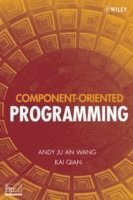
    Component-Oriented Programming

    AvAndy Ju An Wang,Kai Qian

    Inbunden, Engelska, 2005

    1 640 kr

    Beställningsvara. Skickas inom 5-8 vardagar. Fri frakt över 249 kr.

    Beskrivning

    Component Oriented Programming offers a unique programming-centered approach to component-based software development that delivers the well-developed training and practices you need to successfully apply this cost-effective method. Following an overview of basic theories and methodologies, the authors provide a unified component infrastructure for building component software using JavaBeans, EJB, OSGi, CORBA, CCM, .NET, and Web services. You'll learn how to develop reusable software components; build a software system of pre-built software components; design and implement a component-based software system using various component-based approaches. Clear organization and self-testing features make Component Oriented Programming an ideal textbook for graduate and undergraduate courses in computer science, software engineering, or information technology as well as a valuable reference for industry professionals.

    Produktinformation

    • Utgivningsdatum:2005-05-03
    • Mått:184 x 260 x 22 mm
    • Vikt:794 g
    • Format:Inbunden
    • Språk:Engelska
    • Antal sidor:336
    • Förlag:John Wiley & Sons Inc
    • ISBN:9780471644460

    Utforska kategorier

    • Elektronik och kommunikationer inom Naturvetenskap och teknik
    • Programmeringsböcker inom Data och IT
    • Systemvetenskap och AI inom Data och IT

    Mer om författaren

    ANDY JU AN WANG, PHD, is Associate Professor of Software Engineering at the School of Computing and Software Engineering, Southern Polytechnic State University. In addition to teaching graduate courses in component-based software development, Dr. Wang has published more than thirty technical papers and has given presentations at a number of national and international conferences and universities. KAI QIAN, PHD, is Professor and Department Chair of Software Engineering at the School of Computing and Software Engineering, Southern Polytechnic State University. He has taught component-based software development courses and has completed a number of research projects in component-based software engineering. Dr. Qian has also published extensively in various professional journals and international conference proceedings.

    Recensioner i media

    "…a hands-on, experimental approach to component-oriented programming." (Computing Reviews.com, February 27, 2006)

    Innehållsförteckning

    • Preface. 1. Introduction.1.1 What is COP?1.2 Why is COP important?1.3 What is a component?1.4 Hardware components and software components.1.5 From OOP to COP.1.6 Component-based software engineering.1.7 Summary.1.8 Self-review questions.1.9 Exercises.2. A Theory of Components.2.1 Principles of COP.2.2 Infrastructures of COP.2.3 Component models.2.4 Connection models.2.5 Deployment models.2.6 Unifying component technologies.2.7 Summary.2.8 Self-review questions.2.9 Exercises.3. COP with JavaBeans.3.1 Overview of JavaBeans technology.3.2 The component model of JavaBeans.3.3 The connection model of JavaBeans.3.4 The deployment model of JavaBeans.3.5 Examples and lab practice.3.6 Summary.3.7 Self-review questions.3.8 Exercises.4. Enterprise JavaBeans Components.4.1 The EJB a rchitecture.4.2 The component model of EJB.4.3 The connection model of EJB.4.4 The deployment model of EJB.4.5 Examples and lab practice.4.6 Summary.4.7 Self-review questions.4.8 Exercises.4.9 Programming exercises.5. CORBA Components.5.1 The COBRA component infrastructure.5.2 The CORBA component model (CCM).5.3 The connection model of CORBA and CCM.5.4 The deployment model of CORBA and CCM.5.5 Examples and lab practice.5.6 Summary.5.7 Self-review questions.5.8 Exercises.5.9 Programming exercises.6. .NET Components.6.1 The .NET framework.6.2 The component model of .NET.6.3 The connection model of .NET.6.4 .NET component deployments.6.5 Visual Studio .NET.6.6 Examples and lab practice.6.7 Summary.6.8 Self-review questions.6.9 Exercises.6.10 Programming exercises.7. COP with OSGi Components.7.1 Overview of OSGi technology.7.2 The component model of OSGi.7.3 The connection model of OSGi.7.4 The deployment model of OSGi.7.5 Examples and lab practice.7.6 Summary.7.7 Self-review questions.7.8 Exercises.8. Web Services Components.8.1 The Web Services framework.8.2 The component model of Web Services.8.3 The connection model of Web Services.8.4 Web Services component deployment.8.5 Examples and lab practice.8.6 Summary.8.7 Self-review questions.8.8 Exercises.8.9 Programming exercises.Appendix.