• Fri frakt över 249 kr
  • •
  • Snabba leveranser
  • •
  • Billiga böcker
Kundservice

Du är på sajten för privatpersoner.

Företag, bibliotek eller offentlig verksamhet?

Du handlar på classic.bokus.com, där alla dina funktioner finns intakta.
Till classic.bokus.com
Bokus logotyp. Gå till startsidan.
  • Erbjudanden
  • Nyheter
  • Student
  • Topplistor
  • Barn & ungdom
  • Bokus Play
  • E-böcker
  • Pocketböcker
  • Spel & pussel

10% rabatt på allt med kod NYSTART10 →

Sidfot

Mina sidor

    Hjälp

    • Kundservice
    • Vanliga frågor och svar
    • Frakt och leverans
    • Retur vid ångerrätt
    • Reklamera vara
    • Betalning
    • Köpvillkor
    • Allmänna villkor
    • Information om webbplatsens tillgänglighet

    Om Bokus

    • Om oss
    • Pressrum
    • För studenter
    • För företag
    • För bibliotek och offentlig verksamhet
    • För leverantörer
    • Hållbarhet

    Populärt

    • Aktuella erbjudanden
    • Presentkort
    • Studentlitteratur
    • Nya böcker
    • Topplistor
    • Signerade böcker
    • Engelska böcker

    Inspiration

    • Boktips
    • BookTok
    • Populära bokserier
    • Barnbokskaraktärer
    • Populära författare
    Logotyp för Bokus
    Följ oss på Facebook (extern länk)Följ oss på Instagram (extern länk)Följ oss på YouTube (extern länk)Följ oss på TikTok (extern länk)
    bokus @ CookiesAnpassa cookiesIntegritetspolicyKöpvillkor
    Till Citymail hemsida (extern länk)Till Budbee hemsida (extern länk)Till Postnord hemsida (extern länk)Till Schenker hemsida (extern länk)Till Early Bird hemsida (extern länk)Till Walleys hemsida (extern länk)
    1. Naturvetenskap och teknik
    2. Teknik och industri
    3. Elektronik och kommunikationer

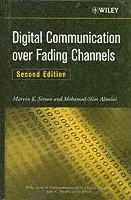
    Digital Communication over Fading Channels

    AvMarvin K. Simon,Mohamed-Slim Alouini

    Inbunden, Engelska, 2005

    Del 86 i serien Wiley Series in Telecommunications and Signal Processing

    3 160 kr

    Beställningsvara. Skickas inom 5-8 vardagar. Fri frakt över 249 kr.

    Beskrivning

    The four short years since Digital Communication over Fading Channels became an instant classic have seen a virtual explosion of significant new work on the subject, both by the authors and by numerous researchers around the world. Foremost among these is a great deal of progress in the area of transmit diversity and space-time coding and the associated multiple input–multiple output (MIMO) channel. This new edition gathers these and other results, previously scattered throughout numerous publications, into a single convenient and informative volume.Like its predecessor, this Second Edition discusses in detail coherent and noncoherent communication systems as well as a large variety of fading channel models typical of communication links found in the real world. Coverage includes single- and multichannel reception and, in the case of the latter, a large variety of diversity types. The moment generating function (MGF)–based approach for performance analysis, introduced by the authors in the first edition and referred to in literally hundreds of publications, still represents the backbone of the book's presentation. Important features of this new edition include: An all-new, comprehensive chapter on transmit diversity, space-time coding, and the MIMO channel, focusing on performance evaluationCoverage of new and improved diversity schemesPerformance analyses of previously known schemes in new and different fading scenariosA new chapter on the outage probability of cellular mobile radio systemsA new chapter on the capacity of fading channelsAnd much moreDigital Communication over Fading Channels, Second Edition is an indispensable resource for graduate students, researchers investigating these systems, and practicing engineers responsible for evaluating their performance.

    Produktinformation

    • Utgivningsdatum:2005-01-07
    • Mått:158 x 245 x 49 mm
    • Vikt:1 418 g
    • Format:Inbunden
    • Språk:Engelska
    • Serie:Wiley Series in Telecommunications and Signal Processing
    • Antal sidor:944
    • Upplaga:2
    • Förlag:John Wiley & Sons Inc
    • ISBN:9780471649533

    Utforska kategorier

    • Elektronik och kommunikationer inom Naturvetenskap och teknik

    Mer om författaren

    MARVIN K. SIMON, PhD, is Principal Scientist at the Jet Propulsion Laboratory, California Institute of Technology, Pasadena.MOHAMED-SLIM ALOUINI, PhD, is Associate Professor in the Department of Electrical and Computer Engineering of the University of Minnesota, Minneapolis.

    Innehållsförteckning

    • Preface xxvNomenclature xxxiPart 1 FundamentalsChapter 1 Introduction 31.1 System Performance Measures 41.2 Conclusions 14Chapter 2 Fading Channel Characterization and Modeling 172.1 Main Characteristics of Fading Channels 172.2 Modeling of Flat-Fading Channels 192.3 Modeling of Frequency-Selective Fading Channels 37Chapter 3 Types of Communication 453.1 Ideal Coherent Detection 453.2 Nonideal Coherent Detection 623.3 Noncoherent Detection 663.4 Partially Coherent Detection 68Part 2 Mathematical ToolsChapter 4 Alternative Representations of Classical Functions 834.1 Gaussian Q-Function 844.2 Marcum Q-Function 934.3 The Nuttall Q-Function 1134.4 Other Functions 117Chapter 5 Useful Expressions for Evaluating Average Error Probability Performance 1235.1 Integrals Involving the Gaussian Q-Function 1235.2 Integrals Involving the Marcum Q-Function 1315.3 Integrals Involving the Incomplete Gamma Function 1375.4 Integrals Involving Other Functions 141Chapter 6 New Representations of Some Probability Density and Cumulative Distribution Functions for Correlative Fading Applications 1696.1 Bivariate Rayleigh PDF and CDF 1706.2 PDF and CDF for Maximum of Two Rayleigh Random Variables 1756.3 PDF and CDF for Maximum of Two Nakagami-m Random Variables 1776.4 PDF and CDF for Maximum and Minimum of Two Log-Normal Random Variables 180Part 3 Optimum Reception and Performance EvaluationChapter 7 Optimum Receivers for Fading Channels 1897.1 The Case of Known Amplitudes, Phases, and Delays—Coherent Detection 1917.2 The Case of Known Phases and Delays but Unknown Amplitudes 1957.3 The Case of Known Amplitudes and Delays but Unknown Phases 1987.4 The Case of Known Delays but Unknown Amplitudes and Phases 1997.5 The Case of Unknown Amplitudes, Phases, and Delays 219Chapter 8 Performance of Single-Channel Receivers 2238.1 Performance Over the AWGN Channel 2238.2 Performance Over Fading Channels 252Chapter 9 Performance of Multichannel Receivers 3119.1 Diversity Combining 3129.2 Maximal-Ratio Combining (MRC) 3169.3 Coherent Equal Gain Combining 3319.4 Noncoherent and Differentially Coherent Equal Gain Combining 3429.5 Optimum Diversity Combining of Noncoherent Fsk 3759.6 Outage Probability Performance 3799.7 Impact of Fading Correlation 3899.8 Selection Combining 4049.9 Switched Diversity 4179.10 Performance in the Presence of Outdated or Imperfect Channel Estimates 4569.11 Combining in Diversity-Rich Environments 4669.12 Post-detection Combining 5379.13 Performance of Dual-Branch Diversity Combining Schemes over Log-Normal Channels 5669.14 Average Outage Duration 5849.15 Multiple-Input/Multiple-Output (MIMO) Antenna Diversity Systems 594Part 4 Multiuser Communication SystemsChapter 10 Outage Performance of Multiuser Communication Systems 63910.1 Outage Probability in Interference-Limited Systems 64010.2 Outage Probability with a Minimum Desired Signal Power Constraint 64810.3 Outage Probability with Dual-Branch SC and SSC Diversity 65910.4 Outage Rate and Average Outage Duration of Multiuser Communication Systems 667Chapter 11 Optimum Combining—a Diversity Technique for Communication over Fading Channels in the Presence of Interference 68111.1 Performance of Diversity Combining Receivers 68211.2 Optimum Combining with Multiple Transmit and Receive Antennas 721Chapter 12 Direct-Sequence Code-Division Multiple Access (ds-cdma) 73512.1 Single-Carrier DS-CDMA Systems 73612.2 Multicarrier DS-CDMA Systems 741Part 5 Coded Communication SystemsChapter 13 Coded Communication over Fading Channels 75913.1 Coherent Detection 76113.2 Differentially Coherent Detection 78113.3 Numerical Results—Comparison between the True Upper Bounds and Union–Chernoff Bounds 787Chapter 14 Multichannel Transmission—Transmit Diversity and Space-Time Coding 79714.1 A Historical Perspective 79914.2 Transmit versus Receive Diversity—Basic Concepts 80014.3 Alamouti's Diversity Technique—a Simple Transmit Diversity Scheme Using Two Transmit Antennas 80314.4 Generalization of Alamouti's Diversity Technique to Orthogonal Space-Time Block Code Designs 80914.5 Alamouti's Diversity Technique Combined with Multidimensional Trellis-Coded Modulation 81214.6 Space-Time Trellis-Coded Modulation 81814.7 Other Combinations of Space-Time Block Codes and Space-Time Trellis Codes 83314.8 Disclaimer 858Chapter 15 Capacity of Fading Channels 86315.1 Channel and System Model 86315.2 Optimum Simultaneous Power and Rate Adaptation 86515.3 Optimum Rate Adaptation with Constant Transmit Power 86715.4 Channel Inversion with Fixed Rate 86915.5 Numerical Examples 87115.6 Capacity of MIMO Fading Channels 876References 877Index 883