• Fri frakt över 249 kr
  • •
  • Snabba leveranser
  • •
  • Billiga böcker
Kundservice

Du är på sajten för privatpersoner.

Företag, bibliotek eller offentlig verksamhet?

Du handlar på classic.bokus.com, där alla dina funktioner finns intakta.
Till classic.bokus.com
Bokus logotyp. Gå till startsidan.
  • Erbjudanden
  • Student
  • Topplistor
  • Barn & ungdom
  • Bokus Play
  • E-böcker
  • Ljudböcker
  • Pocketböcker
  • Spel och pussel

5% studentrabatt – använd koden KURSBOK27 →

Sidfot

Mina sidor

    Hjälp

    • Kundservice
    • Vanliga frågor och svar
    • Frakt och leverans
    • Retur vid ångerrätt
    • Reklamera vara
    • Betalning
    • Köpvillkor
    • Allmänna villkor
    • Information om webbplatsens tillgänglighet

    Om Bokus

    • Om oss
    • Pressrum
    • För studenter
    • För företag
    • För bibliotek och offentlig verksamhet
    • För leverantörer
    • Hållbarhet

    Populärt

    • Aktuella erbjudanden
    • Presentkort
    • Studentlitteratur
    • Nya böcker
    • Topplistor
    • Signerade böcker
    • Engelska böcker

    Inspiration

    • Boktips
    • BookTok
    • Barnbokskaraktärer
    • Populära författare
    Logotyp för Bokus
    Följ oss på Facebook (extern länk)Följ oss på Instagram (extern länk)Följ oss på YouTube (extern länk)Följ oss på TikTok (extern länk)
    bokus @ CookiesAnpassa cookiesIntegritetspolicyKöpvillkor
    Till Citymail hemsida (extern länk)Till Budbee hemsida (extern länk)Till Postnord hemsida (extern länk)Till Schenker hemsida (extern länk)Till Early Bird hemsida (extern länk)Till Walleys hemsida (extern länk)
    1. Ekonomi och Ledarskap
    2. Företagsekonomi

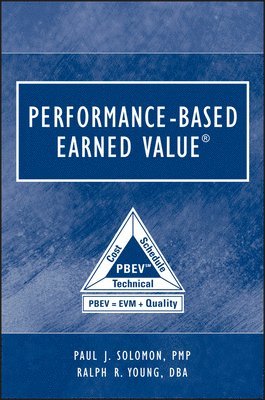
    Performance-Based Earned Value

    AvPaul Solomon,Ralph Young

    Häftad, Engelska, 2007

    Del 64 i serien Practitioners

    1 117 kr

    Beställningsvara. Skickas inom 5-8 vardagar. Fri frakt över 249 kr.

    Beskrivning

    A complete toolkit for implementation of Earned Value Management Performance-Based Earned Value uniquely shows project managers how to effectively integrate technical, schedule, and cost objectives by improving earned value management (EVM) practices. Providing innovative guidelines, methods, examples, and templates consistent with capability models and standards, this book approaches EVM from a practical level with understandable techniques that are applicable to the management of any project.Clear and unambiguous instructions explain how to incorporate EVM with key systems engineering, software engineering, and project management processes such as establishing the technical or quality baseline, requirements management, using product metrics, and meeting success criteria for technical reviews. Detailed information is included on linking product requirements, project work products, the project plan, and the Performance Measurement Baseline (PMB), as well as correlating technical performance measures (TPM) with EVM. With straightforward instructions on how to use EVM on a simple project, such as building a house, and on complex projects, such as high-risk IT and engineering development projects, it is the only book that includes excerpts from the PMI®'s Project Management Body of Knowledge (PMBOK®), CMMI, the EVM System standard, systems engineering standards, federal acquisition regulations, and Department of Defense guides.Performance-Based Earned Value allows both novices and experienced project managers, including project manager of suppliers and customers in the commercial and government sectors; software and systems engineering process improvement leaders; CMMI appraisers; PMI members; and IEEE Computer Society members to: Incorporate product requirements and planned quality into the PMBConduct an Integrated Baseline ReviewAnalyze performance reportsPerform independent assessments and predictive analysisEnsure that key TPMs are selected, monitored, and reportedIdentify the right success criteria for technical reviewsDevelop techniques for monitoring and controlling supplier performanceIntegrate risk management with EVMComply with government acquisition policies and regulationsWritten by Paul Solomon and Ralph Young, internationally recognized industry experts, Performance-Based Earned Value is constructed from guidance in standards and capability models for EVM, systems engineering, software engineering, and project management. It is the complete guide to EVM, invaluable in helping students prepare for the PMI®-PMP® exam with practical examples and templates to facilitate understanding, and in guiding project professionals in the private and public sectors to use EVM on complex projects.(PMI, PMBOK, PMP, and Project Management Professional are registered marks of the Project Management Institute, Inc.)

    Produktinformation

    • Utgivningsdatum:2007-01-05
    • Mått:158 x 234 x 18 mm
    • Vikt:467 g
    • Format:Häftad
    • Språk:Engelska
    • Serie:Practitioners
    • Antal sidor:320
    • Förlag:John Wiley & Sons Inc
    • ISBN:9780471721888

    Utforska kategorier

    • Företagsekonomi inom Ekonomi och Ledarskap
    • Ledarskapsböcker inom Ekonomi och Ledarskap

    Mer om författaren

    PAUL J. SOLOMON, PMP, is an internationally known consultant and author on Earned Value Management (EVM), and founder of his firm, Performance-Based Earned Value®. Mr. Solomon led the use of EVM on programs at Northrop Grumman Corporation, including the B-2 Stealth Bomber and the F-35 Joint Strike Fighter. He is a coauthor of EVM standards, including the national standard, ANSI/EIA-748 (for which he received the U.S. Department of Defense David Packard Excellence in Acquisition Award) and the PMI Practice Standard for EVM. He was a visiting scientist at the Software Engineering Institute (SEI) and wrote an SEI report on CMMI® and EVM. Mr. Solomon frequently speaks at industry and government conferences and is a tutor concerning EVM, systems engineering, and software engineering in the U.S. and India.RALPH R. YOUNG, DBA, is Director of Engineering Process Improvement, Systems and Process Engineering, Defense Group at Northrop Grumman Information Technology. Dr. Young helped lead his former business unit (Litton PRC) to CMM Level 5 and his current business unit to CMMI® Level 5. Northrop Grumman Corporation's Defense Group was the first organization in the world to be evaluated a second time at CMMI® Level 5. Dr. Young supports continuous improvement for both internal and external projects, to make process improvements, implement effective requirements practices, and develop innovations to facilitate project management.

    Innehållsförteckning

    • Table of Contents vForeword xvPreface xviiAcknowledgments xix1 Overview of PBEV 1Introduction 1What is PBEV? 1PBEV Characteristics 2Reputation of Earned Value Management 3Lessons Learned 3Inadequate Early Warning 4Poor Implementation of EVMS 4Reliable, Valid Information 4Product Requirements and Quality 4Processes 5Measures 5Snapshot of EVM 5EVMS History and Limitations 6EVMS History 6EVMS Limitations 6Customer Expectations for Performance-Based Management Systems 8U.S. Federal Policy 8U.S. Department of Defense Policies 8Integrating Systems Engineering with Earned Value Management 9National Defense Industrial Association 9Standards and Capability Models 10Customer Demand for Excellent Processes 11CMMI as a Framework for Process Improvement 11Customer Needs for Reduced Cycle Time and Evolutionary Acquisition 11Increasing Utilization of EVM 12PBEV and Agile Methods 13Enterprise Demand for Cost-Effective Processes 13Evolution of PBEV 13Comparison of PBEV with EVMS 15PBEV Process Flow 16About this Book 16Summary 18References 182 Principles and Guidelines of PBEV 21Introduction 21EVMS Guidelines 21PBEV Principles and Guidelines 21PBEV Principles 21PBEV Guidelines 22First Principle 22Product Scope 22Product Requirements 22Development of Product Requirements 26Guideline 1.1 26Guideline 1.2 26Guideline 1.3 27Second Principle 27Performance 28Base Measure 28Guideline 2.1 29Guideline 2.2 30Guideline 2.3 31Guideline 2.4 32Guideline 2.5 33Guideline 2.6 33Guideline 2.7 33Guideline 2.8 34Guideline 2.9 34Third Principle 35Guideline 3.1 36Guideline 3.2 36Fourth Principle 37Guideline 4.1 37Guideline 4.2 37Summary 38References 383 Product Requirements Baseline 39Introduction 39What are the Requirements Baseline and the Technical Baseline? 40What are Allocated Requirements? 41High-level Requirements to Lower-Level Requirements 41Engineering Approach 42Performance Requirements 45Early Validation 46Requirements Validation Process 47Requirements Traceability 49A Case Study 52Conversion of Customer Needs, Problems, and Requirements to Product Requirements 54Allocation of Product Requirements to ProductComponent Requirements 55Development of the Product ComponentRequirements 56Defining the Technical Performance Measures 63Summary 65References 664 Maintain Bidirectional Traceability 69Introduction 69Project Plans and the Performance Measurement Baseline 69Integration of Product Scope and Project Scope 70Work Products 70System Definition Stage 72EIA 632 Engineering Life Cycle Phase Work Products 72Design Stage 72Work Products and Work Packages 72Synthesis 75Design Verification 76Test Stage 77Summary 77References 785 Progress Toward Meeting Product Requirements 79Introduction 79Guideline 2.1 80When Product Requirements are Not Measurable 82What If Measurement is Not Needed? 82Guideline 2.2 83Work Products 83SE Process Work Products 83Measures of Progress 84Guideline 2.3 85Guideline 2.4 86Success Criteria 86Summary 87References 876 Establish Planned Values and Allocate Budget 89Introduction 89Guidelines 2.5 and 2.6 90Trade Studies 90Allocated Requirements 90Allocated Requirements with Rework Examples 91Technical Performance Measurement 92TPM Flowdown Procedure 93Evidence of Achieving Planned TPM Values 95Planning for Rework 95Summary 957 Variance Analysis 97Introduction 97Variance Analysis 98Scenarios 98Scenario 1: TPM Schedule Variance 99Scenario 2: Software Behind Schedule in Meeting Requirements 100Scenario 3: Systems Engineering Behind Schedule in Requirements Management 101Scenario 4: Trade Study Behind Schedule 102Variance from Critical-To-Quality Parameters 102Summary 103References 1038 Level of Effort 105Introduction 105Guideline 2.8 105Measurable But Not Practical to Measure 105Exception to Guideline 2.8: Planned Process Improvements 106Arbitrary Limits to LOE 107Guideline 2.9 107Commingling LOE with Discrete Work Packages 107Solution: Quarantine LOE Performance 109Summary 109References 1099 Integrate Risk Management with EVM 111Introduction 111Guideline 3.1 112Guideline 3.2 113Summary 11410 Changes to the Performance Measurement Baseline 115Introduction 115Causes of Change to Product Requirements 116Quality Factors 116Example 10.1: Trade-off of Product Requirements, Project X 117Example 10.2: House Project Revised Product Requirement 118Summary 119References 11911 Agile Methods 121Introduction 121Business Environment 121Agile Methods 122Guidance for Tailoring Contract Performance Reports 123Tailoring the Implementation of EVM 124Tailor by WBS Element 124Tailor by Project Phase 124Extreme Tailoring of EVM 124Summary 125References 12512 Requirements and Earned Value 127Introduction 127Requirements Status 127Early Validation 128Ways to Accomplish Validation 128Select a Verification Method for Each Requirement 129Trace the Requirements to the Verification Document 130Revised/Recommended Requirements Statuses 130Discrete Measurement of Requirements Management and Tracing 130Use the RTM to Develop the Plan 131How to Measure Progress 132How to Determine EV 132RTM Example 132Total Requirements Management EV 134Reasonableness Check 135Summary 135References 13513 Using PBEV to Manage Software-Intensive Development 137Introduction 137Characteristics of Software Project Management 137Functionality and Requirements 138Functional Requirements 138Grouping and Traceability of Requirements 139Recommended Base Measures by Phase 140Software Requirements and Analysis Phase 140Code and Unit Test Phase 141Test Phase 141Software Rework 142Deferred Functionality: Deviation from Plan 145Technical Performance Measurement 148Capacity and Response Time Requirements Issues 148Capacity or Performance Requirements 149COTS Considerations 150Summary 151References 15114 Supplier Acquisition Management 153Introduction 153Contractual Considerations 153Industry Standards 154Contractual Technical and Management Deliverables 155Integrated Baseline Review 155Monitor Supplier’s Adherence with Periodic Reviews 156Utilize and Analyze Supplier’s Performance Reports 157CMMI Acquisition Module 158Project Monitoring and Control 159Solicitation and Contract Monitoring 159Requirements Management 159Summary 160References 16015 Moving Forward 161Introduction 161Why Implement Process Improvement? 161Setting the Stage for Success 162How to Implement a Process Improvement Program 162Policies for Integrating Systems Engineering and Risk Management 163Example 15.1: Integrate Organizational Processes with Systems Engineering Standards 164Excerpt from NGIS Procedure: Systems Engineering 164Example 15.2: Integrate Risk Management with Earned Value Management 164Excerpt from NGIS Procedure: Manage Risk 164Implementation of PBEV 164Summary 165References 166Appendices: 167A. Fundamentals of Earned Value Management 167Introduction 167Why use EVM? 168EVM principles 168Planning and control processes 169Product scope and quality 170Work Breakdown Structure 170Organizational Breakdown Structure 171Control Accounts and Control Account Managers 171Work packages and planning packages 171Base measures 172Performance Measurement Baseline (PMB) 172House Project 173Controlling a Project with EVM 183Technical or Quality Variances 183Schedule variances 184Cost variances 184Variance analysis 185Cost Performance Index 186Restatement of earned value 189Rework 189Maintaining the integrity of the PMB 191Summary 192References 192B. Detailed Planning Guidance 193Introduction 193Detailed Planning of the Project 193Detailed Planning of a Work Package 194Work Products 194Completion Criteria 195Earned Value Methods 195Technical Performance Matrix Worksheet Templates 195Replan for Change in Number of Base Measures 200Rework 204Minimize Number of Work Packages 208C. American National Standards Institute (ANSI)/Electronics Industries Alliance (EIA) Standard-748, Earned Value Management Systems Guidelines 213Guidelines by Major Category 213References 216C-1 Excerpts from NDIA PMSC ANSI/EIA 748-A, Standard for Earned Value Management Systems Intent Guide 219D. Federal Acquisition Regulations (FAR) Rule on EVMS 227PART 2—Definitions of Words and Terms 228PART 7—Acquisition Plans 228PART 34—Major System Acquisition 229PART 52—Solicitation Provisions and Contract Clauses 231E. Enabling Work Products 235Example E.1: Typical Work Products in CMMI 235Example E.2: Enabling Work Products from Project X 235F. Trade Studies 239Trade Study Progress 242Example F.1: Evaluate Trade Study Candidates 242Example F.2: Trade Sudy Evaluate Candidates Activity 243Example F.3: Trade Study from Project X 243G. Allocated Requirements 247Allocated Requirements 247Requirements Development 248Design Phase 249Rework 253Testing 254Deferred Requirements 256Software Development 256References 256H. Technical Performance Measures 257TPM Work Products: Evidence of Achieving Planned TPM Values 257Concept of Basing EV on TPMS 257TPM: Planned Value for Physical Qualities 258TPM: Software Quality 262I. Success Criteria 265Event-driven Entry and Exit Criteria for Success 265Example I.1: Entrance and Exit Criteria for Critical Design Review (CDR) 266Example I.2: Success Criteria for Completion of Detailed Design, Project X 270Example I.3: Success Criteria and Technical Baselines from the Defense Acquisition Guide 271Glossary 277About the Authors 287Index 291