• Fri frakt över 249 kr
  • •
  • Snabba leveranser
  • •
  • Billiga böcker
Kundservice

Du är på sajten för privatpersoner.

Företag, bibliotek eller offentlig verksamhet?

Du handlar på classic.bokus.com, där alla dina funktioner finns intakta.
Till classic.bokus.com
Bokus logotyp. Gå till startsidan.
  • Erbjudanden
  • Student
  • Topplistor
  • Barn & ungdom
  • Bokus Play
  • E-böcker
  • Ljudböcker
  • Pocketböcker
  • Spel och pussel

5% studentrabatt – använd koden KURSBOK27 →

Sidfot

Mina sidor

    Hjälp

    • Kundservice
    • Vanliga frågor och svar
    • Frakt och leverans
    • Retur vid ångerrätt
    • Reklamera vara
    • Betalning
    • Köpvillkor
    • Allmänna villkor
    • Information om webbplatsens tillgänglighet

    Om Bokus

    • Om oss
    • Pressrum
    • För studenter
    • För företag
    • För bibliotek och offentlig verksamhet
    • För leverantörer
    • Hållbarhet

    Populärt

    • Aktuella erbjudanden
    • Presentkort
    • Studentlitteratur
    • Nya böcker
    • Topplistor
    • Signerade böcker
    • Engelska böcker

    Inspiration

    • Boktips
    • BookTok
    • Barnbokskaraktärer
    • Populära författare
    Logotyp för Bokus
    Följ oss på Facebook (extern länk)Följ oss på Instagram (extern länk)Följ oss på YouTube (extern länk)Följ oss på TikTok (extern länk)
    bokus @ CookiesAnpassa cookiesIntegritetspolicyKöpvillkor
    Till Citymail hemsida (extern länk)Till Budbee hemsida (extern länk)Till Postnord hemsida (extern länk)Till Schenker hemsida (extern länk)Till Early Bird hemsida (extern länk)Till Walleys hemsida (extern länk)
    1. Data och IT
    2. Systemvetenskap och AI

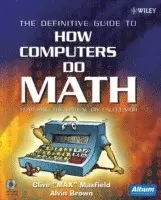
    Definitive Guide to How Computers Do Math

    Featuring the Virtual DIY Calculator

    AvClive Maxfield,Alvin Brown

    Häftad, Engelska, 2005

    681 kr

    Beställningsvara. Skickas inom 5-8 vardagar. Fri frakt över 249 kr.

    Beskrivning

    The Basics of Computer Arithmetic Made Enjoyable and Accessible-with a Special Program Included for Hands-on Learning "The combination of this book and its associated virtual computer is fantastic! Experience over the last fifty years has shown me that there's only one way to truly understand how computers work; and that is to learn one computer and its instruction set-no matter how simple or primitive-from the ground up. Once you fully comprehend how that simple computer functions, you can easily extrapolate to more complex machines."-Fred Hudson, retired engineer/scientist "This book-along with the virtual DIY Calculator-is an incredibly useful teaching and learning tool. The interesting trivia nuggets keep you turning the pages to see what's next. Students will have so much fun reading the text and performing the labs that they won't even realize they are learning."-Michael Haghighi, Chairperson of the Business and Computer Information Systems Division, Calhoun Community College, Alabama "At last, a book that presents an innovative approach to the teaching of computer architecture. Written with authority and verve, witty, superbly illustrated, and enhanced with many laboratory exercises, this book is a must for students and teachers alike."-Dr. Albert Koelmans, Lecturer in Computer Engineering, University of Newcastle upon Tyne, UK, and the 2003 recipient of the EASIT-Eng. Gold Award for Innovative Teaching in Computer Engineering Packed with nuggets of information and tidbits of trivia, How Computers Do Math provides an incredibly fun and interesting introduction to the way in which computers perform their magic in general and math in particular. The accompanying CD-ROM contains a virtual computer/calculator called the DIY Calculator, and the book's step-by-step interactive laboratories guide you in the creation of a simple program to run on your DIY Calculator. How Computers Do Math can be enjoyed by non-technical individuals; students of computer science, electronics engineering, and mathematics; and even practicing engineers. All of the illustrations and interactive laboratories featured in the book are provided on the CD-ROM for use by high school, college, and university educators as lecture notes and handouts. For online resources and more information please visit the author's website at www.DIYCalculator.com.

    Produktinformation

    • Utgivningsdatum:2005-10-21
    • Mått:193 x 236 x 24 mm
    • Vikt:816 g
    • Format:Häftad
    • Språk:Engelska
    • Antal sidor:480
    • Förlag:John Wiley & Sons Inc
    • ISBN:9780471732785

    Utforska kategorier

    • Systemvetenskap och AI inom Data och IT

    Mer om författaren

    CLIVE "MAX" MAXFIELD is a bestselling author and engineer with a large following in the electronic design automation (EDA) and embedded systems industries. He is also one of the founders and President of the high-technology marketing consultancy TechBites (www.TechBites.com). ALVIN BROWN has spent over thirty years working in the electronics and computing industries. He currently acts as an engineering manager supervising remote development groups around the world.

    Recensioner i media

    "I found this book to be a lot of fun, and I think many high school teachers and students would enjoy it too." (Mathematics Teacher, September 2006) "Clive 'Max' Maxfield and Alvin Brown have written a wonderful book…about the essential workings of computers." (The Embedded Muse, February 22, 2006)"I have not seen a better description of the stack and related concepts. The authors obviously understand that these concepts are usually confusing to novices, and hence they support the material with good and simple examples." (Computing Reviews.com, January 16, 2006)"It looks like Max has done it again, i.e., written another technical book that reminds us why we studied electronics in the first place--for the sheer fun of it." (Chip Design Magazine, December 2005/January 2006)"The book is fun, highly informative, and full of vitally important stuff for both the technical and non-technical alike." (EDA Confidential, November 21, 2005)"Everybody can learn from this lively book but it [is] especially helpful for teachers and engineers who want to share their interest in math and computing machinery with others." (Wireless Net DesignLine Newsletter, November 10, 2005)"For those interested in a slightly off-beat approach to learning the basics of computer architectures, Maxfield and Brown have put together a multimedia package that's well worth the price of admission." (Electronic Design.com, October 20, 2005)"The book is perfect for students and those among us who aspire to really understand what is going on in those gismos…the prose is easy to read, and the lab exercises are well designed." (Gabe On EDA.com)

    Innehållsförteckning

    • Laboratories ixDo You Speak Martian? xiChapter 0 Why This Book is So Cool 1This is where we discover just why this book is so cool, and also why this chapter is numbered “0.”Chapter 1 Introducing Binary and Hexadecimal Numbers 7In this chapter we introduce the concepts of the binary and hexadecimal number systems (but in a much more interesting manner than most computer books).Chapter 2 Computers and Calculators 23Here we rampage through the insides of a simple computer and calculator, and we also meet our virtual DIY Calculator.Chapter 3 Subroutines and Other Stuff 35In this smorgasbord of a chapter, we first discuss logical, shift, and rotate instructions; then we plunge headfirst into the stack, subroutines, recursion, and the concept of selfmodifying code.Chapter 4 Integer Arithmetic 69This is where we learn the concepts of signed and unsigned binary arithmetic, and multibyte data representations. In the labs associated with this chapter we create some integer-based math subroutines for use in Chapter 5.Chapter 5 Creating an Integer Calculator 123This is where things really start to get interesting because we use the subroutines we developed in Chapter 4 to implement a simple four-function integer calculator.Chapter 6 More Functions and Experiments 135This may be the last chapter, but turn that frown upside down into a smile because this is where we discover additional projects you can undertake, and also how you can compete with other readers to create better math routines for your DIY Calculator.Interactive Laboratories 155–412This is where you will find the interactive laboratories associated with Chapters 2 through 5 (see more details on page ix).Appendix A Installing Your DIY Calculator 413In this appendix, we learn how to install the virtual DIY Calculator presented on the CD-ROM accompanying this book.Appendix B Addressing Modes 417Here we learn about the various addressing modes supported by the virtual microprocessor powering the DIY Calculator.Appendix C Instruction Set Summary 429The tables in this appendix are useful for quickly determining which instructions are available with which addressing modes.Appendix D Additional Resources 433There is a wealth of additional resources for individual readers and educators on the CD-ROM accompanying the book and from the DIY Calculator’s website. Also, there are lots of other really interesting books to read. This appendix explains it all.About the Authors 441Acknowledgments 443Index 445