• Fri frakt över 249 kr
  • •
  • Snabba leveranser
  • •
  • Billiga böcker
Kundservice

Du är på sajten för privatpersoner.

Företag, bibliotek eller offentlig verksamhet?

Du handlar på classic.bokus.com, där alla dina funktioner finns intakta.
Till classic.bokus.com
Bokus logotyp. Gå till startsidan.
  • Erbjudanden
  • Nyheter
  • Student
  • Topplistor
  • Barn & ungdom
  • Bokus Play
  • E-böcker
  • Pocketböcker
  • Spel & pussel

10% rabatt på allt med kod NYSTART10 →

Sidfot

Mina sidor

    Hjälp

    • Kundservice
    • Vanliga frågor och svar
    • Frakt och leverans
    • Retur vid ångerrätt
    • Reklamera vara
    • Betalning
    • Köpvillkor
    • Allmänna villkor
    • Information om webbplatsens tillgänglighet

    Om Bokus

    • Om oss
    • Pressrum
    • För studenter
    • För företag
    • För bibliotek och offentlig verksamhet
    • För leverantörer
    • Hållbarhet

    Populärt

    • Aktuella erbjudanden
    • Presentkort
    • Studentlitteratur
    • Nya böcker
    • Topplistor
    • Signerade böcker
    • Engelska böcker

    Inspiration

    • Boktips
    • BookTok
    • Populära bokserier
    • Barnbokskaraktärer
    • Populära författare
    Logotyp för Bokus
    Följ oss på Facebook (extern länk)Följ oss på Instagram (extern länk)Följ oss på YouTube (extern länk)Följ oss på TikTok (extern länk)
    bokus @ CookiesAnpassa cookiesIntegritetspolicyKöpvillkor
    Till Citymail hemsida (extern länk)Till Budbee hemsida (extern länk)Till Postnord hemsida (extern länk)Till Schenker hemsida (extern länk)Till Early Bird hemsida (extern länk)Till Walleys hemsida (extern länk)
    1. Psykologi och pedagogik
    2. Psykologi
    3. Socialpsykologi och gruppsykologi

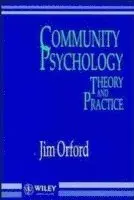
    Community Psychology

    Theory and Practice

    AvJim Orford

    Häftad, Engelska, 1992

    780 kr

    Beställningsvara. Skickas inom 5-8 vardagar. Fri frakt över 249 kr.

    Fler format och utgåvor

    Inbunden

    2 029 kr

    Häftad

    645 kr

    E-bok

    2 330 kr

    Beskrivning

    Community Psychology Theory and Practice Jim Orford, University of Exeter, UK Community psychology is a comparatively new area within psychology. Its perspective is that people and their problems can only be understood by considering the social settings and systems of which they are part and with which they interact continuously over time. These include not only micro-systems of family, work and leisure groups, but also higher-order systems from neighbourhood to socio-cultural groups. Community psychology is also about using this understanding to improve people's well-being. It is an applied, practical subject as well as a theoretical one. Community Psychology: Theory and Practice breaks new ground. It is the first such book written by a British psychologist and, unlike previous texts on the subject, it combines material from Britain, the United States and elsewhere. It deals at length with topics such as power and powerlessness, qualitative and case-study research methods, and offers background theory--so important to a new subject--together with reports of research on many practical aspects in community psychology. The book will prove essential reading for practitioners and researchers either oriented towards community psychology or thinking of moving in that direction--this includes psychologists working in any one of a wide range of areas (clinical, educational, forensic, organisational, applied social, etc.); health care workers with an interest in public mental health and prevention; those working in community settings and serving groups such as the mentally ill and psychologically distressed; people with learning difficulties; older people; and people with addiction problems. It will also be a valuable addition to the literature for final year psychology undergraduates and their teachers. From a published review- '. Orford's book is written in a measured, cautious and scholarly style, does not exaggerate what community psychology has actually achieved so far, yet inspires with its vision of what community psychology could become. I used it as a core text for teaching a final year option on community psychology. The undergraduate group was wildly enthusiastic about the book. Indeed, the only complaint, raised equally energetically by the students, was that they had not been given access to such exciting material until the final year. The book is essential reading.' The Psychologist 1993

    Produktinformation

    • Utgivningsdatum:1992-09-17
    • Mått:152 x 228 x 18 mm
    • Vikt:454 g
    • Format:Häftad
    • Språk:Engelska
    • Antal sidor:304
    • Förlag:John Wiley & Sons Inc
    • ISBN:9780471938101

    Utforska kategorier

    • Socialpsykologi och gruppsykologi inom Psykologi och pedagogik
    • Socialt arbete och välfärd inom Samhälle och politik

    Mer om författaren

    Jim Orford is Professor of Clinical and Community Psychology at the University of Birmingham, UK, and part of a team studying community participation and urban regeneration. He is the author of the classic Excessive Appetites, now in its second edition (0471982318), and a Founding Editor of the Journal of Community and Applied Social Psychology.

    Recensioner i media

    From a published review '...Orford's book is written in a measured, cautious and scholarly style, does not exaggerate what community psychology has actually achieved so far, yet inspires with its vision of what community psychology could become. I used it as a core text for teaching a final year option on community psychology. The undergraduate group was wildly enthusiastic about the book. Indeed, the only complaint, raised equally energetically by the students, was that they had not been given access to such exciting material until the final year. The book is essential reading.' The Psychologist 1993

    Innehållsförteckning

    • THEORY. What Is Community Psychology?. Theories of Person-In-Context. Psychological Problems in the Community. Social Resources 1: Social Support. Social Resources 2: Power and Control. Research Methods. PRACTICE. Sharing Psychology with Workers in Human Services. Prevention. Understanding and Changing Organizations. Self-Help and Non-Professional Help. Empowering the Community. References. Index.