Häftad, Engelska, 2004
American Empire
Av Neil Smith
377 kr
Beställningsvara. Skickas inom 5-8 vardagar. Fri frakt över 249 kr.
Beskrivning
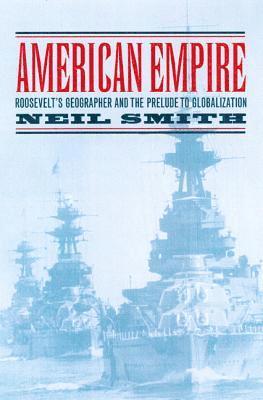
An American Empire, constructed over the last century, long ago overtook European colonialism, and it has been widely assumed that the new globalism it espoused took us "beyond geography." Neil Smith debunks that assumption, offering an incisive argument that American globalism had a distinct geography and was pieced together as part of a powerful geographical vision. The power of geography did not die with the twilight of European colonialism, but it did change fundamentally. That the inauguration of the American Century brought a loss of public geographical sensibility in the United States was itself a political symptom of the emerging empire. This book provides a vital geographical-historical context for understanding the power and limits of contemporary globalization, which can now be seen as representing the third of three distinct historical moments of U.S. global ambition. The story unfolds through a decisive account of the career of Isaiah Bowman (1878--1950), the most famous American geographer of the twentieth century. For nearly four decades Bowman operated around the vortex of state power, working to bring an American order to the global landscape.An explorer on the famous Machu Picchu expedition of 1911 who came to be known first as "Woodrow Wilson's geographer," and later as Frankin D. Roosevelt's, Bowman was present at the creation of U.S. liberal foreign policy. A quarter-century later, Bowman was at the center of Roosevelt's State Department, concerned with the disposition of Germany and heightened U.S. access to European colonies; he was described by Dean Acheson as a key "architect of the United Nations." In that period he was a leader in American science, served as president of Johns Hopkins University, and became an early and vociferous cold warrior. A complicated, contradictory, and at times controversial figure who was very much in the public eye, he appeared on the cover of Time magazine. Bowman's career as a geographer in an era when the value of geography was deeply questioned provides a unique window into the contradictory uses of geographical knowledge in the construction of the American Empire.Smith's historical excavation reveals, in broad strokes yet with lively detail, that today's American-inspired globalization springs not from the 1980s but from two earlier moments in 1919 and 1945, both of which ended in failure. By recharting the geography of this history, Smith brings the politics--and the limits--of contemporary globalization sharply into focus.
Produktinformation
- Utgivningsdatum: 2004-10-29
- Mått: 152 x 229 x 36 mm
- Vikt: 816 g
- Format: Häftad
- Språk: Engelska
- Serie: California Studies in Critical Human Geography
- Antal sidor: 586
- Förlag: University of California Press
- ISBN: 9780520243385
Utforska kategorier
Betyg & recensioner
0 recensioner
Inga recensioner tillgängliga.