• Fri frakt över 249 kr
  • •
  • Snabba leveranser
  • •
  • Billiga böcker
Kundservice

Du är på sajten för privatpersoner.

Företag, bibliotek eller offentlig verksamhet?

Du handlar på classic.bokus.com, där alla dina funktioner finns intakta.
Till classic.bokus.com
Bokus logotyp. Gå till startsidan.
  • Erbjudanden
  • Nyheter
  • Student
  • Topplistor
  • Barn & ungdom
  • Bokus Play
  • E-böcker
  • Pocketböcker
  • Spel & pussel

Må bättre, för mindre! Upp till 50% rabatt på hälsoböcker

Sidfot

Mina sidor

    Hjälp

    • Kundservice
    • Vanliga frågor och svar
    • Frakt och leverans
    • Retur vid ångerrätt
    • Reklamera vara
    • Betalning
    • Köpvillkor
    • Allmänna villkor
    • Information om webbplatsens tillgänglighet

    Om Bokus

    • Om oss
    • Pressrum
    • För studenter
    • För företag
    • För bibliotek och offentlig verksamhet
    • För leverantörer
    • Hållbarhet

    Populärt

    • Aktuella erbjudanden
    • Presentkort
    • Studentlitteratur
    • Nya böcker
    • Topplistor
    • Signerade böcker
    • Engelska böcker

    Inspiration

    • Boktips
    • BookTok
    • Populära bokserier
    • Barnbokskaraktärer
    • Populära författare
    Logotyp för Bokus
    Följ oss på Facebook (extern länk)Följ oss på Instagram (extern länk)Följ oss på YouTube (extern länk)Följ oss på TikTok (extern länk)
    bokus @ CookiesAnpassa cookiesIntegritetspolicyKöpvillkor
    Till Citymail hemsida (extern länk)Till Budbee hemsida (extern länk)Till Postnord hemsida (extern länk)Till Schenker hemsida (extern länk)Till Early Bird hemsida (extern länk)Till Walleys hemsida (extern länk)
    1. Djur och Natur
    2. Djurböcker
    3. Vilda djur
    4. Fågelböcker

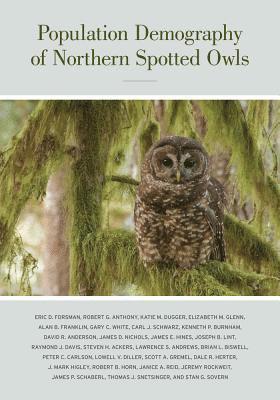
    Population Demography of Northern Spotted Owls

    AvEric Forsman

    Inbunden, Engelska, 2011

    Del 40 i serien Studies in Avian Biology

    456 kr

    Beställningsvara. Skickas inom 5-8 vardagar. Fri frakt över 249 kr.

    Fler format och utgåvor

    E-bok

    772 kr

    Beskrivning

    The Northern Spotted Owl, a threatened species that occurs in coniferous forests in the western United States, has become a well-known environmental symbol. But how is the owl actually faring? This book contains the results of a long-term effort by a large group of leading researchers to document population trends of the Northern Spotted Owl. The study was conducted on 11 areas in the Pacific Northwest from 1985 to 2008, and its objectives were both to evaluate population trends and to assess relationships between reproductive rates and recruitment of owls and covariates such as weather, habitat, and the invasion of a closely related species, the Barred Owl. Among other findings, the study shows that fecundity was declining in five populations, stable in three, and increasing in three areas. Annual apparent survival rates of adults were declining in 10 out of 11 areas. This broad, synthetic work provides the most complete and up-to-date picture of the population status of this inconspicuous forest owl, which is at the center of the complex and often volatile debate regarding the management of forest lands in the western United States.

    Produktinformation

    • Utgivningsdatum:2011-07-21
    • Mått:178 x 254 x 13 mm
    • Vikt:499 g
    • Format:Inbunden
    • Språk:Engelska
    • Serie:Studies in Avian Biology
    • Antal sidor:120
    • Förlag:University of California Press
    • ISBN:9780520270084

    Utforska kategorier

    • Fågelböcker inom Djur och Natur
    • Fåglar inom Naturvetenskap och teknik

    Mer om författaren

    Eric D. Forsman, who collaborated with a team of twenty-seven researchers to produce this report, is a Wildlife Biologist with the USDA Forest Service's Pacific Northwest Research Station, and also holds a courtesy faculty position as an Associate Professor in the Department of Fisheries and Wildlife at Oregon State University.

    Recensioner i media

    "One of the most exact and large-scale metapopulation analyses in the world." Luonnon Tutkija

    Innehållsförteckning

    • INTRODUCTION STUDY AREAS FIELD METHODS ANALYTICAL METHODS DEVELOPMENT OF COVARIATES Barred Owl covariate Habitat covariates Weather and climate covariates Land ownership, ecoregion, and latitude covariates Reproduction covariate FECUNDITY Individual study areas Meta-analysis of fecundity APPARENT SURVIVAL Individual study areas Meta-analysis of apparent survival ANNUAL RATE OF POPULATION CHANGE Individual study areas Estimates of realized population change Meta-analysis of annual rate of population change STATISTICAL CONVENTIONS WORKSHOP PROTOCOLS RESULTS FECUNDITY Individual study areas Meta-analysis of fecundity APPARENT SURVIVAL Individual study areas Meta-analysis of apparent survival on all areas Meta-analysis of apparent survival on the eight NWFP monitoring areas Potential cost of reproduction on survival Effects of Barred Owls on recapture and survival ANNUAL RATE OF POPULATION CHANGE Individual study areas Estimates of realized population change Meta-analysis of annual rate of population change DISCUSSION FECUNDITY APPARENT SURVIVAL ANNUAL RATE OF POPULATION CHANGE AND REALIZED RATES OF POPULATION CHANGE Individual study areas Meta-analysis of annual rate of population change STATUS OF OWL POPULATIONS IN THE EIGHT NWFP MONITORING AREAS ASSOCIATIONS BETWEEN DEMOGRAPHIC PARAMETERS AND COVARIATES Cost of reproduction on survival Weather and climate Barred Owls Habitat POTENTIAL BIASES IN ESTIMATES OF DEMOGRAPHIC PARAMETERS Fecundity Apparent survival Annual rate of population change Estimating goodness-of-fit and overdispersion SUMMARY, CONCLUSIONS, and RECOMMENDATIONS ACKNOWLEDGMENTS LITERATURE CITED APPENDICES TABLES FIGURES