• Fri frakt över 249 kr
  • •
  • Snabba leveranser
  • •
  • Billiga böcker
Kundservice

Du är på sajten för privatpersoner.

Företag, bibliotek eller offentlig verksamhet?

Du handlar på classic.bokus.com, där alla dina funktioner finns intakta.
Till classic.bokus.com
Bokus logotyp. Gå till startsidan.
  • Erbjudanden
  • Nyheter
  • Student
  • Topplistor
  • Barn & ungdom
  • Bokus Play
  • E-böcker
  • Pocketböcker
  • Spel & pussel

10% studentrabatt med kod TERM26

Sidfot

Mina sidor

    Hjälp

    • Kundservice
    • Vanliga frågor och svar
    • Frakt och leverans
    • Retur vid ångerrätt
    • Reklamera vara
    • Betalning
    • Köpvillkor
    • Allmänna villkor
    • Information om webbplatsens tillgänglighet

    Om Bokus

    • Om oss
    • Pressrum
    • För studenter
    • För företag
    • För bibliotek och offentlig verksamhet
    • För leverantörer
    • Hållbarhet

    Populärt

    • Aktuella erbjudanden
    • Presentkort
    • Studentlitteratur
    • Nya böcker
    • Topplistor
    • Signerade böcker
    • Engelska böcker

    Inspiration

    • Boktips
    • BookTok
    • Populära bokserier
    • Barnbokskaraktärer
    • Populära författare
    Logotyp för Bokus
    Följ oss på Facebook (extern länk)Följ oss på Instagram (extern länk)Följ oss på YouTube (extern länk)Följ oss på TikTok (extern länk)
    bokus @ CookiesAnpassa cookiesIntegritetspolicyKöpvillkor
    Till Citymail hemsida (extern länk)Till Budbee hemsida (extern länk)Till Postnord hemsida (extern länk)Till Schenker hemsida (extern länk)Till Early Bird hemsida (extern länk)Till Walleys hemsida (extern länk)
    1. Ekonomi och Ledarskap
    2. Nationalekonomi

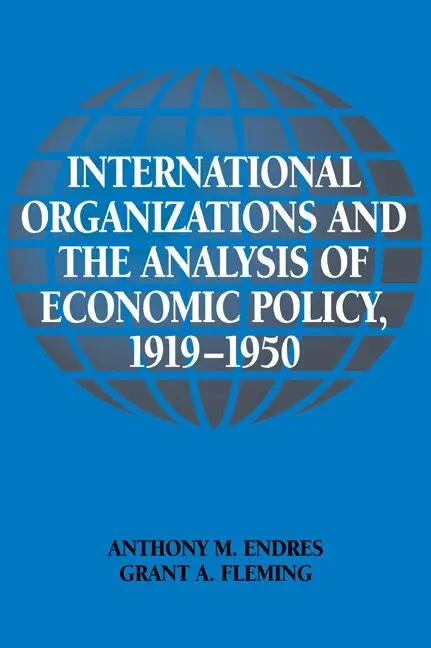
    International Organizations and the Analysis of Economic Policy, 1919-1950

    AvAnthony M. Endres,Grant A. Fleming

    Häftad, Engelska, 2005

    Del i serien Historical Perspectives on Modern Economics

    657 kr

    Beställningsvara. Skickas inom 10-15 vardagar. Fri frakt över 249 kr.

    Fler format och utgåvor

    Inbunden

    1 458 kr

    Beskrivning

    This 2002 book expands our understanding of the distinctive policy analysis produced between 1919 and 1950 by economists and other social scientists for four major international organizations: the League of Nations, the International Labor Organization, the Bank for International Settlements, and the United Nations. These practitioners included some of the twentieth century's eminent economists, including Cassel, Haberler, Kalecki, Meade, Morgenstern, Nurkse, Ohlin, Tinbergen, and Viner. Irving Fisher and John Maynard Keynes also influenced the work of these organizations. Topics covered include: the relationship between economics and policy analysis in international organizations; business cycle research; the role and conduct of monetary policy; public investment; trade policy; social and labor economics; international finance; the coordination problem in international macroeconomic policy; full employment economics; and the rich-country-poor-country debate. Normative agendas underlying international political economy are made explicit, and lessons are distilled for today's debates on international economic integration.

    Produktinformation

    • Utgivningsdatum:2005-11-10
    • Mått:154 x 229 x 19 mm
    • Vikt:453 g
    • Format:Häftad
    • Språk:Engelska
    • Serie:Historical Perspectives on Modern Economics
    • Antal sidor:308
    • Förlag:Cambridge University Press
    • ISBN:9780521022415

    Utforska kategorier

    • Nationalekonomi inom Ekonomi och Ledarskap

    Innehållsförteckning

    • 1. Economics and policy in international organizations: introduction; 2. Business cycles: conceptions, causes and implications; 3. The role and conduct of monetary policy in the 1920s and 1930s; 4. Public investment programs in the interwar period: pre-Keynesian, proto-Keynesian and Keynesian perspectives; 5. Trade policy research: Geneva Doctrine and the Scandinavian connection; 6. Social economics at the ILO: scope, content and significance; 7. International finance and exchange rate policy; 8. The full employment movement from the 1940s; 9. Conclusion.