• Fri frakt över 249 kr
  • •
  • Snabba leveranser
  • •
  • Billiga böcker
Kundservice

Du är på sajten för privatpersoner.

Företag, bibliotek eller offentlig verksamhet?

Du handlar på classic.bokus.com, där alla dina funktioner finns intakta.
Till classic.bokus.com
Bokus logotyp. Gå till startsidan.
  • Erbjudanden
  • Nyheter
  • Student
  • Topplistor
  • Barn & ungdom
  • Bokus Play
  • E-böcker
  • Pocketböcker
  • Spel & pussel

Må bättre, för mindre! Upp till 50% rabatt på hälsoböcker

Sidfot

Mina sidor

    Hjälp

    • Kundservice
    • Vanliga frågor och svar
    • Frakt och leverans
    • Retur vid ångerrätt
    • Reklamera vara
    • Betalning
    • Köpvillkor
    • Allmänna villkor
    • Information om webbplatsens tillgänglighet

    Om Bokus

    • Om oss
    • Pressrum
    • För studenter
    • För företag
    • För bibliotek och offentlig verksamhet
    • För leverantörer
    • Hållbarhet

    Populärt

    • Aktuella erbjudanden
    • Presentkort
    • Studentlitteratur
    • Nya böcker
    • Topplistor
    • Signerade böcker
    • Engelska böcker

    Inspiration

    • Boktips
    • BookTok
    • Populära bokserier
    • Barnbokskaraktärer
    • Populära författare
    Logotyp för Bokus
    Följ oss på Facebook (extern länk)Följ oss på Instagram (extern länk)Följ oss på YouTube (extern länk)Följ oss på TikTok (extern länk)
    bokus @ CookiesAnpassa cookiesIntegritetspolicyKöpvillkor
    Till Citymail hemsida (extern länk)Till Budbee hemsida (extern länk)Till Postnord hemsida (extern länk)Till Schenker hemsida (extern länk)Till Early Bird hemsida (extern länk)Till Walleys hemsida (extern länk)
    1. Naturvetenskap och teknik
    2. Geovetenskap
    3. Miljövetenskap och miljöpolitik

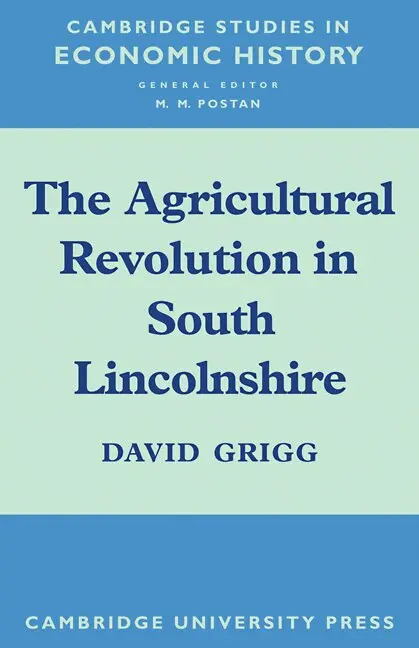
    The Agricultural Revolution in South Lincolnshire

    AvDavid Grigg

    Häftad, Engelska, 2009

    Del i serien Cambridge Studies in Economic History

    463 kr

    Beställningsvara. Skickas inom 10-15 vardagar. Fri frakt över 249 kr.

    Beskrivning

    The new farming methods that so radically changed English agriculture in the eighteenth and early nineteenth centuries were not adopted immediately by all farmers. The rate of improvement was uneven, not only between one farmer and another, but between different farming regions. This book suggests an approach to the problem of regional agricultural change and the factors which determined the different rates of change. Dr Grigg begins by describing the differences between the agricultural regions of South Lincolnshire - that is the two parts of Kesteven and Holland, an area fairly typical of eastern England - at the end of the eighteenth century. These were differences not only of land use and soil type but of landownership and farm size, productivity and location. The diffusion and adoption of new methods in each region is considered against the general economic background of the late eighteenth century and the boom conditions of the period of the Napoleonic Wars. The later part of the book traces the rate of farming improvement in the less favourable price conditions after 1815, and finds a marked contrast between this period and the preceding forty years. The way in which the agricultural geography of the area was changed by the new methods is discussed, and in addition Dr Grigg shows how the conditions of each agricultural region affected farmers' response to the new methods.

    Produktinformation

    • Utgivningsdatum:2009-04-02
    • Mått:140 x 216 x 14 mm
    • Vikt:310 g
    • Format:Häftad
    • Språk:Engelska
    • Serie:Cambridge Studies in Economic History
    • Antal sidor:236
    • Förlag:Cambridge University Press
    • ISBN:9780521106153

    Utforska kategorier

    • Miljövetenskap och miljöpolitik inom Naturvetenskap och teknik

    Innehållsförteckning

    • Part I. Agriculture During the Napoleonic Wars: 1. The Land; 2. Prices and Progress; 3. Farming Methods and Productivity; 4. The Patterns of Land Use; 5. Landlords, Farmers and Farms; 6. The Agricultural Regions; Part II. Agriculture After 1815: 7. Paradox and Progress; 8. The Age of Improvement; 9. The New Agricultural Geography; 10. The Changing Regional Pattern; 11. Some Conclusions.