• Fri frakt över 249 kr
  • •
  • Snabba leveranser
  • •
  • Billiga böcker
Kundservice

Du är på sajten för privatpersoner.

Företag, bibliotek eller offentlig verksamhet?

Du handlar på classic.bokus.com, där alla dina funktioner finns intakta.
Till classic.bokus.com
Bokus logotyp. Gå till startsidan.
  • Erbjudanden
  • Nyheter
  • Student
  • Topplistor
  • Barn & ungdom
  • Bokus Play
  • E-böcker
  • Pocketböcker
  • Spel & pussel

10% rabatt på allt med kod NYSTART10 →

Sidfot

Mina sidor

    Hjälp

    • Kundservice
    • Vanliga frågor och svar
    • Frakt och leverans
    • Retur vid ångerrätt
    • Reklamera vara
    • Betalning
    • Köpvillkor
    • Allmänna villkor
    • Information om webbplatsens tillgänglighet

    Om Bokus

    • Om oss
    • Pressrum
    • För studenter
    • För företag
    • För bibliotek och offentlig verksamhet
    • För leverantörer
    • Hållbarhet

    Populärt

    • Aktuella erbjudanden
    • Presentkort
    • Studentlitteratur
    • Nya böcker
    • Topplistor
    • Signerade böcker
    • Engelska böcker

    Inspiration

    • Boktips
    • BookTok
    • Populära bokserier
    • Barnbokskaraktärer
    • Populära författare
    Logotyp för Bokus
    Följ oss på Facebook (extern länk)Följ oss på Instagram (extern länk)Följ oss på YouTube (extern länk)Följ oss på TikTok (extern länk)
    bokus @ CookiesAnpassa cookiesIntegritetspolicyKöpvillkor
    Till Citymail hemsida (extern länk)Till Budbee hemsida (extern länk)Till Postnord hemsida (extern länk)Till Schenker hemsida (extern länk)Till Early Bird hemsida (extern länk)Till Walleys hemsida (extern länk)
    1. Samhälle och politik
    2. Krig och försvar

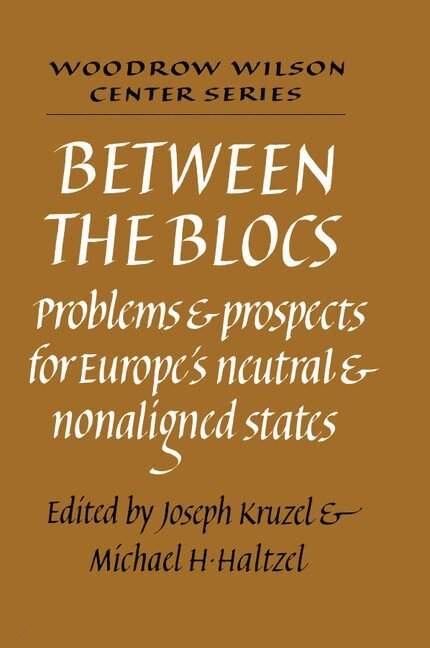
    Between the Blocs

    Problems and Prospects for Europe's Neutral and Nonaligned States

    AvJoseph Kruzel,Michael H. Haltzel

    Inbunden, Engelska, 1990

    Del i serien Woodrow Wilson Center Press

    1 496 kr

    Beställningsvara. Skickas inom 10-15 vardagar. Fri frakt över 249 kr.

    Beskrivning

    The major European neutrals - Austria, Finland, Ireland, Sweden and Switzerland - are heirs to a venerable and adaptable tradition. In the turmoil of the past two centuries, many neutral states have disappeared, others have joined alliance systems, and those that have remained or become neutral have often seen themselves as misunderstood, even as their international positions have solidified. Neutrality is no longer an easily defined, static legal concept, but an evolving political practice. Between the Blocs, published in 1990, features many of the pre-eminent scholars and political figures who have crafted the shape and meaning of the modern policy of neutrality and nonalignment in contemporary Europe. With its wide-ranging and non-ideological analysis of the phenomenon of Europe's neutral analysis of the phenomenon of Europe's natural and non-aligned states, Between the Blocs promises to become a modern classic in the field.

    Produktinformation

    • Utgivningsdatum:1990-01-26
    • Mått:152 x 229 x 24 mm
    • Vikt:680 g
    • Format:Inbunden
    • Språk:Engelska
    • Serie:Woodrow Wilson Center Press
    • Antal sidor:344
    • Förlag:Cambridge University Press
    • ISBN:9780521375580

    Utforska kategorier

    • Krig och försvar inom Samhälle och politik

    Recensioner i media

    "John Foster Dulles is long gone, but still Americans are prone to regard neutrality as, if not a sin, then a nuisance. This volume is a welcome antidote, neither extolling nor dismissing neutrality. Rather, it demonstrates the range of both the forms of, and the challenges to, neutrality. Kruzel's fine conclusion stresses the contrast between neutral realists, who believe quiet voices befit small powers, and neutral idealists, who seek to reshape the international system. This book is all the more valuable as Europe confronts new neutrals from Eastern Europe and new roles for neutrality in the post-Cold War order." Gregory F. Treverton in Foreign Affairs

    Innehållsförteckning

    • Acknowledgments; Introduction Michael H. Haltzel; Part I. Perspectives: 1. Neutral states in historical perspectives Philip Windsor; Commentary Luzius Wildhaber; Commentary Wilhelm Carlgren; 2. Forms of neutrality Sigmund Widmer; 3. The various conceptions of European neutrality Radovan Vukadinovic; Part II. Special Cases: 4. The underlying assumptions of Finnish neutrality Pertti Joenniemi; 5. Neutrality and regional integration: Ireland's experience in the European community Patrick Keatinge; Part III. Interdependence: 6. Challenges to neutrality in an interdependent world Hanspeter Neuhold; 7. National security dilemmas and strategies for the European neutrals Bengt Sundelius; Commentary Raimo Väyrynen; Part IV. Security: 8. The European neutrals, national defense, and international security Joseph Kruzel; 9. Beyond soldiers and arms: the Swiss model of comprehensive security policy Kurt R. Spillmann; 10. Swedish defense: traditions, perceptions, and policies Nils Andrén; 11. Swedish and Finnish defense policies: a comparative study Tomas Ries; Commentary Kari Möttölä; Part V. Public Opinion: 12. The role of public opinion in neutral policy Hans Thalberg; 13. Finnish neutrality and public opinion Krister Ståhlberg; Commentary Sverker Åström; Part VI. Policy Views: 14. Some misconceptions about Austrian neutrality Gerald Hinteregger; 15. Neutrality in the European context: the Finnish perspective Paavo Väyrynen; 16. The Swiss approach Edouard Brunner; 17. The United States and Europe's neutrals Rozanne L. Ridgway; Part VII. Conclusion: 18. The future of European neutrality Joseph Kruzel; About the authors; Index.