• Fri frakt över 249 kr
  • •
  • Snabba leveranser
  • •
  • Billiga böcker
Kundservice

Du är på sajten för privatpersoner.

Företag, bibliotek eller offentlig verksamhet?

Du handlar på classic.bokus.com, där alla dina funktioner finns intakta.
Till classic.bokus.com
Bokus logotyp. Gå till startsidan.
  • Erbjudanden
  • Nyheter
  • Student
  • Topplistor
  • Barn & ungdom
  • Bokus Play
  • E-böcker
  • Pocketböcker
  • Spel & pussel

10% studentrabatt med kod TERM26

Sidfot

Mina sidor

    Hjälp

    • Kundservice
    • Vanliga frågor och svar
    • Frakt och leverans
    • Retur vid ångerrätt
    • Reklamera vara
    • Betalning
    • Köpvillkor
    • Allmänna villkor
    • Information om webbplatsens tillgänglighet

    Om Bokus

    • Om oss
    • Pressrum
    • För studenter
    • För företag
    • För bibliotek och offentlig verksamhet
    • För leverantörer
    • Hållbarhet

    Populärt

    • Aktuella erbjudanden
    • Presentkort
    • Studentlitteratur
    • Nya böcker
    • Topplistor
    • Signerade böcker
    • Engelska böcker

    Inspiration

    • Boktips
    • BookTok
    • Populära bokserier
    • Barnbokskaraktärer
    • Populära författare
    Logotyp för Bokus
    Följ oss på Facebook (extern länk)Följ oss på Instagram (extern länk)Följ oss på YouTube (extern länk)Följ oss på TikTok (extern länk)
    bokus @ CookiesAnpassa cookiesIntegritetspolicyKöpvillkor
    Till Citymail hemsida (extern länk)Till Budbee hemsida (extern länk)Till Postnord hemsida (extern länk)Till Schenker hemsida (extern länk)Till Early Bird hemsida (extern länk)Till Walleys hemsida (extern länk)
    1. Ekonomi och Ledarskap
    2. Nationalekonomi
    3. Makroekonomi

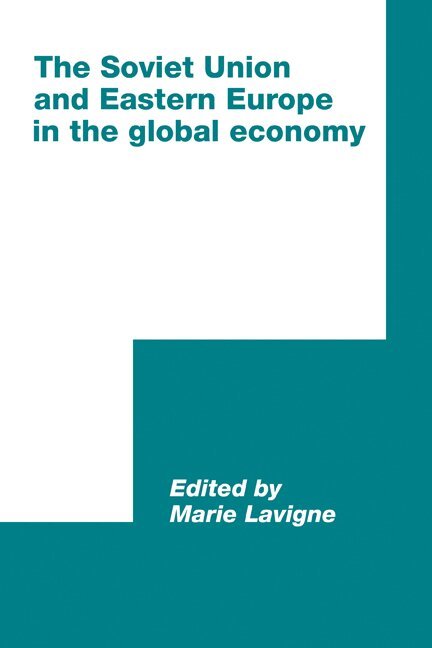
    The Soviet Union and Eastern Europe in the Global Economy

    AvMarie Lavigne

    Inbunden, Engelska, 1992

    Del i serien International Council for Central and East European Studies

    1 748 kr

    Beställningsvara. Skickas inom 10-15 vardagar. Fri frakt över 249 kr.

    Beskrivning

    The Soviet Union and Eastern Europe are moving away from a centrally planned economy toward integration within the global economy. How did this transition begin? Is this an aim which all the countries can afford? What conditions are to be met so that the countries will achieve a level of development comparable with the average level of their industrial partners? In this 1992 volume, leading international political economists from both the East and West provide an in-depth analysis of these questions. The contributors assess how the transition to the market requires liberalizing foreign trade, introducing convertibility, and transforming property structures, all of which are also part of the ongoing domestic reform. They also examine how these countries overcome their development lag and implement a restructuring policy.

    Produktinformation

    • Utgivningsdatum:1992-07-09
    • Mått:160 x 238 x 25 mm
    • Vikt:480 g
    • Format:Inbunden
    • Språk:Engelska
    • Serie:International Council for Central and East European Studies
    • Antal sidor:240
    • Förlag:Cambridge University Press
    • ISBN:9780521414173

    Utforska kategorier

    • Makroekonomi inom Ekonomi och Ledarskap

    Innehållsförteckning

    • List of figures; List of tables; Introduction: the USSR and Eastern Europe opening to the world Marie Lavigne; Part I. Integration: The East in the World Economy: 1. East–West European integration Harriet Matejka; 2. East–West trade: what is it good for? Heinrich Vogel; 3. US interests in granting most favored nation status to the Soviet Union Joseph Pelzman; 4. New developments in economic relations between Japan and CMEA countries Wojciech Bienkowski and Masumi Hakogi; 5. Perestroika and its implications for Soviet foreign aid W. Donald Bowles; 6. Features and trends of East Germany's aid and trade with the Third World Siefried Schulz; Part II. Growth, Technology Transfers and Joint Ventures: 7. East–West technology transfer and Soviet regional development: continuity and change Michael J. Bradshaw and Denis J. B. Shaw; 8. East–West technology flows: recent developments and perspectives Jan Maciejewicz; 9. The opening of the USSR to foreign capital: from concessions during NEP to joint ventures under perestroika Patrick Gutman; 10. Current joint venture law and its impact on the Polish economy Jozef Misala; 11. Joint ventures in Poland: interests and experiences of western firms Horst Brezinski; Part III. Liberalization: Entry into the International Markets: 12. Perestroika and the new international economy Erik P. Hoffman; 13. From decentralization to liberalization of foreign trade: the experience of Poland Krystyna Szymkiewicz; 14. Between two firs? Foreign economic relations of Eastern Europe: past, present, and future(s) Istvan Salgo; Index.