• Fri frakt över 249 kr
  • •
  • Snabba leveranser
  • •
  • Billiga böcker
Kundservice

Du är på sajten för privatpersoner.

Företag, bibliotek eller offentlig verksamhet?

Du handlar på classic.bokus.com, där alla dina funktioner finns intakta.
Till classic.bokus.com
Bokus logotyp. Gå till startsidan.
  • Erbjudanden
  • Nyheter
  • Student
  • Topplistor
  • Barn & ungdom
  • Bokus Play
  • E-böcker
  • Pocketböcker
  • Spel & pussel

10% rabatt på allt med kod: NYSTART10 →

Sidfot

Mina sidor

    Hjälp

    • Kundservice
    • Vanliga frågor och svar
    • Frakt och leverans
    • Retur vid ångerrätt
    • Reklamera vara
    • Betalning
    • Köpvillkor
    • Allmänna villkor
    • Information om webbplatsens tillgänglighet

    Om Bokus

    • Om oss
    • Pressrum
    • För studenter
    • För företag
    • För bibliotek och offentlig verksamhet
    • För leverantörer
    • Hållbarhet

    Populärt

    • Aktuella erbjudanden
    • Presentkort
    • Studentlitteratur
    • Nya böcker
    • Topplistor
    • Signerade böcker
    • Engelska böcker

    Inspiration

    • Boktips
    • BookTok
    • Populära bokserier
    • Barnbokskaraktärer
    • Populära författare
    Logotyp för Bokus
    Följ oss på Facebook (extern länk)Följ oss på Instagram (extern länk)Följ oss på YouTube (extern länk)Följ oss på TikTok (extern länk)
    bokus @ CookiesAnpassa cookiesIntegritetspolicyKöpvillkor
    Till Citymail hemsida (extern länk)Till Budbee hemsida (extern länk)Till Postnord hemsida (extern länk)Till Schenker hemsida (extern länk)Till Early Bird hemsida (extern länk)Till Walleys hemsida (extern länk)
    1. Djur och Natur
    2. Djurböcker
    3. Vilda djur
    4. Fjärilar, insekter, spindlar

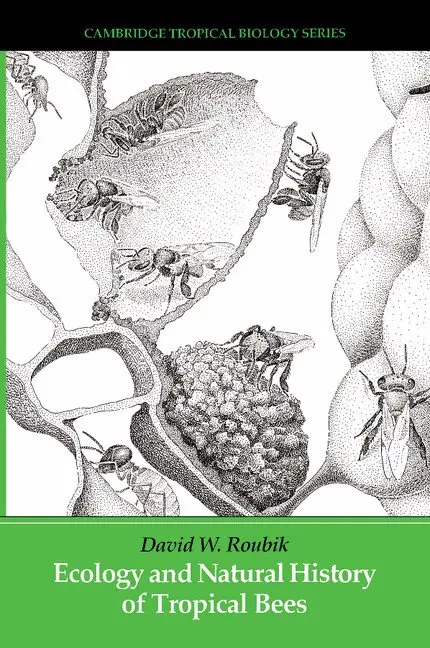
    Ecology and Natural History of Tropical Bees

    AvDavid W. Roubik,David W. Roubik

    Häftad, Engelska, 1992

    Del i serien Cambridge Tropical Biology Series

    1 147 kr

    Beställningsvara. Skickas inom 10-15 vardagar. Fri frakt över 249 kr.

    Beskrivning

    Humans have been fascinated by bees for centuries. Bees display a wide spectrum of behaviours and ecological roles that have provided biologists with a vast amount of material for study. Among the types observed are both social and solitary bees, those that either pollinate or destroy flowers, and those that display traits allowing them to survive underwater. Others fly mainly at night, and some build their nests either in the ground or in the tallest rain forest trees. This highly acclaimed book summarises and interprets research from around the world on tropical bee diversity and draws together major themes in ecology, natural history and evolution. The numerous photographs and line illustrations, and the large reference section, qualify this book as a field guide and reference for workers in tropical and temperate research. The fascinating ecology and natural history of these bees will also provide absorbing reading for other ecologists and naturalists. This book was first published in 1989.

    Produktinformation

    • Utgivningsdatum:1992-05-29
    • Mått:152 x 227 x 26 mm
    • Vikt:700 g
    • Format:Häftad
    • Språk:Engelska
    • Serie:Cambridge Tropical Biology Series
    • Antal sidor:526
    • Förlag:Cambridge University Press
    • ISBN:9780521429092

    Utforska kategorier

    • Fjärilar, insekter, spindlar inom Djur och Natur
    • Insekter inom Naturvetenskap och teknik

    Recensioner i media

    'It will be valued for its substantial and wide-ranging bibliography, as well as for the text, which is a carefully organised mosaic of sparkling fragments giving tempting glimpses of a relatively unexplored world.' Trends in Ecology and Evolution

    Innehållsförteckning

    • Preface; Acknowledgments; Part I. Introduction: 1. Approaches to tropical bee biology; 2. Diversity of tropical bees; Part II. Foraging and Pollination: 3. Resources gathered by bees; 4. Mechanisms of resource collection; 5. Foraging and flight activity; 6. Pollination ecology; Part III. Nesting and Reproduction Biology: 7. Bee nests; 8. Nest predators, associates and defense; 9. Mating and brood production; Part IV. Community Ecology: 10. Seasonality, abundance and flower preference; 11. Composition of bee assemblages; 12. Roles of bees in communities; References; Index; Appendices.