David W. Roubik - Böcker
Visar alla böcker från författaren David W. Roubik. Handla med fri frakt och snabb leverans.
11 produkter
11 produkter
1 074 kr
Skickas inom 7-10 vardagar
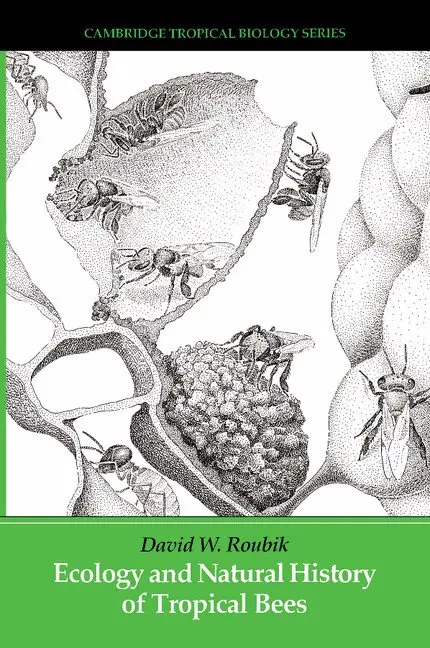
Humans have been fascinated by bees for centuries. Bees display a wide spectrum of behaviours and ecological roles that have provided biologists with a vast amount of material for study. Among the types observed are both social and solitary bees, those that either pollinate or destroy flowers, and those that display traits allowing them to survive underwater. Others fly mainly at night, and some build their nests either in the ground or in the tallest rain forest trees. This highly acclaimed book summarises and interprets research from around the world on tropical bee diversity and draws together major themes in ecology, natural history and evolution. The numerous photographs and line illustrations, and the large reference section, qualify this book as a field guide and reference for workers in tropical and temperate research. The fascinating ecology and natural history of these bees will also provide absorbing reading for other ecologists and naturalists. This book was first published in 1989.
944 kr
Skickas inom 5-8 vardagar
634 kr
Skickas inom 5-8 vardagar
944 kr
Skickas inom 5-8 vardagar
1 099 kr
Skickas inom 5-8 vardagar
1 589 kr
Skickas inom 10-15 vardagar
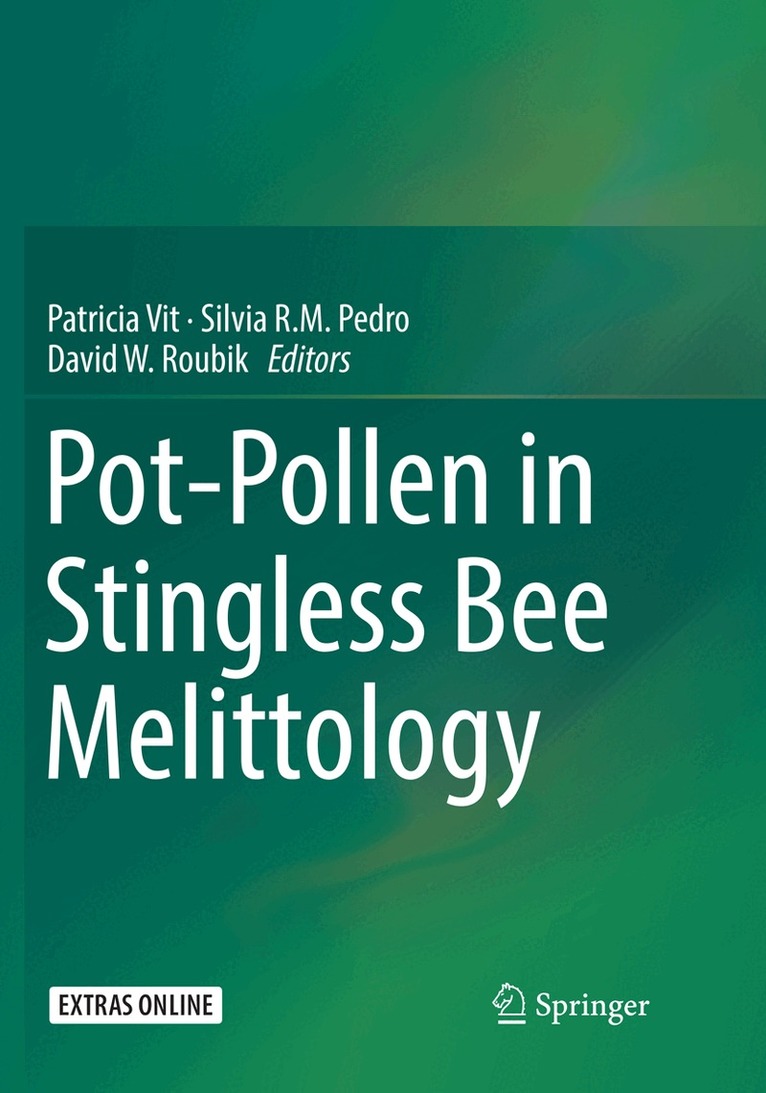
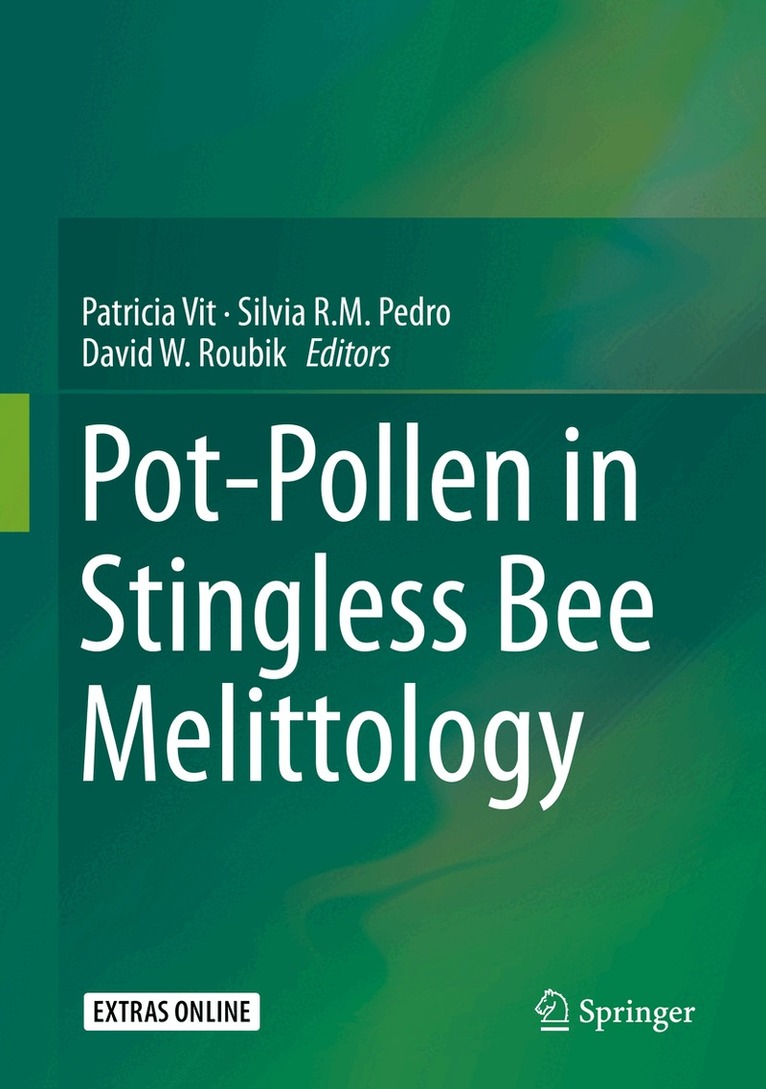
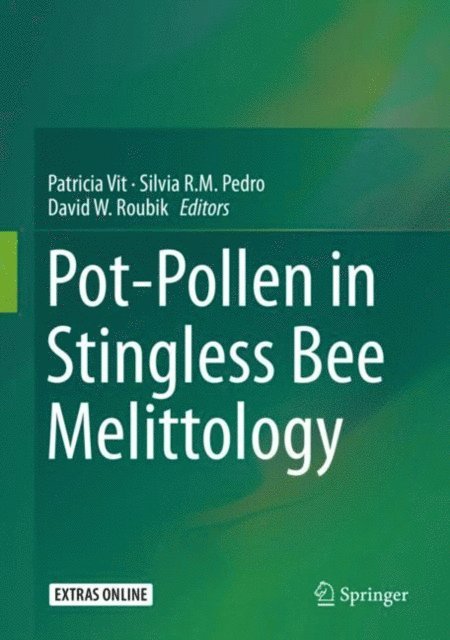
This book covers pot-pollen—the other product, besides honey, stored in cerumen pots by Meliponini. Critical assessment is given of stingless bee and pot-pollen biodiversity in the Americas, Africa, Asia and Oceania. Topics addressed include historical biogeography, cultural knowledge, bee foraging behavior, pollination, ecological interactions, health applications, microbiology, the natural history of bee nests, and chemical, bioactive and individual plant components in stored pollen. Pot-pollen maintains the livelihoods of stingless bees and provides many interesting biological products that are just now beginning to be understood. The Meliponini have developed particular nesting biologies, uses of building materials, and an architecture for pollen storage. Environmental windows provide optimal temperature and availability of pollen sources for success in plant pollination and pollen storage. Palynological composition and pollen taxonomy are usedto assess stingless honey bee pollination services. Pollen processing with microorganisms in the nest modifies chemical composition and bioactivity, and confers nutraceutical benefits to the honey and pollen widely relished by native people. Humans have always used stingless bees. Yet, sustainable meliponiculture (stingless bee-keeping) projects have so far lacked a treatise on pot-pollen, which experts provide in this transdisciplinary, groundbreaking volume.
2 433 kr
Skickas inom 10-15 vardagar
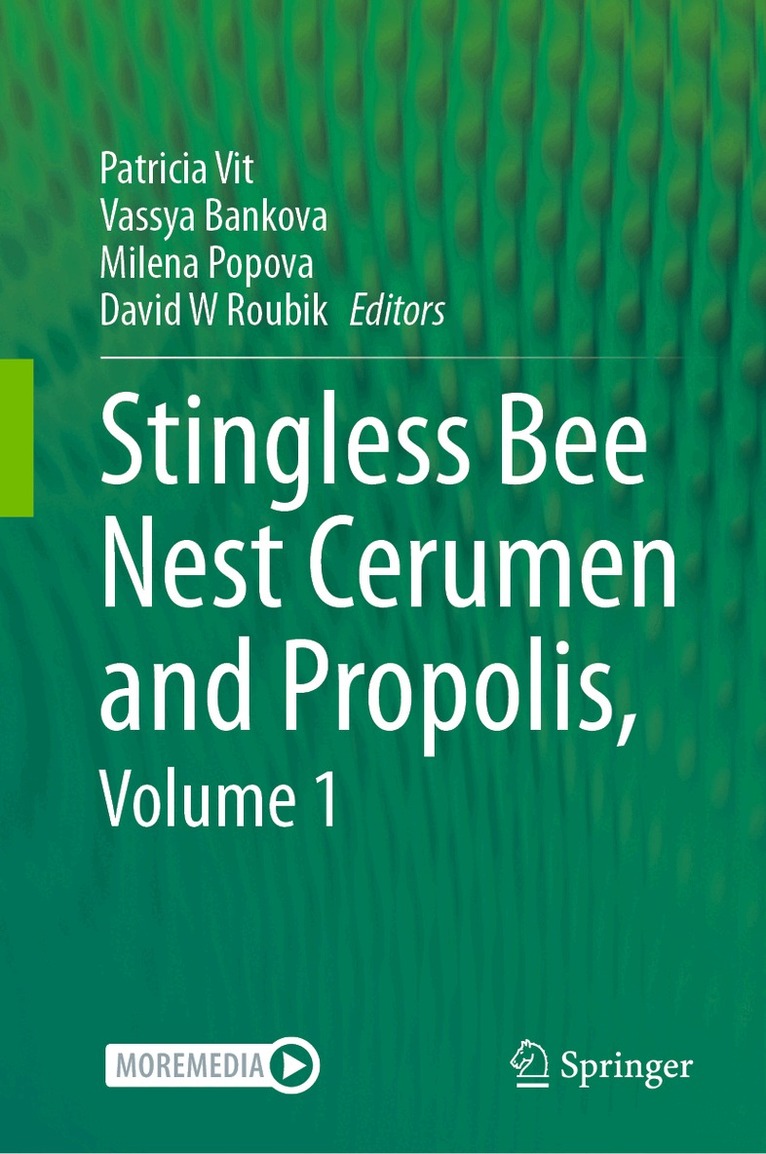
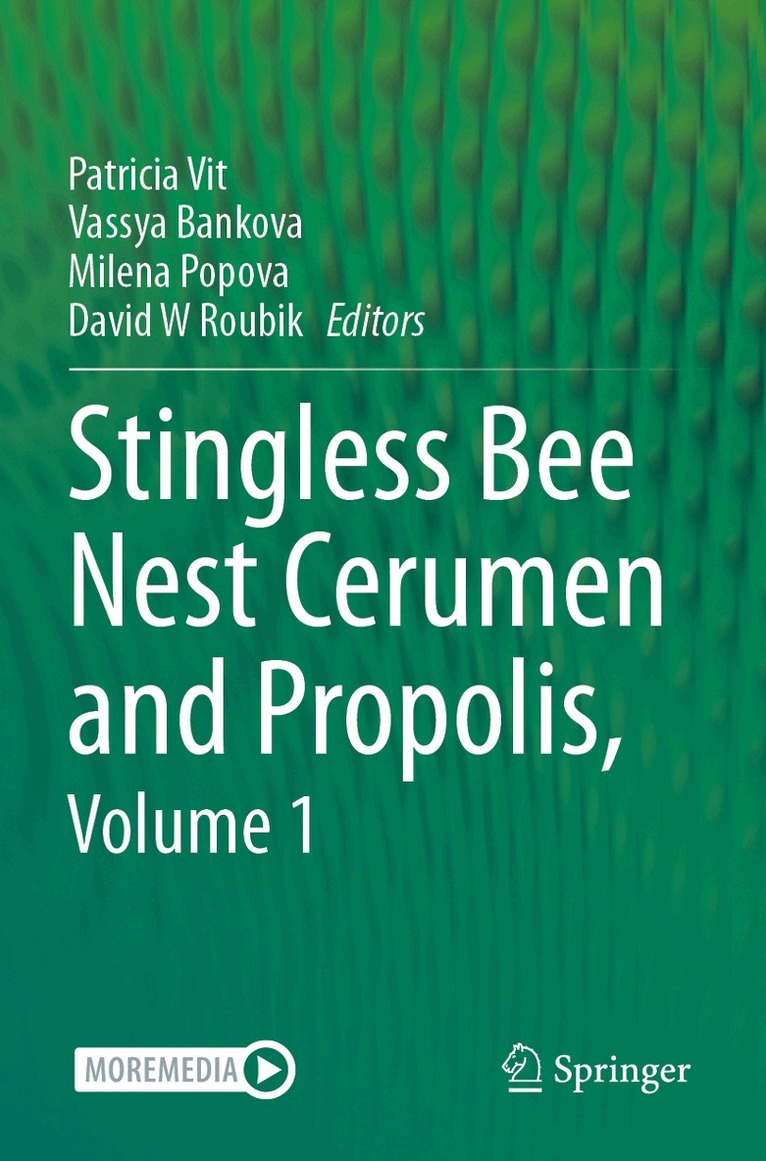
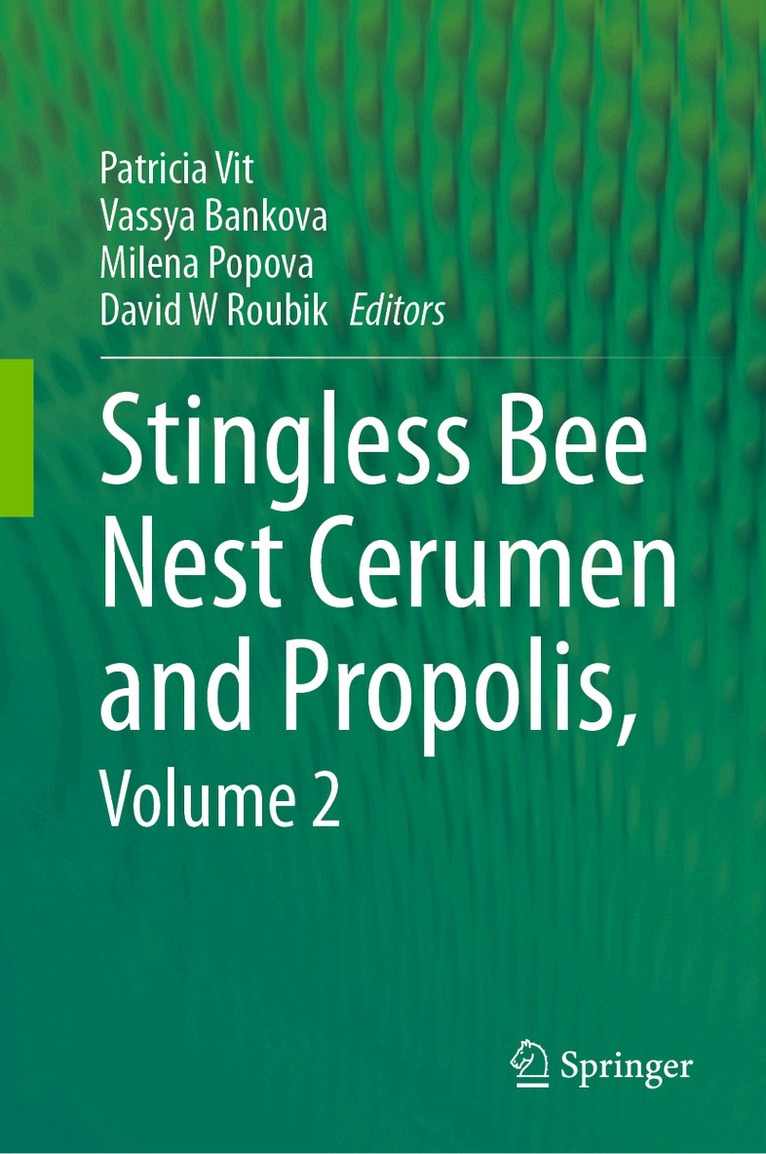
Meliponini, the stingless bees of the tropics, process and store honey, pollen and plant resins to maintain their colonies. The chemical components of their nests are bioactive and believed to be therapeutic for a long list of maladies. However, only recently are tests and analyses being done with molecular and modern laboratory techniques, such as high throughput EDX, HPIC, HPLC, GC, NMR, PCR, and ultrastructural SEM; coupled with diverse detectors such as DAD, RI, MS, SCD.This two-volume book is about the cerumen –plant resins mixed with stingless bee wax– and propolis, which fortify the colony in ways that are beginning to be understood. It includes reviews and new research on diverse topics involving the chemistry and bioactivity of plant resins, cerumen, propolis, besides bee and microbe behavior and ecology. These analytic studies are presented along with stingless bee biodiversity, palynology, cultural knowledge, bee foraging behavior, resin flower evolution, ecology, and evolution of nest microbe mutualisms, social immunity, human health, the decisive role of microbiology investigation in moving forward, natural history of stingless bee colonies and nests, marketing, and bibliometrics for plant resin use by bees, propolis, and the Starmerella yeast.
2 433 kr
Skickas inom 10-15 vardagar
Meliponini, the stingless bees of the tropics, process and store honey, pollen and plant resins to maintain their colonies. The chemical components of their nests are bioactive and believed to be therapeutic for a long list of maladies. However, only recently are tests and analyses being done with molecular and modern laboratory techniques, such as high throughput EDX, HPIC, HPLC, GC, NMR, PCR, and ultrastructural SEM; coupled with diverse detectors such as DAD, RI, MS, SCD.This two-volume book is about the cerumen –plant resins mixed with stingless bee wax– and propolis, which fortify the colony in ways that are beginning to be understood. It includes reviews and new research on diverse topics involving the chemistry and bioactivity of plant resins, cerumen, propolis, besides bee and microbe behavior and ecology. These analytic studies are presented along with stingless bee biodiversity, palynology, cultural knowledge, bee foraging behavior, resin flower evolution, ecology, and evolution of nest microbe mutualisms, social immunity, human health, the decisive role of microbiology investigation in moving forward, natural history of stingless bee colonies and nests, marketing, and bibliometrics for plant resin use by bees, propolis, and the Starmerella yeast.
2 433 kr
Skickas inom 10-15 vardagar
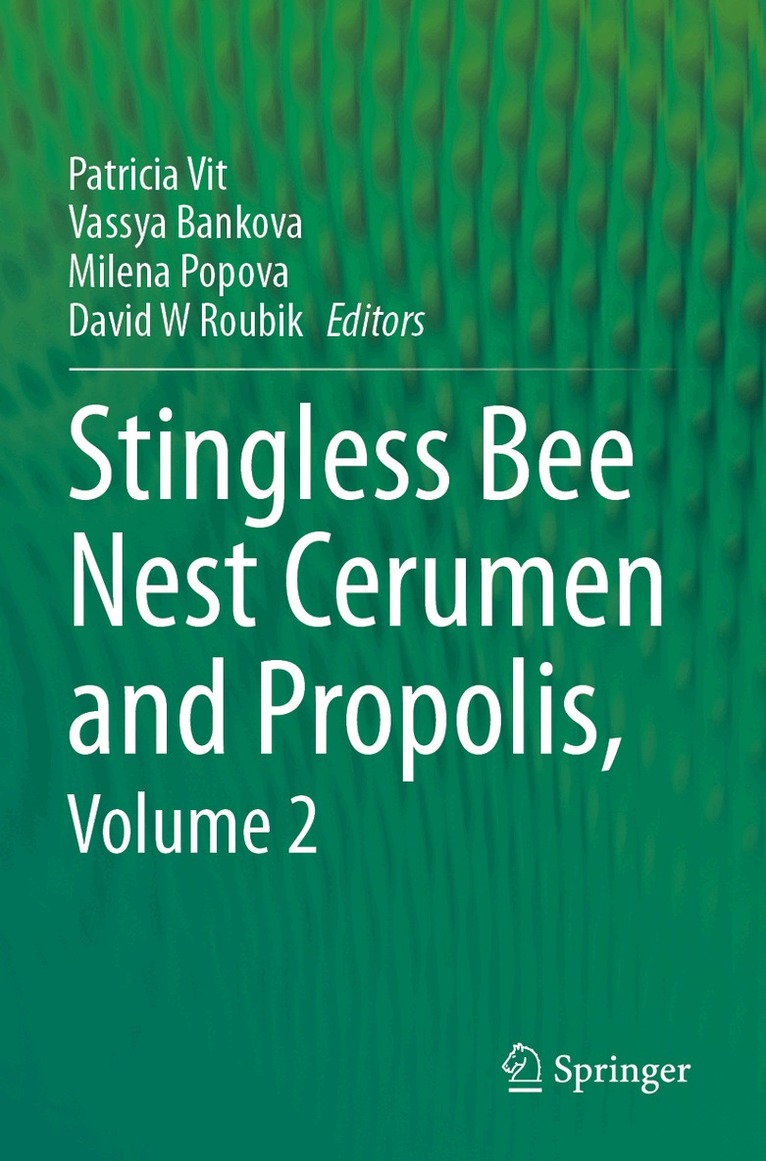
Meliponini, the stingless bees of the tropics, process and store honey, pollen and plant resins to maintain their colonies. The chemical components of their nests are bioactive and believed to be therapeutic for a long list of maladies. However, only recently are tests and analyses being done with molecular and modern laboratory techniques, such as high throughput EDX, HPIC, HPLC, GC, NMR, PCR, and ultrastructural SEM; coupled with diverse detectors such as DAD, RI, MS, SCD.This two-volume book is about the cerumen –plant resins mixed with stingless bee wax– and propolis, which fortify the colony in ways that are beginning to be understood. It includes reviews and new research on diverse topics involving the chemistry and bioactivity of plant resins, cerumen, propolis, besides bee and microbe behavior and ecology. These analytic studies are presented along with stingless bee biodiversity, palynology, cultural knowledge, bee foraging behavior, resin flower evolution, ecology, and evolution of nest microbe mutualisms, social immunity, human health, the decisive role of microbiology investigation in moving forward, natural history of stingless bee colonies and nests, marketing, and bibliometrics for plant resin use by bees, propolis, and the Starmerella yeast.
2 433 kr
Skickas inom 10-15 vardagar
Meliponini, the stingless bees of the tropics, process and store honey, pollen and plant resins to maintain their colonies. The chemical components of their nests are bioactive and believed to be therapeutic for a long list of maladies. However, only recently are tests and analyses being done with molecular and modern laboratory techniques, such as high throughput EDX, HPIC, HPLC, GC, NMR, PCR, and ultrastructural SEM; coupled with diverse detectors such as DAD, RI, MS, SCD.This two-volume book is about the cerumen –plant resins mixed with stingless bee wax– and propolis, which fortify the colony in ways that are beginning to be understood. It includes reviews and new research on diverse topics involving the chemistry and bioactivity of plant resins, cerumen, propolis, besides bee and microbe behavior and ecology. These analytic studies are presented along with stingless bee biodiversity, palynology, cultural knowledge, bee foraging behavior, resin flower evolution, ecology, and evolution of nest microbe mutualisms, social immunity, human health, the decisive role of microbiology investigation in moving forward, natural history of stingless bee colonies and nests, marketing, and bibliometrics for plant resin use by bees, propolis, and the Starmerella yeast.
1 589 kr
Skickas inom 10-15 vardagar
This book covers pot-pollen—the other product, besides honey, stored in cerumen pots by Meliponini. Critical assessment is given of stingless bee and pot-pollen biodiversity in the Americas, Africa, Asia and Oceania. Topics addressed include historical biogeography, cultural knowledge, bee foraging behavior, pollination, ecological interactions, health applications, microbiology, the natural history of bee nests, and chemical, bioactive and individual plant components in stored pollen. Pot-pollen maintains the livelihoods of stingless bees and provides many interesting biological products that are just now beginning to be understood. The Meliponini have developed particular nesting biologies, uses of building materials, and an architecture for pollen storage. Environmental windows provide optimal temperature and availability of pollen sources for success in plant pollination and pollen storage. Palynological composition and pollen taxonomy are usedto assess stingless honey bee pollination services. Pollen processing with microorganisms in the nest modifies chemical composition and bioactivity, and confers nutraceutical benefits to the honey and pollen widely relished by native people. Humans have always used stingless bees. Yet, sustainable meliponiculture (stingless bee-keeping) projects have so far lacked a treatise on pot-pollen, which experts provide in this transdisciplinary, groundbreaking volume.