Patricia Vit – författare
Visar alla böcker från författaren Patricia Vit. Handla med fri frakt och snabb leverans.
12 produkter
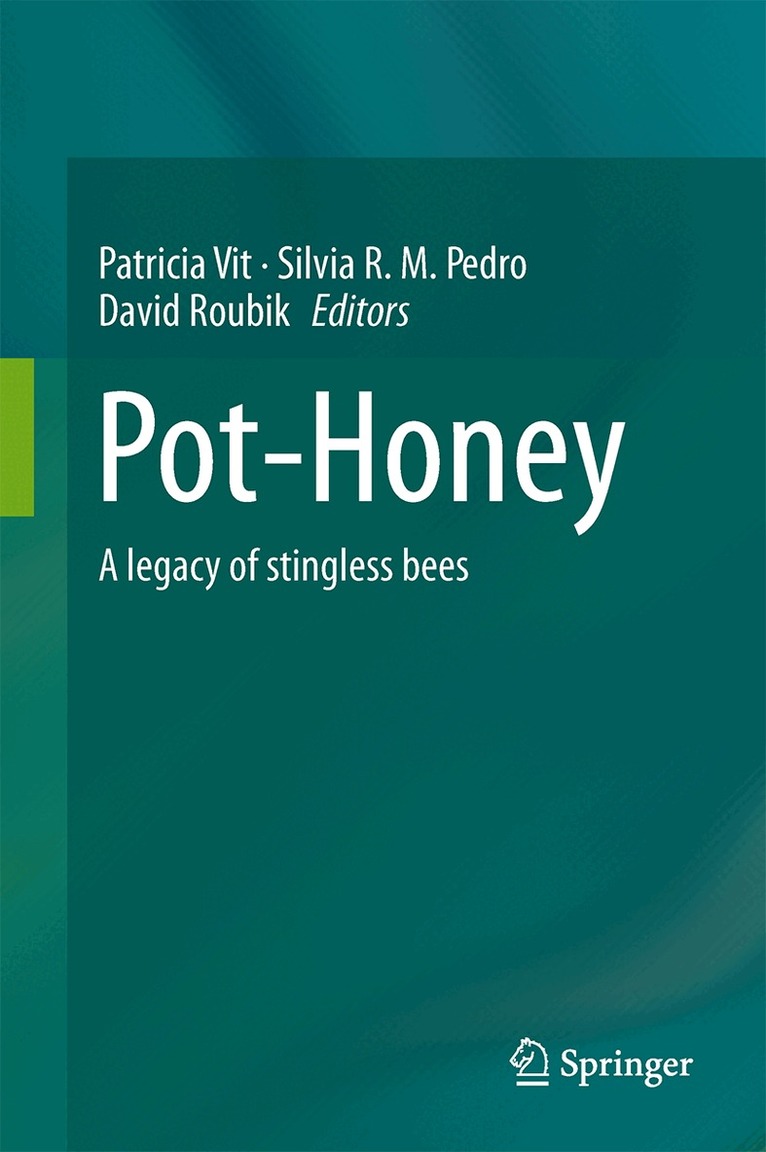
Pot-Honey
A legacy of stingless bees
Av Patricia Vit, Silvia R. M. Pedro m. fl.
Inbunden, 2013
3062 kr
Lägg i varukorg
The stingless bees are one of the most diverse, attractive, fascinating, conspicuous and useful of all the insect groups of the tropical world. This is a formidable and contentious claim but I believe it can be backed up. They are fifty times more species rich than the honey bees, the other tribe …
Pot-Honey
A legacy of stingless bees
Av David Roubik, Silvia R. M. Pedro m. fl.
E-bok, 2013
2925 kr
Lägg i varukorg
The stingless bees are one of the most diverse, attractive, fascinating, conspicuous and useful of all the insect groups of the tropical world. This is a formidable and contentious claim but I believe it can be backed up. They are fifty times more species rich than the honey bees, the other tribe …
Pot-Honey
A legacy of stingless bees
Av Patricia Vit, Silvia R. M. Pedro m. fl.
Häftad, 2016
2189 kr
Lägg i varukorg
The stingless bees are one of the most diverse, attractive, fascinating, conspicuous and useful of all the insect groups of the tropical world. This is a formidable and contentious claim but I believe it can be backed up. They are fifty times more species rich than the honey bees, the other tribe …
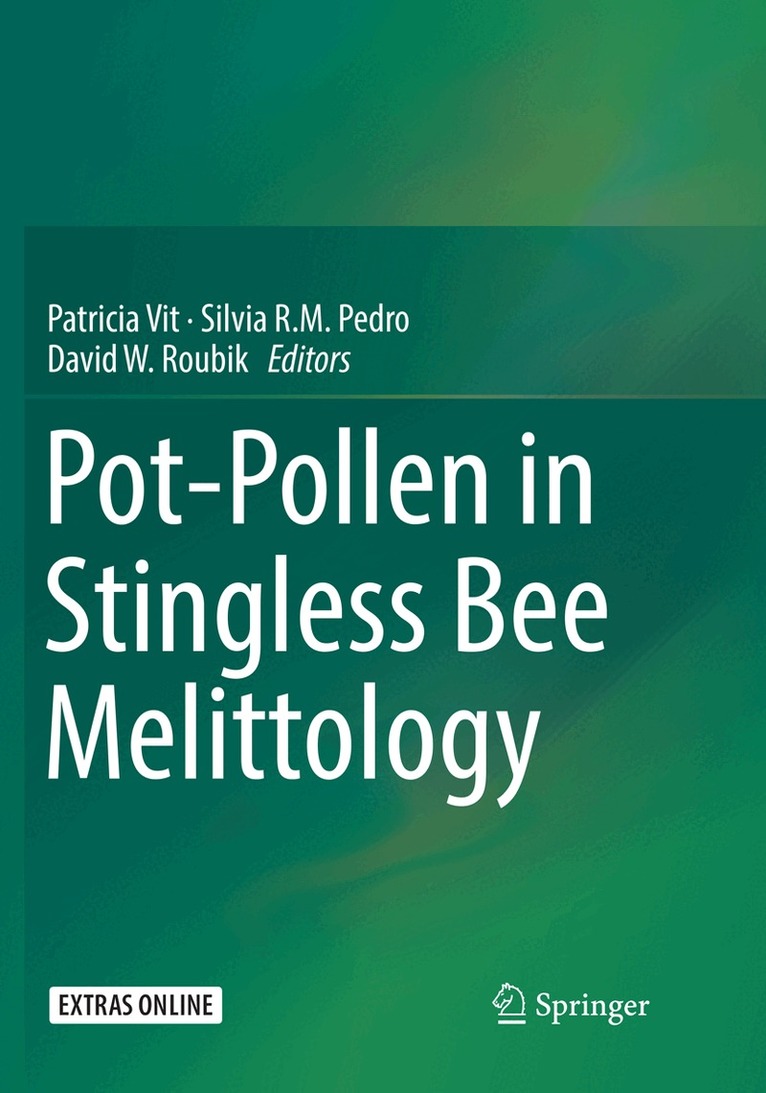
Pot-Pollen in Stingless Bee Melittology
Av Patricia Vit, Silvia R.M. Pedro m. fl.
Häftad, 2019
1643 kr
Lägg i varukorg
This book covers pot-pollen—the other product, besides honey, stored in cerumen pots by Meliponini. Critical assessment is given of stingless bee and pot-pollen biodiversity in the Americas, Africa, Asia and Oceania. Topics addressed include historical biogeography, cultural knowledge, bee foraging …
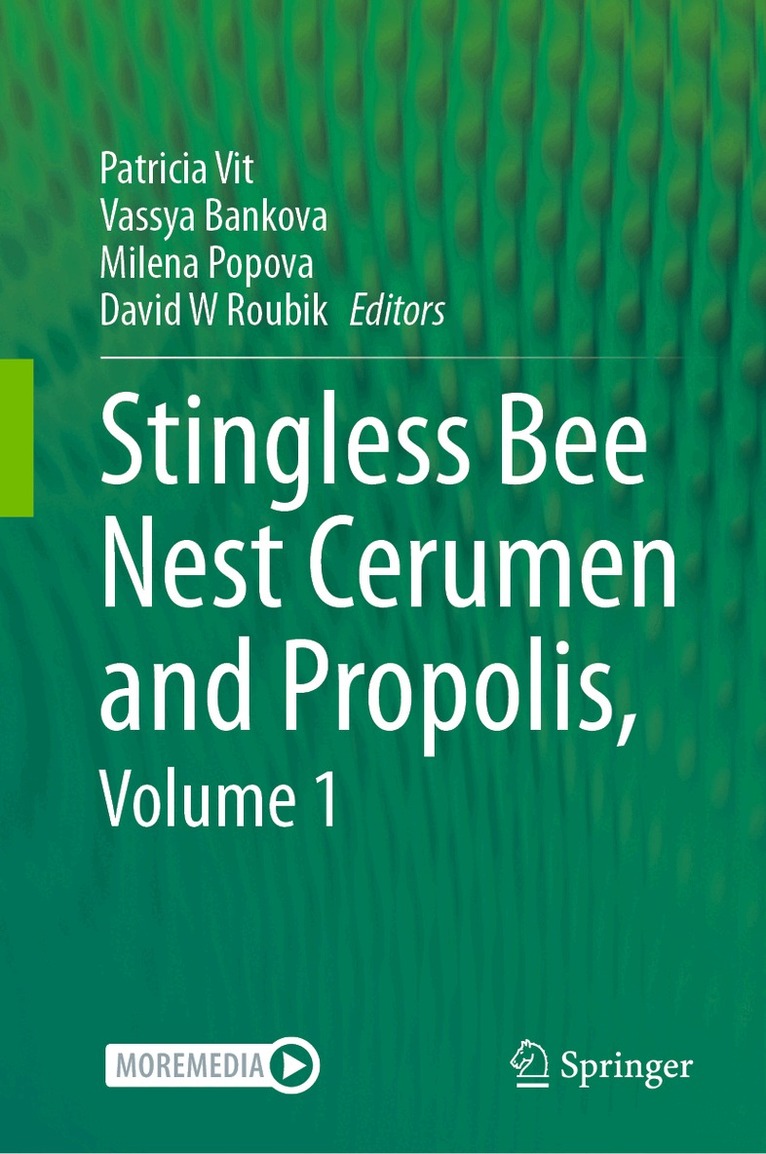
Stingless Bee Nest Cerumen and Propolis, Volume 1
Av Patricia Vit, Vassya Bankova m. fl.
Inbunden, 2024
2516 kr
Lägg i varukorg
Meliponini, the stingless bees of the tropics, process and store honey, pollen and plant resins to maintain their colonies. The chemical components of their nests are bioactive and believed to be therapeutic for a long list of maladies. However, only recently are tests and analyses being done with …
Stingless Bee Nest Cerumen and Propolis, Volume 1
Av David W Roubik, Milena Popova m. fl.
E-bok, 2024
3251 kr
Lägg i varukorg
Meliponini, the stingless bees of the tropics, process and store honey, pollen and plant resins to maintain their colonies. The chemical components of their nests are bioactive and believed to be therapeutic for a long list of maladies. However, only recently are tests and analyses being done with …
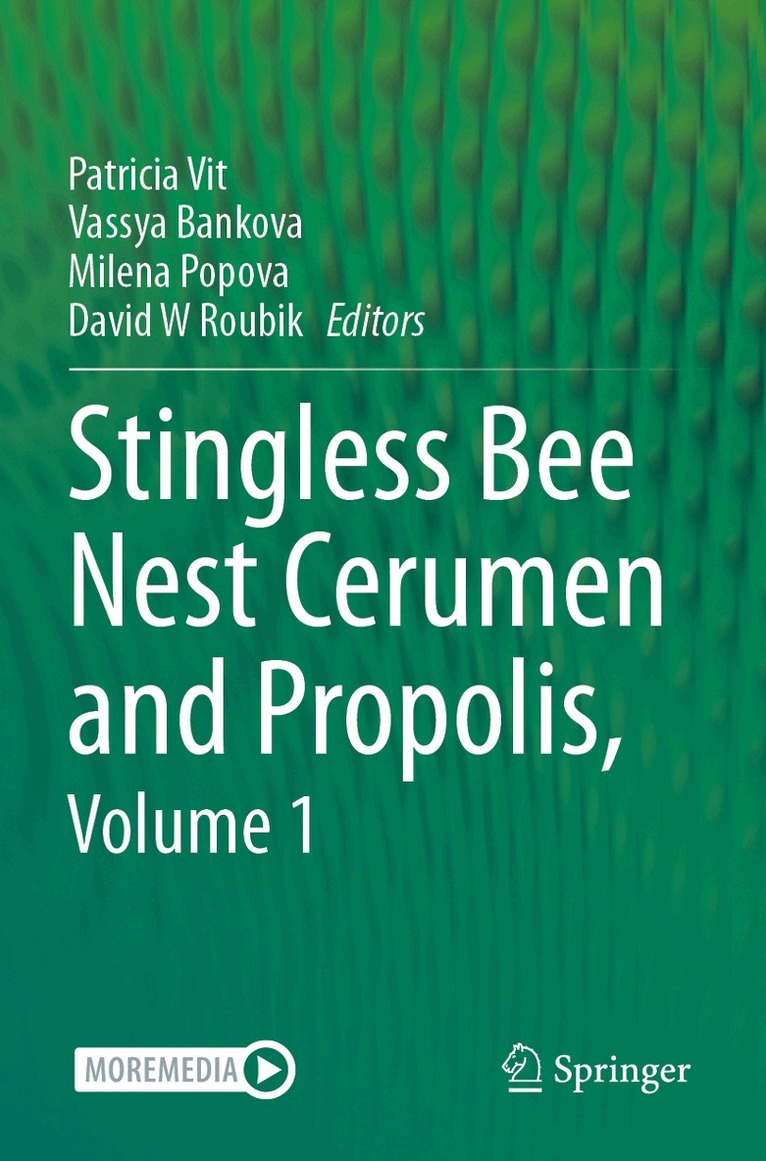
Stingless Bee Nest Cerumen and Propolis, Volume 1
Av Patricia Vit, Vassya Bankova m. fl.
Häftad, 2025
2516 kr
Lägg i varukorg
Meliponini, the stingless bees of the tropics, process and store honey, pollen and plant resins to maintain their colonies. The chemical components of their nests are bioactive and believed to be therapeutic for a long list of maladies. However, only recently are tests and analyses being done with …
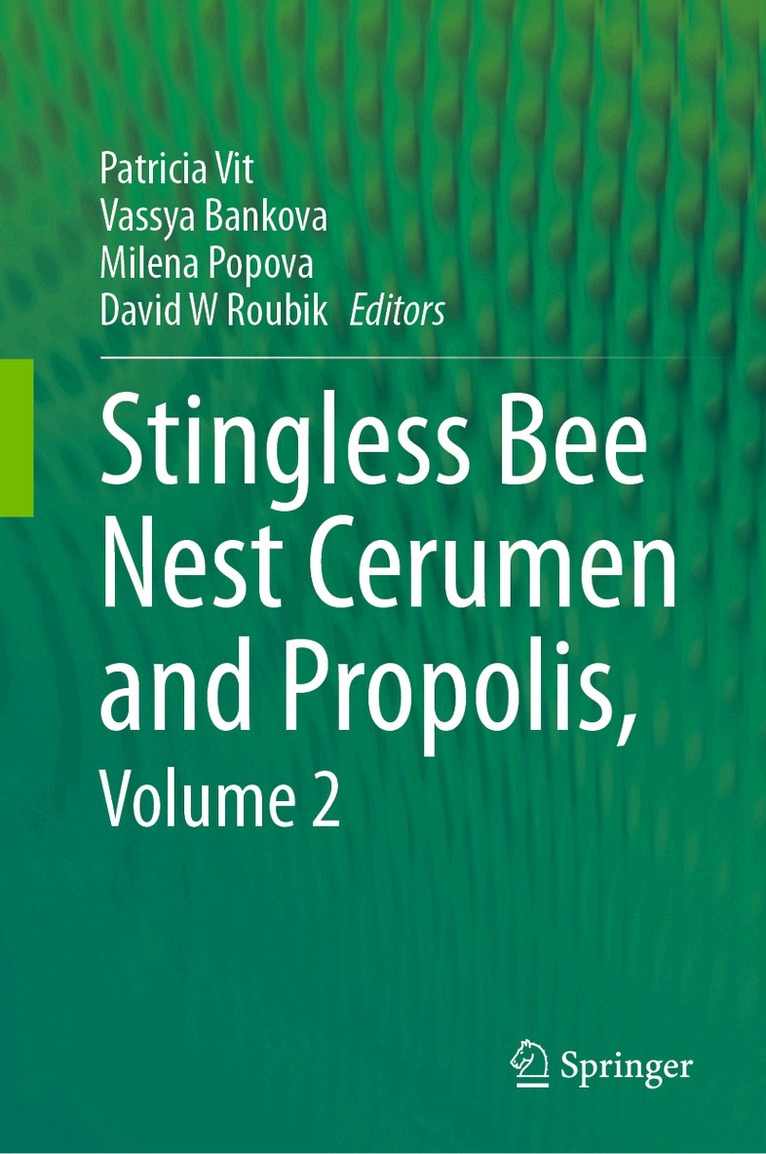
Stingless Bee Nest Cerumen and Propolis, Volume 2
Av Patricia Vit, Vassya Bankova m. fl.
Inbunden, 2024
2516 kr
Lägg i varukorg
Meliponini, the stingless bees of the tropics, process and store honey, pollen and plant resins to maintain their colonies. The chemical components of their nests are bioactive and believed to be therapeutic for a long list of maladies. However, only recently are tests and analyses being done with …
Stingless Bee Nest Cerumen and Propolis, Volume 2
Av David W Roubik, Milena Popova m. fl.
E-bok, 2024
3251 kr
Lägg i varukorg
Meliponini, the stingless bees of the tropics, process and store honey, pollen and plant resins to maintain their colonies. The chemical components of their nests are bioactive and believed to be therapeutic for a long list of maladies. However, only recently are tests and analyses being done with …
Stingless Bee Nest Cerumen and Propolis, Volume 2
Av Patricia Vit, Vassya Bankova m. fl.
Häftad, 2025
2516 kr
Lägg i varukorg
Meliponini, the stingless bees of the tropics, process and store honey, pollen and plant resins to maintain their colonies. The chemical components of their nests are bioactive and believed to be therapeutic for a long list of maladies. However, only recently are tests and analyses being done with …
Pot-Pollen in Stingless Bee Melittology
Av Patricia Vit, Silvia R.M. Pedro m. fl.
Inbunden, 2018
1643 kr
Lägg i varukorg
This book covers pot-pollen—the other product, besides honey, stored in cerumen pots by Meliponini. Critical assessment is given of stingless bee and pot-pollen biodiversity in the Americas, Africa, Asia and Oceania. Topics addressed include historical biogeography, cultural knowledge, bee foraging …
Pot-Pollen in Stingless Bee Melittology
Av David W. Roubik, Silvia R.M. Pedro m. fl.
E-bok, 2018
2065 kr
Lägg i varukorg
This book covers pot-pollen—the other product, besides honey, stored in cerumen pots by Meliponini. Critical assessment is given of stingless bee and pot-pollen biodiversity in the Americas, Africa, Asia and Oceania. Topics addressed include historical biogeography, cultural knowledge, bee foraging …