• Fri frakt över 249 kr
  • •
  • Snabba leveranser
  • •
  • Billiga böcker
Kundservice

Du är på sajten för privatpersoner.

Företag, bibliotek eller offentlig verksamhet?

Du handlar på classic.bokus.com, där alla dina funktioner finns intakta.
Till classic.bokus.com
Bokus logotyp. Gå till startsidan.
  • Erbjudanden
  • Nyheter
  • Student
  • Topplistor
  • Barn & ungdom
  • Bokus Play
  • E-böcker
  • Pocketböcker
  • Spel & pussel

10% rabatt på allt med kod: NYSTART10 →

Sidfot

Mina sidor

    Hjälp

    • Kundservice
    • Vanliga frågor och svar
    • Frakt och leverans
    • Retur vid ångerrätt
    • Reklamera vara
    • Betalning
    • Köpvillkor
    • Allmänna villkor
    • Information om webbplatsens tillgänglighet

    Om Bokus

    • Om oss
    • Pressrum
    • För studenter
    • För företag
    • För bibliotek och offentlig verksamhet
    • För leverantörer
    • Hållbarhet

    Populärt

    • Aktuella erbjudanden
    • Presentkort
    • Studentlitteratur
    • Nya böcker
    • Topplistor
    • Signerade böcker
    • Engelska böcker

    Inspiration

    • Boktips
    • BookTok
    • Populära bokserier
    • Barnbokskaraktärer
    • Populära författare
    Logotyp för Bokus
    Följ oss på Facebook (extern länk)Följ oss på Instagram (extern länk)Följ oss på YouTube (extern länk)Följ oss på TikTok (extern länk)
    bokus @ CookiesAnpassa cookiesIntegritetspolicyKöpvillkor
    Till Citymail hemsida (extern länk)Till Budbee hemsida (extern länk)Till Postnord hemsida (extern länk)Till Schenker hemsida (extern länk)Till Early Bird hemsida (extern länk)Till Walleys hemsida (extern länk)
    1. Samhälle och politik
    2. Samhälle och kultur
    3. Sociala och etiska frågor

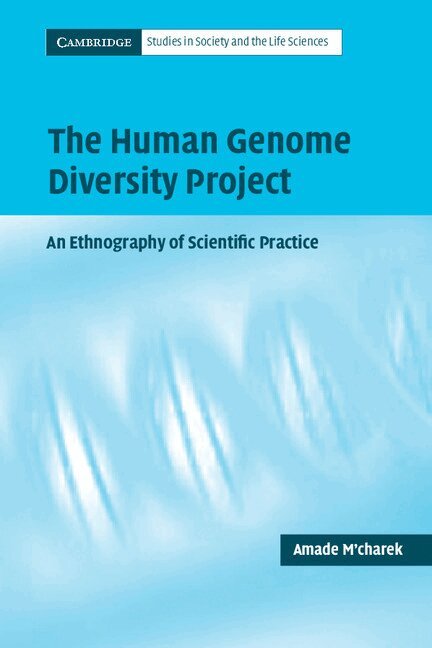
    The Human Genome Diversity Project

    An Ethnography of Scientific Practice

    AvAmade M'Charek

    Häftad, Engelska, 2005

    Del i serien Cambridge Studies in Society and the Life Sciences

    624 kr

    Beställningsvara. Skickas inom 10-15 vardagar. Fri frakt över 249 kr.

    Fler format och utgåvor

    Inbunden

    1 281 kr

    Beskrivning

    The Human Genome Diversity Project (HGDP) was launched in 1991 by a group of population geneticists whose aim was to map genetic diversity in hundreds of human populations by tracing the similarities and differences between them. It quickly became controversial and was accused of racism and 'bad science' because of the special interest paid to sampling cell material from isolated and indigenous populations. The author spent a year carrying out participant observation in two of the laboratories involved and provides fascinating insights into daily routines and technologies used in those laboratories and also into issues of normativity, standardization and naturalisation. Drawing on debates and theoretical perspectives from across the social sciences, M'charek explores the relationship between the tools used to produce knowledge and the knowledge thus produced in a way that illuminates the HGDP but also contributes to our broader understanding of the contemporary life sciences and their social implications.

    Produktinformation

    • Utgivningsdatum:2005-01-20
    • Mått:152 x 228 x 23 mm
    • Vikt:362 g
    • Format:Häftad
    • Språk:Engelska
    • Serie:Cambridge Studies in Society and the Life Sciences
    • Antal sidor:224
    • Förlag:Cambridge University Press
    • ISBN:9780521539876

    Utforska kategorier

    • Sociala och etiska frågor inom Samhälle och politik

    Mer om författaren

    Amade M'charek is Assistant Professor at the Department of Biology and the Department of Poltical Science, University of Amsterdam and is Lecturer in Science, Technology and Public Management.

    Recensioner i media

    'M'Charek offers the reader a fascinating first-hand account of science-in-practice at two of the laboratories involved in the Human Genome Diversity Project, but this is more than just another instalment in the now well-established tradition of ethnography in/of the laboratory. … engagingly written …'. Environment and Planning A

    Innehållsförteckning

    • Introduction: The Human Genome Diversity Project; 1. Technologies of populations: making differences and similarities between Turkish and Dutch males; 3. Ten chimps in a laboratory: or how a human genetic marker may become a good genetic marker for typing chimps; 4. Naturalisation of a reference sequence: Anderson or the Mitochondrial Eve of modern genetics; 5. The traffic in males and other stories on the enactment of the sexes in studies of genetic lineage; 6. Technologies of similarity and difference or how to do politics with DNA.