• Fri frakt över 249 kr
  • •
  • Snabba leveranser
  • •
  • Billiga böcker
Kundservice

Du är på sajten för privatpersoner.

Företag, bibliotek eller offentlig verksamhet?

Du handlar på classic.bokus.com, där alla dina funktioner finns intakta.
Till classic.bokus.com
Bokus logotyp. Gå till startsidan.
  • Erbjudanden
  • Student
  • Topplistor
  • Barn & ungdom
  • Bokus Play
  • E-böcker
  • Ljudböcker
  • Pocketböcker
  • Spel och pussel

Upp till 25% på utvalda nyheter →

Sidfot

Mina sidor

    Hjälp

    • Kundservice
    • Vanliga frågor och svar
    • Frakt och leverans
    • Retur vid ångerrätt
    • Reklamera vara
    • Betalning
    • Köpvillkor
    • Allmänna villkor
    • Information om webbplatsens tillgänglighet

    Om Bokus

    • Om oss
    • Pressrum
    • För studenter
    • För företag
    • För bibliotek och offentlig verksamhet
    • För leverantörer
    • Hållbarhet

    Populärt

    • Aktuella erbjudanden
    • Presentkort
    • Studentlitteratur
    • Nya böcker
    • Topplistor
    • Signerade böcker
    • Engelska böcker

    Inspiration

    • Boktips
    • BookTok
    • Barnbokskaraktärer
    • Populära författare
    Logotyp för Bokus
    Följ oss på Facebook (extern länk)Följ oss på Instagram (extern länk)Följ oss på YouTube (extern länk)Följ oss på TikTok (extern länk)
    bokus @ CookiesAnpassa cookiesIntegritetspolicyKöpvillkor
    Till Citymail hemsida (extern länk)Till Budbee hemsida (extern länk)Till Postnord hemsida (extern länk)Till Schenker hemsida (extern länk)Till Early Bird hemsida (extern länk)Till Walleys hemsida (extern länk)
    1. Psykologi och pedagogik
    2. Psykologi

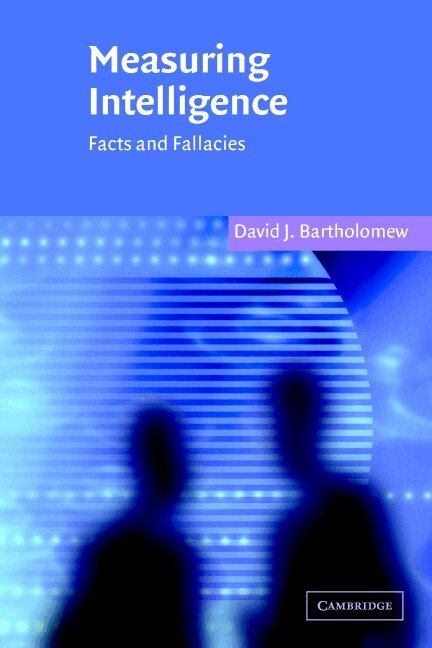
    Measuring Intelligence

    Facts and Fallacies

    AvDavid J. Bartholomew

    Häftad, Engelska, 2004

    528 kr

    Beställningsvara. Skickas inom 7-10 vardagar. Fri frakt över 249 kr.

    Beskrivning

    The testing of intelligence has a long and controversial history. Claims that it is a pseudo-science or a weapon of ideological warfare have been commonplace and there is not even a consensus as to whether intelligence exists and, if it does, whether it can be measured. As a result the debate about it has centred on the nurture versus nature controversy and especially on alleged racial differences and the heritability of intelligence - all of which have major policy implications. This book aims to penetrate the mists of controversy, ideology and prejudice by providing a clear non-mathematical framework for the definition and measurement of intelligence derived from modern factor analysis. Building on this framework and drawing on everyday ideas the author address key controversies in a clear and accessible style and explores some of the claims made by well known writers in the field such as Stephen Jay Gould and Michael Howe.

    Produktinformation

    • Utgivningsdatum:2004-08-26
    • Mått:152 x 227 x 14 mm
    • Vikt:311 g
    • Format:Häftad
    • Språk:Engelska
    • Antal sidor:186
    • Förlag:Cambridge University Press
    • ISBN:9780521544788

    Utforska kategorier

    • Psykologi inom Psykologi och pedagogik

    Mer om författaren

    David J. Bartholomew is Emeritus Professor of Statistics, London School of Economics, Fellow of the British Academy and a former president of the Royal Statistical Society. He is a member of the editorial board of various journals and has published numerous books and journal articles in the fields of statistics and social measurement.

    Recensioner i media

    'This book represents a step forward in the debate on measuring intelligence. It is essential reading for anyone concerned with the 'intelligence debate'. It will also make excellent reading for anyone learning about factor analysis, and provides a perfect illustration of the Bartholomew school of measurement models.' International Statistical Institute

    Innehållsförteckning

    • 1. The great intelligence debate: science or ideology?; 2. Origins; 3. The end of IQ?; 4. First steps to g; 5. Second steps to g; 6. Extracting g; 7. Factor analysis or principal components analysis?; 8. One intelligence or many?; 9. The bell curve: facts, fallacies and speculations; 10. What is g?; 11. Are some groups more intelligent than others?; 12. Is intelligence inherited?; 13. Facts and fallacies.