• Fri frakt över 249 kr
  • •
  • Snabba leveranser
  • •
  • Billiga böcker
Kundservice

Du är på sajten för privatpersoner.

Företag, bibliotek eller offentlig verksamhet?

Du handlar på classic.bokus.com, där alla dina funktioner finns intakta.
Till classic.bokus.com
Bokus logotyp. Gå till startsidan.
  • Erbjudanden
  • Student
  • Topplistor
  • Barn & ungdom
  • Bokus Play
  • E-böcker
  • Ljudböcker
  • Pocketböcker
  • Spel och pussel

Pocketfynda! Hundratals böcker för 49 kr/st →

Sidfot

Mina sidor

    Hjälp

    • Kundservice
    • Vanliga frågor och svar
    • Frakt och leverans
    • Retur vid ångerrätt
    • Reklamera vara
    • Betalning
    • Köpvillkor
    • Allmänna villkor
    • Information om webbplatsens tillgänglighet

    Om Bokus

    • Om oss
    • Pressrum
    • För studenter
    • För företag
    • För bibliotek och offentlig verksamhet
    • För leverantörer
    • Hållbarhet

    Populärt

    • Aktuella erbjudanden
    • Presentkort
    • Studentlitteratur
    • Nya böcker
    • Topplistor
    • Signerade böcker
    • Engelska böcker

    Inspiration

    • Boktips
    • BookTok
    • Barnbokskaraktärer
    • Populära författare
    Logotyp för Bokus
    Följ oss på Facebook (extern länk)Följ oss på Instagram (extern länk)Följ oss på YouTube (extern länk)Följ oss på TikTok (extern länk)
    bokus @ CookiesAnpassa cookiesIntegritetspolicyKöpvillkor
    Till Citymail hemsida (extern länk)Till Budbee hemsida (extern länk)Till Postnord hemsida (extern länk)Till Schenker hemsida (extern länk)Till Early Bird hemsida (extern länk)Till Walleys hemsida (extern länk)
    1. Skönlitteratur
    2. Litteraturvetenskap
    3. Litteraturvetenskap

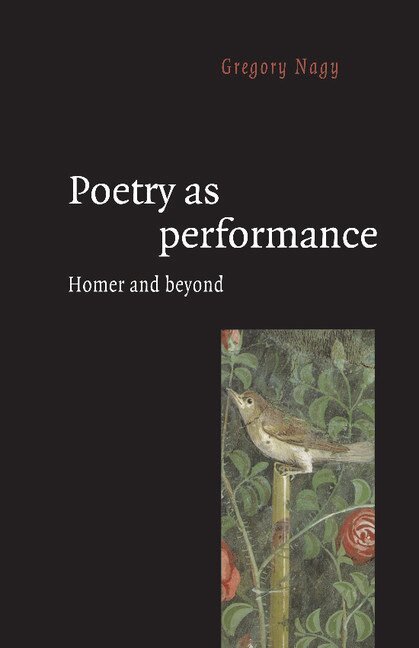
    Poetry as Performance

    Homer and Beyond

    AvGregory Nagy

    Häftad, Engelska, 1996

    687 kr

    Beställningsvara. Skickas inom 7-10 vardagar. Fri frakt över 249 kr.

    Beskrivning

    To understand the emergence of Homeric poetry as an actual written text, it is essential to trace the history of Homeric performance, from the very beginnings of literacy to the critical era of textual canonisations in the Hellenistic and Roman periods. Professor Nagy applies the comparative evidence of oral poetic traditions, including those that survived in literate societies, such as the Provençal troubadour tradition. It appears that a song cannot be fixed as a final written text so long as the oral poetic tradition in which it was created stays alive. So also with Homeric poetry, it is argued that no single definitive text could evolve until the oral traditions in which the epic was grounded became obsolete. In the time of Aristarchus, the gradual movement from relatively fluid to more rigid stages of Homeric transmission reached a near-final point of textualisation.

    Produktinformation

    • Utgivningsdatum:1996-01-26
    • Mått:138 x 217 x 15 mm
    • Vikt:321 g
    • Format:Häftad
    • Språk:Engelska
    • Antal sidor:268
    • Förlag:Cambridge University Press
    • ISBN:9780521558488

    Utforska kategorier

    • Litteraturvetenskap inom Skönlitteratur

    Recensioner i media

    "In this technical yet clear book, Nagy explores how the Homeric poems, stemming from an oral tradition that can be traced to the middle of the second millenium BCE, became the written texts of today....Rich in detail, knowledge and scope, Nagy's book (the culmination of years of work) offers a lucid, well-argued approach to these problems. It will interest not only specialists in ancient Greek poetry, but anyone concerned with oral traditions." P. Nieto, Choice

    Innehållsförteckning

    • Introduction: a brief survey of concepts and aims; Part I. Mimesis and the Making of Identity in Poetic Performance: 1. The Homeric nightingale and the poetics of variation in the art of a troubadour; 2. Mimesis, models of singers, and the meaning of a Homeric epithet; 3. Mimesis in Homer and beyond; 4. Mimesis in lyric: Sappho's Aphrodite and the Changing Woman of the Apache; Part II. Fixed Text in Theory, Shifting Words in Performance: 5. Multiform epic and Aristarchus' quest for the real Homer; 6. Homer as script; 7. Homer as 'scripture'; Epilogue: dead poets and recomposed performers; Appendix; Bibliography; Index.