• Fri frakt över 249 kr
  • •
  • Snabba leveranser
  • •
  • Billiga böcker
Kundservice

Du är på sajten för privatpersoner.

Företag, bibliotek eller offentlig verksamhet?

Du handlar på classic.bokus.com, där alla dina funktioner finns intakta.
Till classic.bokus.com
Bokus logotyp. Gå till startsidan.
  • Erbjudanden
  • Nyheter
  • Student
  • Topplistor
  • Barn & ungdom
  • Bokus Play
  • E-böcker
  • Pocketböcker
  • Spel & pussel

Må bättre, för mindre! Upp till 50% rabatt på hälsoböcker

Sidfot

Mina sidor

    Hjälp

    • Kundservice
    • Vanliga frågor och svar
    • Frakt och leverans
    • Retur vid ångerrätt
    • Reklamera vara
    • Betalning
    • Köpvillkor
    • Allmänna villkor
    • Information om webbplatsens tillgänglighet

    Om Bokus

    • Om oss
    • Pressrum
    • För studenter
    • För företag
    • För bibliotek och offentlig verksamhet
    • För leverantörer
    • Hållbarhet

    Populärt

    • Aktuella erbjudanden
    • Presentkort
    • Studentlitteratur
    • Nya böcker
    • Topplistor
    • Signerade böcker
    • Engelska böcker

    Inspiration

    • Boktips
    • BookTok
    • Populära bokserier
    • Barnbokskaraktärer
    • Populära författare
    Logotyp för Bokus
    Följ oss på Facebook (extern länk)Följ oss på Instagram (extern länk)Följ oss på YouTube (extern länk)Följ oss på TikTok (extern länk)
    bokus @ CookiesAnpassa cookiesIntegritetspolicyKöpvillkor
    Till Citymail hemsida (extern länk)Till Budbee hemsida (extern länk)Till Postnord hemsida (extern länk)Till Schenker hemsida (extern länk)Till Early Bird hemsida (extern länk)Till Walleys hemsida (extern länk)
    1. Samhälle och politik
    2. Politik och statsskick
    3. Internationella relationer

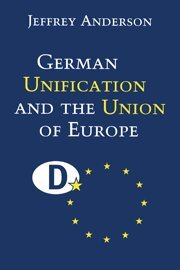
    German Unification and the Union of Europe

    The Domestic Politics of Integration Policy

    AvJeffrey Anderson

    Inbunden, Engelska, 1999

    1 281 kr

    Beställningsvara. Skickas inom 10-15 vardagar. Fri frakt över 249 kr.

    Fler format och utgåvor

    Häftad

    450 kr

    Beskrivning

    German Unification and the Union of Europe discusses some of the most interesting questions in the study of comparative politics and international relations. The book studies the sources of continuity and change in German policy toward the European Union, set in the context of the competing pulls of integration into the EU, and unification of East and West Germany. Employing a framework of analysis premised on the interaction of interests, institutions and ideas, the book asks: how has the domestic politics of unification influenced German policy toward Europe? Why has continuity reigned in some areas, whereas in others significant changes, sometimes reversals, have been registered? What are the implications of this checkered pattern of outcomes for Germany and for Europe? Jeffrey Anderson's book focusses on the political economy issues (such as trade, internal market, energy, and industrial policy) which represent key components of both German domestic politics and Germany's relationship with Europe. Awarded the DAAD 2000 Prize for Distinguished Scholarship in German Studies: Politics and Foreign Policy.

    Produktinformation

    • Utgivningsdatum:1999-06-10
    • Mått:152 x 229 x 17 mm
    • Vikt:520 g
    • Format:Inbunden
    • Språk:Engelska
    • Antal sidor:240
    • Förlag:Cambridge University Press
    • ISBN:9780521643559
    • Utmärkelser:DAAD Prize

    Utforska kategorier

    • Internationella relationer inom Samhälle och politik

    Recensioner i media

    "Jeffery Anderson's study offers a vitual gold mine of new empirical data on the Federal Republic's policies towards the EU. Its meticulous empirical research and careful analysis of concrete case studies makes an important contribution to the growing literature on Germany's role in European integration and will be of inestimable value to scholars and researchers working in the field." German Politics and Society Spring 2001

    Innehållsförteckning

    • 1. A new Germany in Europe?; 2. Unification and 'Germany in Europe'; 3. Continuity in trade and internal market; 4. Mixed outcomes in energy and environment; 5. Change in competition policy; 6. Change in structural funds and the CAP; 7. A new Germany in Europe.