• Fri frakt över 249 kr
  • •
  • Snabba leveranser
  • •
  • Billiga böcker
Kundservice

Du är på sajten för privatpersoner.

Företag, bibliotek eller offentlig verksamhet?

Du handlar på classic.bokus.com, där alla dina funktioner finns intakta.
Till classic.bokus.com
Bokus logotyp. Gå till startsidan.
  • Erbjudanden
  • Student
  • Topplistor
  • Barn & ungdom
  • Bokus Play
  • E-böcker
  • Ljudböcker
  • Pocketböcker
  • Spel och pussel

Pocketfynda! Hundratals böcker för 49 kr/st →

Sidfot

Mina sidor

    Hjälp

    • Kundservice
    • Vanliga frågor och svar
    • Frakt och leverans
    • Retur vid ångerrätt
    • Reklamera vara
    • Betalning
    • Köpvillkor
    • Allmänna villkor
    • Information om webbplatsens tillgänglighet

    Om Bokus

    • Om oss
    • Pressrum
    • För studenter
    • För företag
    • För bibliotek och offentlig verksamhet
    • För leverantörer
    • Hållbarhet

    Populärt

    • Aktuella erbjudanden
    • Presentkort
    • Studentlitteratur
    • Nya böcker
    • Topplistor
    • Signerade böcker
    • Engelska böcker

    Inspiration

    • Boktips
    • BookTok
    • Barnbokskaraktärer
    • Populära författare
    Logotyp för Bokus
    Följ oss på Facebook (extern länk)Följ oss på Instagram (extern länk)Följ oss på YouTube (extern länk)Följ oss på TikTok (extern länk)
    bokus @ CookiesAnpassa cookiesIntegritetspolicyKöpvillkor
    Till Citymail hemsida (extern länk)Till Budbee hemsida (extern länk)Till Postnord hemsida (extern länk)Till Schenker hemsida (extern länk)Till Early Bird hemsida (extern länk)Till Walleys hemsida (extern länk)
    1. Samhälle och politik
    2. Politik och statsskick
    3. Internationella relationer

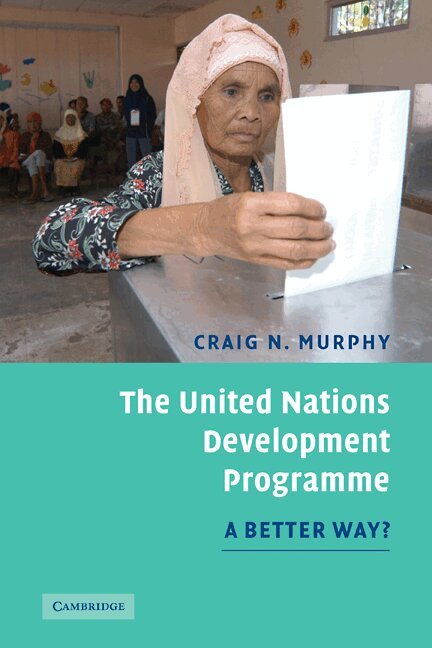
    The United Nations Development Programme

    A Better Way?

    AvCraig N. Murphy

    Häftad, Engelska, 2006

    379 kr

    Beställningsvara. Skickas inom 7-10 vardagar. Fri frakt över 249 kr.

    Fler format och utgåvor

    Inbunden

    1 241 kr

    Beskrivning

    The United Nations Development Programme is the central network co-ordinating the work of the United Nations in over 160 developing countries. This 2006 book provides the first authoritative and accessible history of the Programme and its predecessors. Based on the findings of hundreds of interviews and archives in more than two dozen countries, Craig Murphy traces the history of the UNDP's organizational structure and mission, its relationship to the multilateral financial institutions, and the development of its doctrines. He argues that the principles on which the UNDP was founded remain as relevant in a world divided by terrorism as they were in the immediate aftermath of the Second World War, as are the fundamental problems that have plagued the Programme from its origin, including the opposition of traditionally isolationist forces in the industrialized world.

    Produktinformation

    • Utgivningsdatum:2006-09-14
    • Mått:152 x 229 x 22 mm
    • Vikt:570 g
    • Format:Häftad
    • Språk:Engelska
    • Antal sidor:392
    • Förlag:Cambridge University Press
    • ISBN:9780521683166
    • Utmärkelser:Chadwick F. Alger Prize, International Studies Association 2007

    Utforska kategorier

    • Internationella relationer inom Samhälle och politik

    Mer om författaren

    Craig N. Murphy is the Historian of the United Nations Development Programme and Professor of International Relations at Wellesley College. He is past president of the International Studies Association and co-founder of the international public policy journal, Global Governance. Craig has written and edited several books, the most recent being Global Institutions, Marginalization, and Development (2005).

    Recensioner i media

    'Students of development, the UN, and international relations have waited a long time for this authoritative examination of the UNDP. Informative, provocative, and controversial - this book provides the largest remaining missing piece in the historical puzzle of post-war multilateralism.' Thomas G. Weiss, Presidential Professor, CUNY Graduate Center, and Co-director, UN Intellectual History Project

    Innehållsförteckning

    • 1. Not the standard image; 2. Development and the United Nations; 3. Institutions for practical solidarity; 4. Decolonization and economic transformation; 5. Lewis in Ghana and after; 6. Capacity, consensus, crisis, and consequences; 7. Engaging liberation movements and revolutionary states; 8. A learning organization: women, Latin America, and Africa; 9. 'Bottoms Up' development helps make UNDP a mammal; 10. Working for 'a holy man' after the cold war; 11. 'Fabian socialists do not make the cut'; 12. 'Ploughing the sea'? UNDP and the future of global governance.