• Fri frakt över 249 kr
  • •
  • Snabba leveranser
  • •
  • Billiga böcker
Kundservice

Du är på sajten för privatpersoner.

Företag, bibliotek eller offentlig verksamhet?

Du handlar på classic.bokus.com, där alla dina funktioner finns intakta.
Till classic.bokus.com
Bokus logotyp. Gå till startsidan.
  • Erbjudanden
  • Student
  • Topplistor
  • Barn & ungdom
  • Bokus Play
  • E-böcker
  • Ljudböcker
  • Pocketböcker
  • Spel & pussel

Upp till 25% på utvalda nyheter →

Sidfot

Mina sidor

    Hjälp

    • Kundservice
    • Vanliga frågor och svar
    • Frakt och leverans
    • Retur vid ångerrätt
    • Reklamera vara
    • Betalning
    • Köpvillkor
    • Allmänna villkor
    • Information om webbplatsens tillgänglighet

    Om Bokus

    • Om oss
    • Pressrum
    • För studenter
    • För företag
    • För bibliotek och offentlig verksamhet
    • För leverantörer
    • Hållbarhet

    Populärt

    • Aktuella erbjudanden
    • Presentkort
    • Studentlitteratur
    • Nya böcker
    • Topplistor
    • Signerade böcker
    • Engelska böcker

    Inspiration

    • Boktips
    • BookTok
    • Populära bokserier
    • Barnbokskaraktärer
    • Populära författare
    Logotyp för Bokus
    Följ oss på Facebook (extern länk)Följ oss på Instagram (extern länk)Följ oss på YouTube (extern länk)Följ oss på TikTok (extern länk)
    bokus @ CookiesAnpassa cookiesIntegritetspolicyKöpvillkor
    Till Citymail hemsida (extern länk)Till Budbee hemsida (extern länk)Till Postnord hemsida (extern länk)Till Schenker hemsida (extern länk)Till Early Bird hemsida (extern länk)Till Walleys hemsida (extern länk)
    1. Historia och arkeologi
    2. Historia

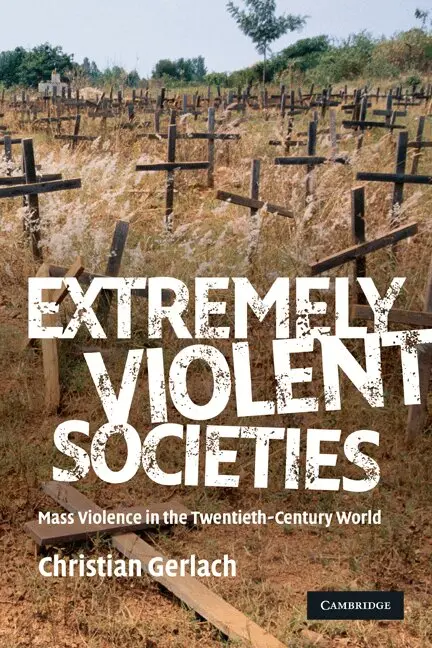
    Extremely Violent Societies

    Mass Violence in the Twentieth-Century World

    AvChristian Gerlach

    Häftad, Engelska, 2010

    458 kr

    Beställningsvara. Skickas inom 7-10 vardagar. Fri frakt över 249 kr.

    Fler format och utgåvor

    Inbunden

    1 071 kr

    Beskrivning

    In this groundbreaking book Christian Gerlach traces the social roots of the extraordinary processes of human destruction involved in mass violence throughout the twentieth century. He argues that terms such as 'genocide' and 'ethnic cleansing' are too narrow to explain the diverse motives and interests that cause violence to spread in varying forms and intensities. From killings and expulsions to enforced hunger, collective rape, strategic bombing, forced labour and imprisonment he explores what happened before, during, and after periods of widespread bloodshed in countries such as Armenia, Indonesia, Bangladesh, Nazi-occupied Greece and in anti-guerilla wars worldwide in order to highlight the crucial role of socio-economic pressures in the generation of group conflicts. By focussing on why so many different people participated in or supported mass violence, and why different groups were victimized, he offers us a new way of understanding one of the most disturbing phenomena of our times.

    Produktinformation

    • Utgivningsdatum:2010-10-14
    • Mått:152 x 223 x 24 mm
    • Vikt:790 g
    • Format:Häftad
    • Språk:Engelska
    • Antal sidor:502
    • Förlag:Cambridge University Press
    • ISBN:9780521706810

    Utforska kategorier

    • Historia inom Historia och arkeologi

    Mer om författaren

    Christian Gerlach is Professor of Contemporary History at the University of Bern. His award-winning titles in German include Calculated Murder: The German Economic and Extermination Policy in Byelorussia (third edition, 2001), War, Food, Genocide: German Extermination Policies in the Second World War (second edition, 2001), and The Last Chapter: The Murder of Hungarian Jews, 1944–45 (with Götz Aly, second edition, 2004).

    Recensioner i media

    'In this pathbreaking book, Christian Gerlach undermines the tunnel-vision of mainstream genocide research. Introducing a challenging new theoretical approach, Gerlach convincingly demonstrates the messy, complex patterns of mass violence in the modern world. Everyone interested in these issues will enrich their understanding by engaging with his arguments and case-studies.' Martin Shaw, University of Sussex

    Innehållsförteckning

    • 1. Introduction: extremely violent societies; Part I. Participatory Violence: 2. A coalition for violence: mass slaughter in Indonesia, 1965–66; 3. Participating and profiteering: the destruction of the Armenians, 1915–23; Part II. The Crisis of Society: 4. From rivalries between elites to a crisis of society: mass violence and famine in Bangladesh (East Pakistan), 1971–77; 5. Sustainable violence: strategic resettlement, militias and 'development' in anti-guerrilla warfare; 6. What connects the fate of different victim groups? The German occupation and Greek society in crisis; Part III. General Observations: 7. The ethnization of history: the historiography of mass violence and national identity construction; 8. Conclusions.