• Fri frakt över 249 kr
  • •
  • Snabba leveranser
  • •
  • Billiga böcker
Kundservice

Du är på sajten för privatpersoner.

Företag, bibliotek eller offentlig verksamhet?

Du handlar på classic.bokus.com, där alla dina funktioner finns intakta.
Till classic.bokus.com
Bokus logotyp. Gå till startsidan.
  • Erbjudanden
  • Nyheter
  • Student
  • Topplistor
  • Barn & ungdom
  • Bokus Play
  • E-böcker
  • Pocketböcker
  • Spel & pussel

10% rabatt på allt med kod: NYSTART10 →

Sidfot

Mina sidor

    Hjälp

    • Kundservice
    • Vanliga frågor och svar
    • Frakt och leverans
    • Retur vid ångerrätt
    • Reklamera vara
    • Betalning
    • Köpvillkor
    • Allmänna villkor
    • Information om webbplatsens tillgänglighet

    Om Bokus

    • Om oss
    • Pressrum
    • För studenter
    • För företag
    • För bibliotek och offentlig verksamhet
    • För leverantörer
    • Hållbarhet

    Populärt

    • Aktuella erbjudanden
    • Presentkort
    • Studentlitteratur
    • Nya böcker
    • Topplistor
    • Signerade böcker
    • Engelska böcker

    Inspiration

    • Boktips
    • BookTok
    • Populära bokserier
    • Barnbokskaraktärer
    • Populära författare
    Logotyp för Bokus
    Följ oss på Facebook (extern länk)Följ oss på Instagram (extern länk)Följ oss på YouTube (extern länk)Följ oss på TikTok (extern länk)
    bokus @ CookiesAnpassa cookiesIntegritetspolicyKöpvillkor
    Till Citymail hemsida (extern länk)Till Budbee hemsida (extern länk)Till Postnord hemsida (extern länk)Till Schenker hemsida (extern länk)Till Early Bird hemsida (extern länk)Till Walleys hemsida (extern länk)
    1. Samhälle och politik
    2. Politik och statsskick
    3. Internationella relationer

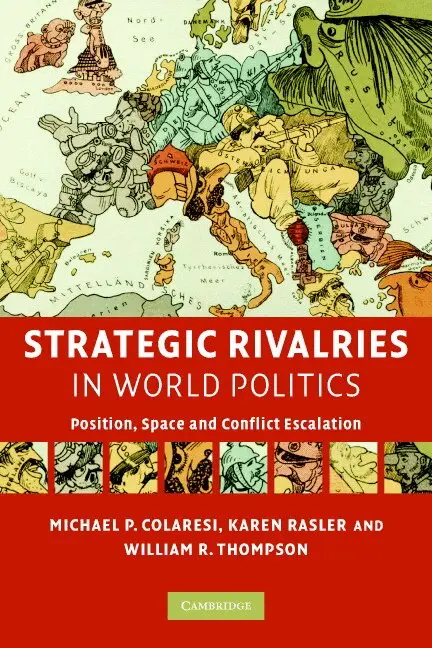
    Strategic Rivalries in World Politics

    Position, Space and Conflict Escalation

    AvMichael P. Colaresi,Karen Rasler

    Häftad, Engelska, 2008

    517 kr

    Beställningsvara. Skickas inom 10-15 vardagar. Fri frakt över 249 kr.

    Fler format och utgåvor

    Inbunden

    1 335 kr

    Beskrivning

    International conflict is neither random nor inexplicable. It is highly structured by antagonisms between a relatively small set of states that regard each other as rivals. Examining the 173 strategic rivalries in operation throughout the nineteenth and twentieth centuries, this book identifies the differences rivalries make in the probability of conflict escalation and analyzes how they interact with serial crises, arms races, alliances and capability advantages. The authors distinguish between rivalries concerning territorial disagreement (space) and rivalries concerning status and influence (position) and show how each leads to markedly different patterns of conflict escalation. They argue that rivals are more likely to engage in international conflict with their antagonists than non-rival pairs of states and conclude with an assessment of whether we can expect democratic peace, economic development and economic interdependence to constrain rivalry-induced conflict.

    Produktinformation

    • Utgivningsdatum:2008-01-10
    • Mått:152 x 228 x 20 mm
    • Vikt:526 g
    • Format:Häftad
    • Språk:Engelska
    • Antal sidor:330
    • Förlag:Cambridge University Press
    • ISBN:9780521707619

    Utforska kategorier

    • Internationella relationer inom Samhälle och politik

    Mer om författaren

    Michael P. Colaresi is Assistant Professor in the Department of Political Science at Michigan State University. Karen Rasler is Professor in the Department of Political Science at Indiana University. William R. Thompson is Rogers Professor of Political Science in the Department of Political Science at Indiana University.

    Recensioner i media

    'Strategic Rivalries in World Politics makes several substantive contributions to our understanding of rivalries. First, the conceptual and empirical distinctions between spatial and positional rivalries are a major contribution to the literature that treats all rivalries as the same. Second, a number of the empirical findings challenge or reinforce past findings about rivalries and thereby extend our knowledge of those phenomena. Yet, the contributions are not confined to the rivalry genre. A nice feature of the book is that the authors use rivalries to gain insights into the validity and utility of some important models and works in international conflict. They demonstrate that considering international conflict in the rivalry context changes or enhances the insights gained from several prominent approaches.' Paul F. Diehl, University of Illinois, Urbana-Champaign

    Innehållsförteckning

    • Part I. About Strategic Rivalries: 1. An introduction to strategic rivalries; 2. Defining and identifying strategic rivalries in world politics; 3. Describing strategic rivalries; Part II. The Dangers of Strategic Rivalries: Crisis Behavior and Escalation: 4. Protracted conflict and crisis escalation; 5. Serial crisis behavior and escalating risks; Part III. Playing to Type: Spatial and Positional Issues in Strategic Rivalries: 6. Contiguity, space and position in the major power subsystem; 7. Initiating and escalating positional and spatial rivalries; Part IV. Filling in Some Steps to War: 8. Arms buildups and alliances in the steps-to-war theory; 9. Contested territory and conflict escalation; Part V. Strategic Rivalries and Conflict: 10. Inducements, facilitators, and suppressors.