• Fri frakt över 249 kr
  • •
  • Snabba leveranser
  • •
  • Billiga böcker
Kundservice

Du är på sajten för privatpersoner.

Företag, bibliotek eller offentlig verksamhet?

Du handlar på classic.bokus.com, där alla dina funktioner finns intakta.
Till classic.bokus.com
Bokus logotyp. Gå till startsidan.
  • Erbjudanden
  • Nyheter
  • Student
  • Topplistor
  • Barn & ungdom
  • Bokus Play
  • E-böcker
  • Pocketböcker
  • Spel & pussel

10% rabatt på allt med kod: NYSTART10 →

Sidfot

Mina sidor

    Hjälp

    • Kundservice
    • Vanliga frågor och svar
    • Frakt och leverans
    • Retur vid ångerrätt
    • Reklamera vara
    • Betalning
    • Köpvillkor
    • Allmänna villkor
    • Information om webbplatsens tillgänglighet

    Om Bokus

    • Om oss
    • Pressrum
    • För studenter
    • För företag
    • För bibliotek och offentlig verksamhet
    • För leverantörer
    • Hållbarhet

    Populärt

    • Aktuella erbjudanden
    • Presentkort
    • Studentlitteratur
    • Nya böcker
    • Topplistor
    • Signerade böcker
    • Engelska böcker

    Inspiration

    • Boktips
    • BookTok
    • Populära bokserier
    • Barnbokskaraktärer
    • Populära författare
    Logotyp för Bokus
    Följ oss på Facebook (extern länk)Följ oss på Instagram (extern länk)Följ oss på YouTube (extern länk)Följ oss på TikTok (extern länk)
    bokus @ CookiesAnpassa cookiesIntegritetspolicyKöpvillkor
    Till Citymail hemsida (extern länk)Till Budbee hemsida (extern länk)Till Postnord hemsida (extern länk)Till Schenker hemsida (extern länk)Till Early Bird hemsida (extern länk)Till Walleys hemsida (extern länk)
    1. Psykologi och pedagogik
    2. Pedagogik
    3. Pedagogisk psykologi

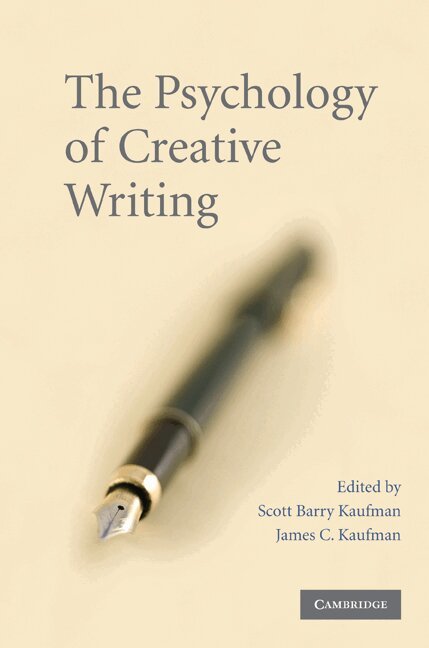
    The Psychology of Creative Writing

    AvScott Barry Kaufman,James C. Kaufman

    Häftad, Engelska, 2009

    605 kr

    Beställningsvara. Skickas inom 10-15 vardagar. Fri frakt över 249 kr.

    Fler format och utgåvor

    Inbunden

    1 571 kr

    Beskrivning

    The Psychology of Creative Writing takes a scholarly, psychological look at multiple aspects of creative writing, including the creative writer as a person, the text itself, the creative process, the writer's development, the link between creative writing and mental illness, the personality traits of comedy and screen writers, and how to teach creative writing. This book will appeal to psychologists interested in creativity, writers who want to understand more about the magic behind their talents, and educated laypeople who enjoy reading, writing, or both. From scholars to bloggers to artists, The Psychology of Creative Writing has something for everyone.

    Produktinformation

    • Utgivningsdatum:2009-06-22
    • Mått:154 x 228 x 21 mm
    • Vikt:550 g
    • Format:Häftad
    • Språk:Engelska
    • Antal sidor:406
    • Förlag:Cambridge University Press
    • ISBN:9780521707824

    Utforska kategorier

    • Pedagogisk psykologi inom Psykologi och pedagogik

    Mer om författaren

    Scott Barry Kaufman, Ph.D., completed his doctorate in cognitive psychology at Yale University in 2009. He also holds an M.Phil. in experimental psychology from the University of Cambridge, where he was a Gates Cambridge Scholar, and a B.S. from Carnegie Mellon University, where he studied psychology, human–computer interaction, and voice performance. In his research, he combines various perspectives, including cognitive science, philosophy, and evolutionary psychology, to further an understanding of intelligence and creativity. In addition to publishing more than 20 book chapters and articles in professional journals such as Intelligence and Journal of Creative Behavior, he is co-editor of The Cambridge Handbook of Intelligence (with Robert J. Sternberg, forthcoming). Kaufman's work has been covered in media outlets such as The Philadelphia Inquirer and Men's Health. Additionally, he writes a blog for Psychology Today called 'Beautiful Minds.' He is the recipient of the 2008 Frank X. Barron student award from Division 10 of the American Psychological Association for his research on the psychology of aesthetics, creativity, and the arts. James C. Kaufman, Ph.D., is an Associate Professor of Psychology at the California State University at San Bernardino, where he directs the Learning Research Institute. Dr Kaufman's research focuses on the nurturance, structure, and assessment of creativity. Kaufman is the author or editor of fifteen books either published or in press, including Creativity 101, Essentials of Creativity Assessment (with Jonathan Plucker and John Baer), International Handbook of Creativity (with Robert J. Sternberg), and Applied Intelligence (with Robert J. Sternberg and Elena Grigorenko). His research has been featured on CNN, NPR, the New York Times, New Yorker, and the BBC. Kaufman is a founding co-editor of the official journal for the American Psychological Association's Division 10, Psychology of Aesthetics, Creativity, and the Arts. He is also the Associate Editor of Journal of Creative Behavior, the Editor of International Journal of Creativity and Problem Solving, and an Associate Editor of Psychological Assessment, and he is the Series Editor of the Psych 101 series. He received the 2003 Daniel E. Berlyne Award from APA's Division 10 and the 2008 E. Paul Torrance Award from the National Association of Gifted Children.

    Recensioner i media

    '… eclectic survey … a wide-ranging companion to an under-researched area.' The Psychologist

    Innehållsförteckning

    • Part I. The Writer: 1. The Personalities of Creative Writers Jane Piirto; 2. Killing Your Babies: The Creative Writer, Locus of Control, and Rumination E. M. Skrzynecky and James C. Kaufman; 3. 'The more I write, the better I write, and the better I feel about myself': Mood Variability and Mood Regulation in Student Journalists and Creative Writers Adèle Kohanyi; 4. Characteristics of Eminent Screenwriters: Who Are Those Guys? Steven R. Pritzker and David McGarva; 5. The Tears of a Clown: Understanding Comedy Writers Scott Barry Kaufman and Aaron Kozbelt; Part II. The Text: 6. The Evolution of Creative Writing Daniel Nettle; 7. Literary Creativity and Physiognomy: Expressiveness in Writers, Readers, and Literature Martin S. Lindauer; 8. The Literary Genius of William Shakespeare: Empirical Studies of His Dramatic and Poetic Creativity Dean Keith Simonton; Part III. The Process: 9. In search of the writer's creative process Todd Lubart; 10. Writing as a collaborative act R. Keith Sawyer; 11. Writing as an interaction with ideas Mark A. Runco; 12. Creative Cognition in Science Fiction and Fantasy Writing Thomas B. Ward and E. Thomas Lawson; Part IV. The Development: 13. Writing in flow Susan K. Perry; 14. Writers' Blocks and Blocked Writers: Using Natural Imagery to Enhance Creativity Jerome L. Singer and Michael V. Barrios; 15. Pretend Play, Emotional Processes, and Developing Narratives Sandra W. Russ; 16. The Healing Powers of Expressive Writing Janel D. Sexton and James W. Pennebaker; Part V. The Education: 17. How Rewards and Evaluations Can Undermine Creativity (and How to Prevent This) John Baer and Sharon S. McKool; 18. Teaching Writing by Demythologizing Creativity Grace R. Waitman and Jonathan A. Plucker; 19. Creation and Response: Wellspring to Evaluation Genevieve E. Chandler and Pat Schneider; 20. Fostering Creative Writing: Challenges Faced by Chinese Learners Ai-Girl Tan; 21. Putting the Parts Together: An Integrative Look at the Psychology of Creative Writing Scott Barry Kaufman and James C. Kaufman.