• Fri frakt över 249 kr
  • •
  • Snabba leveranser
  • •
  • Billiga böcker
Kundservice

Du är på sajten för privatpersoner.

Företag, bibliotek eller offentlig verksamhet?

Du handlar på classic.bokus.com, där alla dina funktioner finns intakta.
Till classic.bokus.com
Bokus logotyp. Gå till startsidan.
  • Erbjudanden
  • Nyheter
  • Student
  • Topplistor
  • Barn & ungdom
  • Bokus Play
  • E-böcker
  • Pocketböcker
  • Spel & pussel

10% rabatt på allt med kod: NYSTART10 →

Sidfot

Mina sidor

    Hjälp

    • Kundservice
    • Vanliga frågor och svar
    • Frakt och leverans
    • Retur vid ångerrätt
    • Reklamera vara
    • Betalning
    • Köpvillkor
    • Allmänna villkor
    • Information om webbplatsens tillgänglighet

    Om Bokus

    • Om oss
    • Pressrum
    • För studenter
    • För företag
    • För bibliotek och offentlig verksamhet
    • För leverantörer
    • Hållbarhet

    Populärt

    • Aktuella erbjudanden
    • Presentkort
    • Studentlitteratur
    • Nya böcker
    • Topplistor
    • Signerade böcker
    • Engelska böcker

    Inspiration

    • Boktips
    • BookTok
    • Populära bokserier
    • Barnbokskaraktärer
    • Populära författare
    Logotyp för Bokus
    Följ oss på Facebook (extern länk)Följ oss på Instagram (extern länk)Följ oss på YouTube (extern länk)Följ oss på TikTok (extern länk)
    bokus @ CookiesAnpassa cookiesIntegritetspolicyKöpvillkor
    Till Citymail hemsida (extern länk)Till Budbee hemsida (extern länk)Till Postnord hemsida (extern länk)Till Schenker hemsida (extern länk)Till Early Bird hemsida (extern länk)Till Walleys hemsida (extern länk)
    1. Juridik
    2. Rättsvetenskap

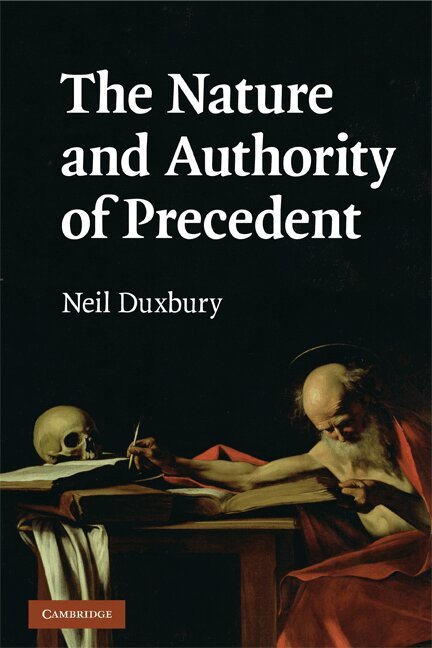
    The Nature and Authority of Precedent

    AvNeil Duxbury

    Häftad, Engelska, 2008

    550 kr

    Beställningsvara. Skickas inom 10-15 vardagar. Fri frakt över 249 kr.

    Beskrivning

    Neil Duxbury examines how precedents constrain legal decision-makers and how legal decision-makers relax and avoid those constraints. There is no single principle or theory which explains the authority of precedent but rather a number of arguments which raise rebuttable presumptions in favour of precedent-following. This book examines the force and the limitations of these arguments and shows that although the principal requirement of the doctrine of precedent is that courts respect earlier judicial decisions on materially identical facts, the doctrine also requires courts to depart from such decisions when following them would perpetuate legal error or injustice. Not only do judicial precedents not 'bind' judges in the classical-positivist sense, but, were they to do so, they would be ill suited to common-law decision-making. Combining historical inquiry and philosophical analysis, this book will assist anyone seeking to understand how precedent operates as a common-law doctrine.

    Produktinformation

    • Utgivningsdatum:2008-04-03
    • Mått:152 x 227 x 13 mm
    • Vikt:350 g
    • Format:Häftad
    • Språk:Engelska
    • Antal sidor:206
    • Förlag:Cambridge University Press
    • ISBN:9780521713368

    Utforska kategorier

    • Rättsvetenskap inom Juridik

    Mer om författaren

    Neil Duxbury is Professor of Law at the London School of Economics.

    Recensioner i media

    "...For the American reader concerned with precedent in constitutional law, there is much food for thought..." --Matthew J. Franck, Radford University; Visiting Fellow, Princeton University, The Law and Politics Book Review

    Innehållsförteckning

    • Part I. Introduction - The Usable Past: 1. Precedent; 2. Positivism and precedent; 3. A theory of precedent?; Part II. Why Does English Law Have a Doctrine of Precedent?: 4. The formation of a doctrine of precedent; Part III. Precedents as Reasons: 5. Looking for a certain ratio; 6. Shortcuts to reason; 7. Pre-emptive precedent?; 8. Conclusion; Part IV. Distinguishing, Overruling and the Problem of Self-Reference: 9. Distinguishing; 10. Overruling; 11. The power to overrule oneself; 12. The authority of the Practice Statement; Part V. Why Follow Precedent?: 13. Consequentialist justifications; 14. Deontological arguments; 15. Conclusion.