• Fri frakt över 249 kr
  • •
  • Snabba leveranser
  • •
  • Billiga böcker
Kundservice

Du är på sajten för privatpersoner.

Företag, bibliotek eller offentlig verksamhet?

Du handlar på classic.bokus.com, där alla dina funktioner finns intakta.
Till classic.bokus.com
Bokus logotyp. Gå till startsidan.
  • Erbjudanden
  • Student
  • Topplistor
  • Barn & ungdom
  • Bokus Play
  • E-böcker
  • Ljudböcker
  • Pocketböcker
  • Spel & pussel

10% rabatt på allt med kod NYSTART10 →

Sidfot

Mina sidor

    Hjälp

    • Kundservice
    • Vanliga frågor och svar
    • Frakt och leverans
    • Retur vid ångerrätt
    • Reklamera vara
    • Betalning
    • Köpvillkor
    • Allmänna villkor
    • Information om webbplatsens tillgänglighet

    Om Bokus

    • Om oss
    • Pressrum
    • För studenter
    • För företag
    • För bibliotek och offentlig verksamhet
    • För leverantörer
    • Hållbarhet

    Populärt

    • Aktuella erbjudanden
    • Presentkort
    • Studentlitteratur
    • Nya böcker
    • Topplistor
    • Signerade böcker
    • Engelska böcker

    Inspiration

    • Boktips
    • BookTok
    • Populära bokserier
    • Barnbokskaraktärer
    • Populära författare
    Logotyp för Bokus
    Följ oss på Facebook (extern länk)Följ oss på Instagram (extern länk)Följ oss på YouTube (extern länk)Följ oss på TikTok (extern länk)
    bokus @ CookiesAnpassa cookiesIntegritetspolicyKöpvillkor
    Till Citymail hemsida (extern länk)Till Budbee hemsida (extern länk)Till Postnord hemsida (extern länk)Till Schenker hemsida (extern länk)Till Early Bird hemsida (extern länk)Till Walleys hemsida (extern länk)
    1. Medicin
    2. Andra medicinska specialiteter
    3. Klinisk psykologi

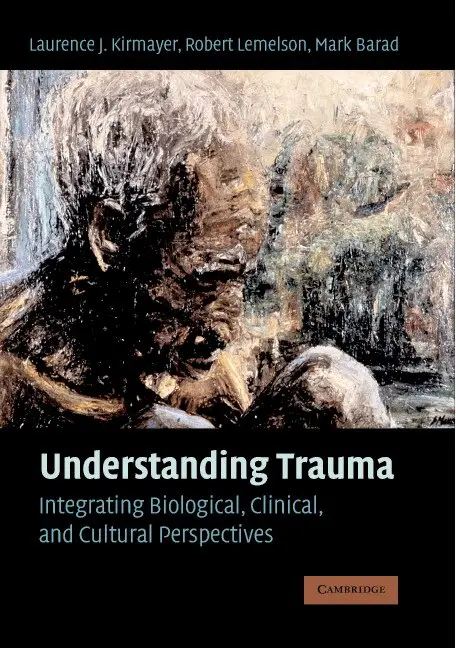
    Understanding Trauma

    Integrating Biological, Clinical, and Cultural Perspectives

    AvLaurence J. Kirmayer,Robert Lemelson

    Häftad, Engelska, 2008

    795 kr

    Beställningsvara. Skickas inom 7-10 vardagar. Fri frakt över 249 kr.

    Beskrivning

    This book analyzes the individual and collective experience of and response to trauma from a wide range of perspectives including basic neuroscience, clinical science, and cultural anthropology. Each perspective presents critical and creative challenges to the other. The first section reviews the effects of early life stress on the development of neural systems and vulnerability to persistent effects of trauma. The second section of the book reviews a wide range of clinical approaches to the treatment of the effects of trauma. The final section of the book presents cultural analyses of personal, social, and political responses to massive trauma and genocidal events in a variety of societies. This work goes well beyond the neurobiological models of conditioned fear and clinical syndrome of post-traumatic stress disorder to examine how massive traumatic events affect the whole fabric of a society, calling forth collective responses of resilience and moral transformation.

    Produktinformation

    • Utgivningsdatum:2008-04-14
    • Mått:151 x 228 x 25 mm
    • Vikt:730 g
    • Format:Häftad
    • Språk:Engelska
    • Antal sidor:548
    • Förlag:Cambridge University Press
    • ISBN:9780521726993

    Utforska kategorier

    • Klinisk psykologi inom Medicin

    Mer om författaren

    Laurence J. Kirmayer, MD, FRCPC, is James McGill Professor and Director, Division of Social and Transcultural Psychiatry, Department of Psychiatry, McGill University. He is Editor-in-Chief of Transcultural Psychiatry and directs the Culture and Mental Health Research Unit at the Department of Psychiatry, Jewish General Hospital in Montreal where he conducts research on mental health services for immigrants and refugees, psychiatry in primary care, the mental health of indigenous peoples, and the anthropology of psychiatry. He founded and directs the annual Summer Program and Advanced Study Institute in Cultural Psychiatry at McGill and co-directs the National Network for Aboriginal Mental Health Research. His past research includes funded studies on the development and evaluation of a cultural consultation service in mental health, pathways and barriers to mental health care for immigrants, somatization in primary care, cultural concepts of mental health and illness in Inuit communities, risk and protective factors for suicide among Inuit youth in Nunavik (Northern Québec), and resilience among Indigenous peoples. He co-edited the volumes Current Concepts of Somatization (American Psychiatric Press), Understanding Trauma: Integrating Biological, Clinical, and Cultural Perspectives (Cambridge University Press), Healing Traditions: The Mental Health of Aboriginal Peoples in Canada (University of British Columbia Press) and Encountering the Other: The Practice of Cultural Consultation (Springer SBM). Robert Lemelson is currently a lecturer in the departments of Anthropology and Psychology at UCLA, and the president of the Foundation for Research (the FPR). He is a psychological anthropologist with a specialty in culture and mental illness. He was a Fulbright scholar in Indonesia, and is currently releasing several documentary films based on his research on culture and neuropsychiatric disorders. He has published in Culture, Medicine and Psychiatry; Medical Anthropology Quarterly; Transcultural Psychiatry and other journals. Mark Barad is Assistant Professor of Psychiatry and Behavioral Sciences at the University of California, Los Angeles and has been the Tennenbaum Scholar from the Department of Psychiatry. His current research and writing further explores the development of adjunctive treatments to accelerate and facilitate the behavioral psychotherapy of anxiety disorders. In addition to his research and teaching, Dr Barad has supervised at the UCLA Anxiety Disorders Clinic and the UCLA General Outpatient Psychiatry Clinic. He also has a private practice as a psychiatrist.

    Recensioner i media

    "... Neatly summarizes the challenges inherent in interdisciplinary integration." --- Psychiatric Services, A Journal of the American Psychiatric Association

    Innehållsförteckning

    • Foreword Robert Jay Lifton; 1. Introduction: inscribing trauma in culture, brain and body Laurence J. Kirmayer, Robert Lemelson and Mark Barad; Part I. Biological Perspectives on Trauma: Introduction Mark Barad; 2. Neurobiological and neuroethological perspectives on fear and anxiety Vinuta Rau and Michael S. Fanselow; 3. Some biobehavioral insights into persistent effects of emotional trauma Mark E. Bouton and Jaylyn Waddell; 4. Learning not to fear: a neural systems approach Gregory Quirk, Mohammed R. Milad, Edwin Santini, and Kelimer Lebrón; 5. Mechanisms of fear extinction: towards improved treatments for anxiety Mark Barad and Chris K. Cain; 6. Developmental origins of neurobiological vulnerability for PTSD Rose Bagot, Carine Parent, Timothy W. Bredy, Tie Yuan Zhang, Alain Gratton and Michael J. Meaney; 7. Somatic manifestations of traumatic stress Emeran A. Mayer; 8. Does stress damage the brain? J. Douglas Bremner; Part II. Clinical Perspectives on Trauma: Introduction Laurence J. Kirmayer; 9. Cognitive behavioral treatments for PTSD Elna Yadin and Edna B. Foa; 10. PTSD among traumatized refugees J. D. Kinzie; 11. PTSD: a disorder of recovery? Arieh Y. Shalev; 12. The developmental impact of childhood trauma Bessel A. van der Kolk; 13. Adaptation, ecosocial safety signals and the trajectory of PTSD Derrick Silove; 14. Religion and spirituality after trauma James K. Boehnlein; 15. Post-traumatic suffering as a source of transformation: a clinical perspective Cécile Rousseau and Toby Measham; Part III. Cultural Perspectives on Trauma: Introduction Robert Lemelson; 16. Trauma, adaptation, and resilience: a cross-cultural and evolutionary perspective Melvin Konner; 17. Bruno and the holy fool: myth, mimesis, and the transmission of traumatic memories Allan Young; 18. Failures of imagination: the refugee's predicament Laurence J. Kirmayer; 19. Trauma, culture and myth: narratives of the Ethiopian Jewish exodus Gadi BenEzer; 20. Post-traumatic politics: violence, memory and biomedical discourse in Bali Leslie Dwyer and Degung Santikarma; 21. Terror and trauma in the Cambodian genocide Alexander Hinton; 22. Trauma in context: integrating biological, clinical and cultural perspectives Robert Lemelson, Laurence J. Kirmayer and Mark Barad; Epilogue: trauma and the vicissitudes of interdisciplinary integration Laurence J. Kirmayer, Robert Lemelson and Mark Barad; Index.