• Fri frakt över 249 kr
  • •
  • Snabba leveranser
  • •
  • Billiga böcker
Kundservice

Du är på sajten för privatpersoner.

Företag, bibliotek eller offentlig verksamhet?

Du handlar på classic.bokus.com, där alla dina funktioner finns intakta.
Till classic.bokus.com
Bokus logotyp. Gå till startsidan.
  • Erbjudanden
  • Nyheter
  • Student
  • Topplistor
  • Barn & ungdom
  • Bokus Play
  • E-böcker
  • Pocketböcker
  • Spel & pussel

10% rabatt på allt med kod: NYSTART10 →

Sidfot

Mina sidor

    Hjälp

    • Kundservice
    • Vanliga frågor och svar
    • Frakt och leverans
    • Retur vid ångerrätt
    • Reklamera vara
    • Betalning
    • Köpvillkor
    • Allmänna villkor
    • Information om webbplatsens tillgänglighet

    Om Bokus

    • Om oss
    • Pressrum
    • För studenter
    • För företag
    • För bibliotek och offentlig verksamhet
    • För leverantörer
    • Hållbarhet

    Populärt

    • Aktuella erbjudanden
    • Presentkort
    • Studentlitteratur
    • Nya böcker
    • Topplistor
    • Signerade böcker
    • Engelska böcker

    Inspiration

    • Boktips
    • BookTok
    • Populära bokserier
    • Barnbokskaraktärer
    • Populära författare
    Logotyp för Bokus
    Följ oss på Facebook (extern länk)Följ oss på Instagram (extern länk)Följ oss på YouTube (extern länk)Följ oss på TikTok (extern länk)
    bokus @ CookiesAnpassa cookiesIntegritetspolicyKöpvillkor
    Till Citymail hemsida (extern länk)Till Budbee hemsida (extern länk)Till Postnord hemsida (extern länk)Till Schenker hemsida (extern länk)Till Early Bird hemsida (extern länk)Till Walleys hemsida (extern länk)
    1. Ekonomi och Ledarskap
    2. Nationalekonomi
    3. Internationell ekonomi

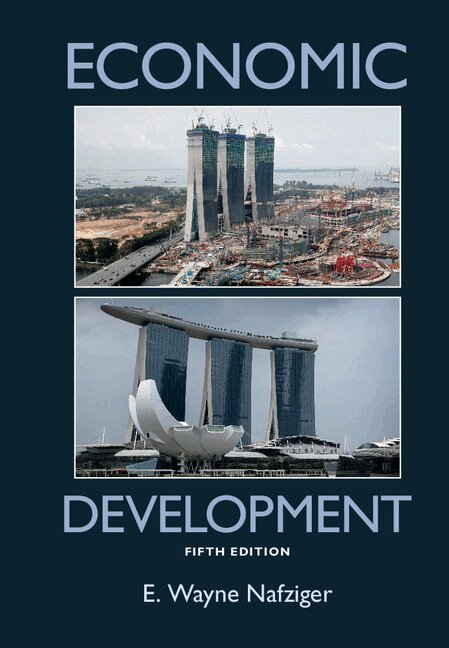
    Economic Development

    AvE. Wayne Nafziger

    Inbunden, Engelska, 2012

    769 kr

    Beställningsvara. Skickas inom 10-15 vardagar. Fri frakt över 249 kr.

    Fler format och utgåvor

    E-bok

    910 kr

    E-bok

    913 kr

    Beskrivning

    Nafziger explains the reasons for the recent fast growth of India, Poland, Brazil, China, and other Pacific Rim countries, and the slow, yet essential, growth for a turnaround of sub-Saharan Africa. The book is suitable for those with a background in economics principles. The fifth edition of the text, written by a scholar of developing countries, is replete with real-world examples and up-to-date information. Nafziger discusses poverty, income inequality, hunger, unemployment, the environment and carbon-dioxide emissions, and the widening gap between rich (including middle-income) and poor countries. Other new components include the rise and fall of models based on Russia, Japan, China/Taiwan/Korea and North America; randomized experiments to assess aid; an exploration of whether information technology and mobile phones can provide poor countries with a shortcut to prosperity; and a discussion of how worldwide financial crises, debt, and trade and capital markets affect developing countries.

    Produktinformation

    • Utgivningsdatum:2012-03-26
    • Mått:183 x 260 x 35 mm
    • Vikt:1 500 g
    • Format:Inbunden
    • Språk:Engelska
    • Antal sidor:856
    • Upplaga:5
    • Förlag:Cambridge University Press
    • ISBN:9780521765480

    Utforska kategorier

    • Internationell ekonomi inom Ekonomi och Ledarskap

    Mer om författaren

    E. Wayne Nafziger is University Distinguished Professor of Economics at Kansas State University. He is the author and editor of nineteen books and numerous journal articles on development economics, income distribution, development theory, the economics of conflict, the Japanese economy and entrepreneurship. His book, Inequality in Africa: Political Elites, Proletariat, Peasants, and the Poor (Cambridge University Press), was cited by Choice as an Outstanding Academic Book for 1989–1990. Professor Nafziger is also the author of The Debt Crisis in Africa (1993) and the editor (with Frances Stewart and Raimo Vayrynen) of the two-volume War, Hunger, and Displacement: The Origins of Humanitarian Emergencies (2000). He has held research positions at the UN University's World Institute for Development Economics Research, the Carter Center, the East–West Center and in Nigeria, India, Japan and Britain. Professor Nafziger edited the Journal of African Development from 2008 to 2010.

    Recensioner i media

    'Now in its fifth edition, Nafziger's Economic Development has gone from the best in the field to the classic in the field, the most comprehensive statement and analysis of the major issues of development. It is essential for students in both economics and development studies, and an invaluable aid to instructors. Indeed, every person who wishes to be well-informed about the inequalities among countries should read the third chapter, 'Economic Development in Historical Perspective'.' John Weeks, School of Oriental and African Studies, University of London

    Innehållsförteckning

    • Preface; Part I. Principles and Concepts of Development: 1. How the other two-thirds live; 2. What is development?; 3. Economic development in historical perspective; 4. Characteristics and institutions of developing countries; 5. Theories of economic development; Part II. Poverty Alleviation and Income Distribution: 6. Poverty, malnutrition, and income inequality; 7. Rural poverty and agricultural transformation; Part III. Factors of Growth: 8. Population and development; 9. Employment, migration, and urbanization; 10. Education, health, and human capital; 11. Capital formation, investment choice, information technology, and technical progress; 12. Entrepreneurship, organization, and innovation; 13. Natural resources and the environment: toward sustainable development; Part IV. The Macroeconomics and International Economics of Development: 14. Monetary, fiscal, and incomes policy, and inflation; 15. Balance of payments, aid, and foreign investment; 16. The external debt and financial crises; 17. International trade; Part V. Development Strategies: 18. The transition to liberalization and economic reform: Eastern Europe, the former Soviet Union, and China; 19. Stabilization, adjustment, and reform.