• Fri frakt över 249 kr
  • •
  • Snabba leveranser
  • •
  • Billiga böcker
Kundservice

Du är på sajten för privatpersoner.

Företag, bibliotek eller offentlig verksamhet?

Du handlar på classic.bokus.com, där alla dina funktioner finns intakta.
Till classic.bokus.com
Bokus logotyp. Gå till startsidan.
  • Erbjudanden
  • Nyheter
  • Student
  • Topplistor
  • Barn & ungdom
  • Bokus Play
  • E-böcker
  • Pocketböcker
  • Spel & pussel

10% rabatt på allt med kod: NYSTART10 →

Sidfot

Mina sidor

    Hjälp

    • Kundservice
    • Vanliga frågor och svar
    • Frakt och leverans
    • Retur vid ångerrätt
    • Reklamera vara
    • Betalning
    • Köpvillkor
    • Allmänna villkor
    • Information om webbplatsens tillgänglighet

    Om Bokus

    • Om oss
    • Pressrum
    • För studenter
    • För företag
    • För bibliotek och offentlig verksamhet
    • För leverantörer
    • Hållbarhet

    Populärt

    • Aktuella erbjudanden
    • Presentkort
    • Studentlitteratur
    • Nya böcker
    • Topplistor
    • Signerade böcker
    • Engelska böcker

    Inspiration

    • Boktips
    • BookTok
    • Populära bokserier
    • Barnbokskaraktärer
    • Populära författare
    Logotyp för Bokus
    Följ oss på Facebook (extern länk)Följ oss på Instagram (extern länk)Följ oss på YouTube (extern länk)Följ oss på TikTok (extern länk)
    bokus @ CookiesAnpassa cookiesIntegritetspolicyKöpvillkor
    Till Citymail hemsida (extern länk)Till Budbee hemsida (extern länk)Till Postnord hemsida (extern länk)Till Schenker hemsida (extern länk)Till Early Bird hemsida (extern länk)Till Walleys hemsida (extern länk)
    1. Samhälle och politik
    2. Politik och statsskick
    3. Internationella relationer

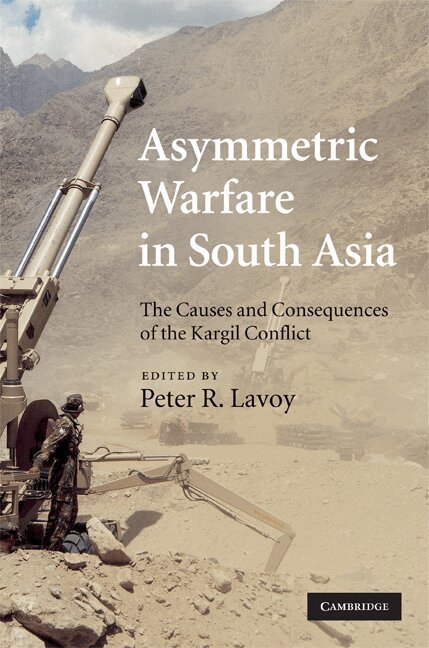
    Asymmetric Warfare in South Asia

    The Causes and Consequences of the Kargil Conflict

    AvPeter R. Lavoy

    Inbunden, Engelska, 2009

    1 630 kr

    Beställningsvara. Skickas inom 10-15 vardagar. Fri frakt över 249 kr.

    Beskrivning

    The 1999 conflict between India and Pakistan near the town of Kargil in contested Kashmir was the first military clash between two nuclear-armed powers since the 1969 Sino-Soviet war. Kargil was a landmark event not because of its duration or casualties, but because it contained a very real risk of nuclear escalation. Until the Kargil conflict, academic and policy debates over nuclear deterrence and proliferation occurred largely on the theoretical level. This deep analysis of the conflict offers scholars and policymakers a rare account of how nuclear-armed states interact during military crisis. Written by analysts from India, Pakistan, and the United States, this unique book draws extensively on primary sources, including unprecedented access to Indian, Pakistani, and U.S. government officials and military officers who were actively involved in the conflict. This is the first rigorous and objective account of the causes, conduct, and consequences of the Kargil conflict.

    Produktinformation

    • Utgivningsdatum:2009-11-12
    • Mått:160 x 234 x 25 mm
    • Vikt:810 g
    • Format:Inbunden
    • Språk:Engelska
    • Antal sidor:426
    • Förlag:Cambridge University Press
    • ISBN:9780521767217

    Utforska kategorier

    • Internationella relationer inom Samhälle och politik

    Mer om författaren

    Peter R. Lavoy is Deputy Director of National Intelligence for Analysis and Chairman of the National Intelligence Council. He has previously served as Principal Director for Requirements, Plans and Counterproliferation Policy and Director for Counterproliferation Policy in the Office of Secretary of Defense. This book was produced whilst he was on the faculty of the Naval Postgraduate School.

    Recensioner i media

    'Unlike most discussions of conflict between the nuclear-armed nations of South Asia, this combines contributions from experts in both of those countries, as well as American perspectives. It is especially comprehensive and balanced and blends theory and policy analysis in the best way.' Richard K. Betts, Director, Saltzman Institute of War and Peace Studies, Columbia University

    Innehållsförteckning

    • 1. Introduction: the importance of the Kargil conflict Peter R. Lavoy; Part I. Causes and Conduct of the Conflict: 2. The strategic context of the Kargil conflict: a Pakistani perspective Zafar Iqbal Cheema; 3. Pakistan's motivations and calculations for the Kargil conflict Feroz Hassan Khan, Peter R. Lavoy and Christopher Clary; 4. Military operations in the Kargil conflict John H. Gill; 5. American diplomacy and the 1999 Kargil Summit at Blair House Bruce Riedel; 6. Kargil: the nuclear dimension Timothy D. Hoyt; 7. Why Kargil did not produce general war: the crisis-management strategies of Pakistan, India, and the United States Peter R. Lavoy; Part II: Consequences and Impact of the Conflict: 8. Surprise at the top of the world: India's systemic and intelligence failure James J. Wirtz and Surinder Rana; 9. Militants in the Kargil conflict: myths, realities, and impacts C. Christine Fair; 10. The impact of the Kargil conflict and Kashmir on Indian politics and society Praveen Swami; 11. The Kargil conflict's impact on Pakistani politics and society Saeed Shafqat; Part III. Lessons Learned: 12. The lessons of Kargil as learned by India Rajesh M. Basrur; 13. The lessons of Kargil as learned by Pakistan Hasan-Askari Rizvi; 14. The Kargil crisis: lessons learned by the United States Rodney W. Jones and Joseph McMillan; 15. Kargil, deterrence, and international relations theory Robert Jervis.