• Fri frakt över 249 kr
  • •
  • Snabba leveranser
  • •
  • Billiga böcker
Kundservice

Du är på sajten för privatpersoner.

Företag, bibliotek eller offentlig verksamhet?

Du handlar på classic.bokus.com, där alla dina funktioner finns intakta.
Till classic.bokus.com
Bokus logotyp. Gå till startsidan.
  • Erbjudanden
  • Nyheter
  • Student
  • Topplistor
  • Barn & ungdom
  • Bokus Play
  • E-böcker
  • Pocketböcker
  • Spel & pussel

10% rabatt på allt med kod: NYSTART10 →

Sidfot

Mina sidor

    Hjälp

    • Kundservice
    • Vanliga frågor och svar
    • Frakt och leverans
    • Retur vid ångerrätt
    • Reklamera vara
    • Betalning
    • Köpvillkor
    • Allmänna villkor
    • Information om webbplatsens tillgänglighet

    Om Bokus

    • Om oss
    • Pressrum
    • För studenter
    • För företag
    • För bibliotek och offentlig verksamhet
    • För leverantörer
    • Hållbarhet

    Populärt

    • Aktuella erbjudanden
    • Presentkort
    • Studentlitteratur
    • Nya böcker
    • Topplistor
    • Signerade böcker
    • Engelska böcker

    Inspiration

    • Boktips
    • BookTok
    • Populära bokserier
    • Barnbokskaraktärer
    • Populära författare
    Logotyp för Bokus
    Följ oss på Facebook (extern länk)Följ oss på Instagram (extern länk)Följ oss på YouTube (extern länk)Följ oss på TikTok (extern länk)
    bokus @ CookiesAnpassa cookiesIntegritetspolicyKöpvillkor
    Till Citymail hemsida (extern länk)Till Budbee hemsida (extern länk)Till Postnord hemsida (extern länk)Till Schenker hemsida (extern länk)Till Early Bird hemsida (extern länk)Till Walleys hemsida (extern länk)
    1. Historia och arkeologi
    2. Historia
    3. Amerikas historia

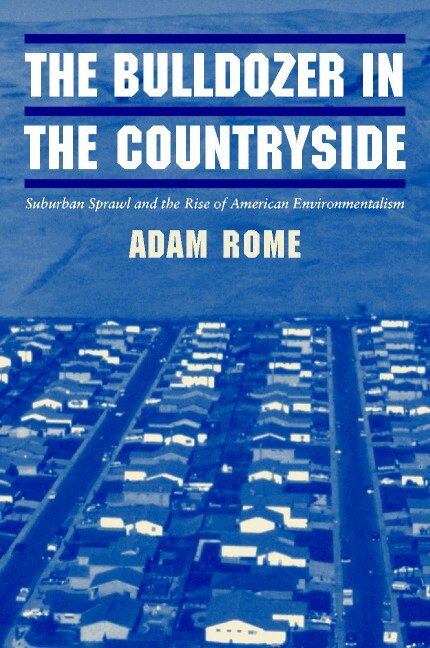
    The Bulldozer in the Countryside

    Suburban Sprawl and the Rise of American Environmentalism

    AvAdam Rome

    Häftad, Engelska, 2001

    Del i serien Studies in Environment and History

    351 kr

    Beställningsvara. Skickas inom 10-15 vardagar. Fri frakt över 249 kr.

    Fler format och utgåvor

    Inbunden

    1 375 kr

    Beskrivning

    The concern today about suburban sprawl is not new. In the decades after World War II, the spread of tract-house construction changed the nature of millions of acres of land, and a variety of Americans began to protest against the environmental costs of suburban development. By the mid-1960s, indeed, many of the critics were attempting to institutionalize an urban land ethic. The Bulldozer in the Countryside was the first scholarly work to analyze the successes and failures of the varied efforts to address the environmental consequences of suburban growth from 1945 to 1970. For scholars and students of American history, the book offers a compelling insight into two of the great stories of modern times - the mass migration to the suburbs and the rise of the environmental movement. The book also offers a valuable historical perspective for participants in contemporary debates about the alternatives to sprawl.

    Produktinformation

    • Utgivningsdatum:2001-04-23
    • Mått:153 x 229 x 18 mm
    • Vikt:480 g
    • Format:Häftad
    • Språk:Engelska
    • Serie:Studies in Environment and History
    • Antal sidor:332
    • Förlag:Cambridge University Press
    • ISBN:9780521804905

    Utforska kategorier

    • Amerikas historia inom Historia och arkeologi

    Recensioner i media

    "The Bulldozer in the Countryside is solid environmental history, telling a remarkably broad story of political economy, culture, and physical environments on a national scale...Rome writes gracefully, with a sense of drama that makes the book hard to put down." Journal of American History

    Innehållsförteckning

    • Introduction; 1. Levitt's progress: the rise of the suburban-industrial complex; 2. From the solar house to the all-electric home: the postwar debates over heating and cooling; 3. Septic-tank suburbia: the problem of waste disposal at the metropolitan fringe; 4. Open space: the first protests against the bulldozed landscape; 5. Where not to build: the campaigns to protect wetlands, hillsides, and floodplains; 6. Water, soil, and wildlife: the federal critiques of tract-house development; 7. Toward a land ethic: the quiet revolution in land-use regulation; Conclusion.