• Fri frakt över 249 kr
  • •
  • Snabba leveranser
  • •
  • Billiga böcker
Kundservice

Du är på sajten för privatpersoner.

Företag, bibliotek eller offentlig verksamhet?

Du handlar på classic.bokus.com, där alla dina funktioner finns intakta.
Till classic.bokus.com
Bokus logotyp. Gå till startsidan.
  • Erbjudanden
  • Nyheter
  • Student
  • Topplistor
  • Barn & ungdom
  • Bokus Play
  • E-böcker
  • Pocketböcker
  • Spel & pussel

10% rabatt på allt med kod: NYSTART10 →

Sidfot

Mina sidor

    Hjälp

    • Kundservice
    • Vanliga frågor och svar
    • Frakt och leverans
    • Retur vid ångerrätt
    • Reklamera vara
    • Betalning
    • Köpvillkor
    • Allmänna villkor
    • Information om webbplatsens tillgänglighet

    Om Bokus

    • Om oss
    • Pressrum
    • För studenter
    • För företag
    • För bibliotek och offentlig verksamhet
    • För leverantörer
    • Hållbarhet

    Populärt

    • Aktuella erbjudanden
    • Presentkort
    • Studentlitteratur
    • Nya böcker
    • Topplistor
    • Signerade böcker
    • Engelska böcker

    Inspiration

    • Boktips
    • BookTok
    • Populära bokserier
    • Barnbokskaraktärer
    • Populära författare
    Logotyp för Bokus
    Följ oss på Facebook (extern länk)Följ oss på Instagram (extern länk)Följ oss på YouTube (extern länk)Följ oss på TikTok (extern länk)
    bokus @ CookiesAnpassa cookiesIntegritetspolicyKöpvillkor
    Till Citymail hemsida (extern länk)Till Budbee hemsida (extern länk)Till Postnord hemsida (extern länk)Till Schenker hemsida (extern länk)Till Early Bird hemsida (extern länk)Till Walleys hemsida (extern länk)
    1. Naturvetenskap och teknik
    2. Matematik och naturvetenskap
    3. Kemi
    4. Fysikalisk kemi

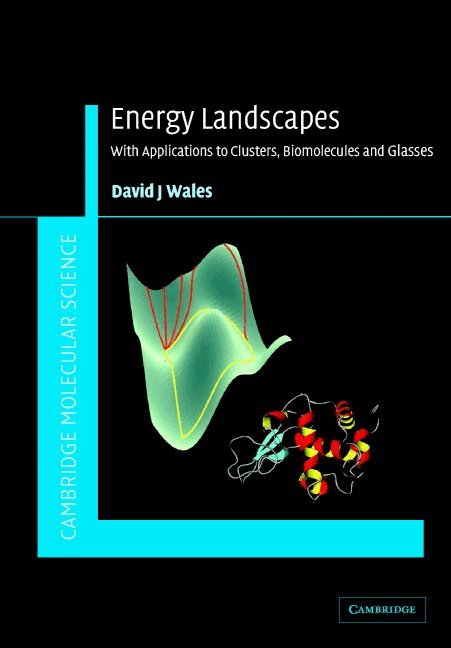
    Energy Landscapes

    Applications to Clusters, Biomolecules and Glasses

    AvDavid Wales

    Inbunden, Engelska, 2004

    Del i serien Cambridge Molecular Science

    2 354 kr

    Beställningsvara. Skickas inom 10-15 vardagar. Fri frakt över 249 kr.

    Fler format och utgåvor

    E-bok

    2 769 kr

    Beskrivning

    The study of energy landscapes holds the key to resolving some of the most important contemporary problems in chemical physics. Many groups are now attempting to understand the properties of clusters, glasses and proteins in terms of the underlying potential energy surface. The aim of this book is to define and unify the field of energy landscapes in a reasonably self-contained exposition. This is the first book to cover this active field. The book begins with an overview of each area in an attempt to make the subject matter accessible to workers in different disciplines. The basic theoretical groundwork for describing and exploring energy landscapes is then introduced followed by applications to clusters, biomolecules and glasses in the final chapters. Beautifully illustrated in full colour throughout, this book is aimed at graduate students and workers in the field.

    Produktinformation

    • Utgivningsdatum:2004-01-22
    • Mått:182 x 255 x 38 mm
    • Vikt:1 527 g
    • Format:Inbunden
    • Språk:Engelska
    • Serie:Cambridge Molecular Science
    • Antal sidor:692
    • Förlag:Cambridge University Press
    • ISBN:9780521814157

    Utforska kategorier

    • Fysikalisk kemi inom Naturvetenskap och teknik
    • Materietillstånd inom Naturvetenskap och teknik

    Mer om författaren

    David Wales is a lecturer in the Department of Chemistry at Cambridge University.

    Recensioner i media

    'This beautifully illustrated book provides a detailed background and description of energy landscapes and gives many examples of how they can be used to explain the properties of atomic and molecular clusters, biomolecules, glasses, and supercooled liquids … Energy Landscapes provides a pictorial language that simplifies complicated calculations to a form that can be understood and used by many scientists interested in molecular problems, from undergraduates to those at the frontier of research.' Science Magazine

    Innehållsförteckning

    • 1. Introduction; 2. The Born–Oppenheimer approximation and normal modes; 3. Symmetry considerations; 4. Features of the landscape; 5. Describing the landscape; 6. Exploring the landscape; 7. Properties of the landscape; 8. Clusters; 9. Biomolecules; 10. Glasses and supercooled liquids.