• Fri frakt över 249 kr
  • •
  • Snabba leveranser
  • •
  • Billiga böcker
Kundservice

Du är på sajten för privatpersoner.

Företag, bibliotek eller offentlig verksamhet?

Du handlar på classic.bokus.com, där alla dina funktioner finns intakta.
Till classic.bokus.com
Bokus logotyp. Gå till startsidan.
  • Erbjudanden
  • Nyheter
  • Student
  • Topplistor
  • Barn & ungdom
  • Bokus Play
  • E-böcker
  • Pocketböcker
  • Spel & pussel

10% studentrabatt med kod TERM26

Sidfot

Mina sidor

    Hjälp

    • Kundservice
    • Vanliga frågor och svar
    • Frakt och leverans
    • Retur vid ångerrätt
    • Reklamera vara
    • Betalning
    • Köpvillkor
    • Allmänna villkor
    • Information om webbplatsens tillgänglighet

    Om Bokus

    • Om oss
    • Pressrum
    • För studenter
    • För företag
    • För bibliotek och offentlig verksamhet
    • För leverantörer
    • Hållbarhet

    Populärt

    • Aktuella erbjudanden
    • Presentkort
    • Studentlitteratur
    • Nya böcker
    • Topplistor
    • Signerade böcker
    • Engelska böcker

    Inspiration

    • Boktips
    • BookTok
    • Populära bokserier
    • Barnbokskaraktärer
    • Populära författare
    Logotyp för Bokus
    Följ oss på Facebook (extern länk)Följ oss på Instagram (extern länk)Följ oss på YouTube (extern länk)Följ oss på TikTok (extern länk)
    bokus @ CookiesAnpassa cookiesIntegritetspolicyKöpvillkor
    Till Citymail hemsida (extern länk)Till Budbee hemsida (extern länk)Till Postnord hemsida (extern länk)Till Schenker hemsida (extern länk)Till Early Bird hemsida (extern länk)Till Walleys hemsida (extern länk)
    1. Språk och ordböcker
    2. Språkvetenskap och lingvistik

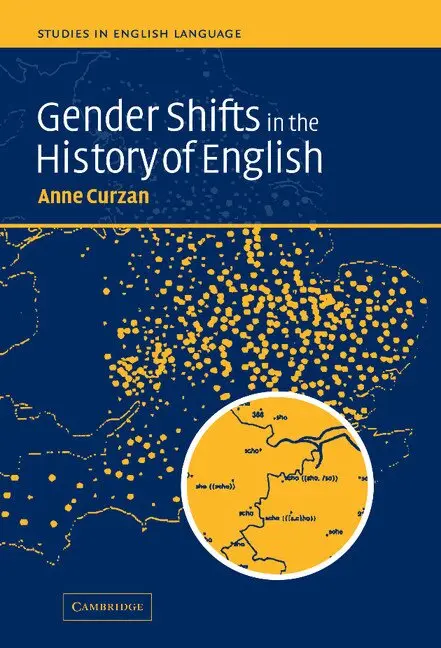
    Gender Shifts in the History of English

    AvAnne Curzan

    Inbunden, Engelska, 2003

    Del i serien Studies in English Language

    1 513 kr

    Beställningsvara. Skickas inom 10-15 vardagar. Fri frakt över 249 kr.

    Fler format och utgåvor

    Häftad

    518 kr

    Beskrivning

    How and why did grammatical gender, found in Old English and in other Germanic languages, gradually disappear from English and get replaced by a system where the gender of nouns and the use of personal pronouns depend on the natural gender of the referent? How is this shift related to 'irregular agreement' (such as she for ships) and 'sexist' language use (such as generic he) in Modern English, and how is the language continuing to evolve in these respects? Anne Curzan's accessibly written and carefully researched study is based on extensive corpus data, and will make a major contribution by providing a historical perspective on these often controversial questions. It will be of interest to researchers and students in history of English, historical linguistics, corpus linguistics, language and gender, and medieval studies.

    Produktinformation

    • Utgivningsdatum:2003-04-24
    • Mått:160 x 236 x 23 mm
    • Vikt:532 g
    • Format:Inbunden
    • Språk:Engelska
    • Serie:Studies in English Language
    • Antal sidor:236
    • Förlag:Cambridge University Press
    • ISBN:9780521820073

    Utforska kategorier

    • Språkvetenskap och lingvistik inom Språk och ordböcker

    Mer om författaren

    Anne Curzan is Assistant Professor of English at the University of Michigan. She has written extensively on the history of English, lexicography, and pedagogy, and is co-author of First Day to Final Grade: A Graduate Student's Guide to Teaching (2000). Professor Curzan is also co-editor of the Journal of English Linguistics.

    Recensioner i media

    'This book is clearly written and accessible to undergraduates in a variety of disciplines, not just in the field of linguistics. It would also be of interest to those in the area of gender studies and mediaeval history. Each of the main analytical chapters opens with a contemporary question which contextualises the relevance of the study within Modern English footnoting elaborates points made throughout.' Journal of Sociolinguistics

    Innehållsförteckning

    • Acknowledgements; Introduction; 1. Defining English gender; 2. The gender shift in histories of English; 3. A history of gender, people and pronouns: the story of generic he; 4. Third-person pronouns in the gender shift: why is that ship a she?; 5. Gender and asymmetrical word histories: when boys could be girls; 6. Implications for non-sexist language reform; Appendix 1. Background on early English personal pronouns; Appendix 2. Helsinki corpus texts and methodology; References; Index.