• Fri frakt över 249 kr
  • •
  • Snabba leveranser
  • •
  • Billiga böcker
Kundservice

Du är på sajten för privatpersoner.

Företag, bibliotek eller offentlig verksamhet?

Du handlar på classic.bokus.com, där alla dina funktioner finns intakta.
Till classic.bokus.com
Bokus logotyp. Gå till startsidan.
  • Erbjudanden
  • Nyheter
  • Student
  • Topplistor
  • Barn & ungdom
  • Bokus Play
  • E-böcker
  • Pocketböcker
  • Spel & pussel

10% studentrabatt med kod TERM26

Sidfot

Mina sidor

    Hjälp

    • Kundservice
    • Vanliga frågor och svar
    • Frakt och leverans
    • Retur vid ångerrätt
    • Reklamera vara
    • Betalning
    • Köpvillkor
    • Allmänna villkor
    • Information om webbplatsens tillgänglighet

    Om Bokus

    • Om oss
    • Pressrum
    • För studenter
    • För företag
    • För bibliotek och offentlig verksamhet
    • För leverantörer
    • Hållbarhet

    Populärt

    • Aktuella erbjudanden
    • Presentkort
    • Studentlitteratur
    • Nya böcker
    • Topplistor
    • Signerade böcker
    • Engelska böcker

    Inspiration

    • Boktips
    • BookTok
    • Populära bokserier
    • Barnbokskaraktärer
    • Populära författare
    Logotyp för Bokus
    Följ oss på Facebook (extern länk)Följ oss på Instagram (extern länk)Följ oss på YouTube (extern länk)Följ oss på TikTok (extern länk)
    bokus @ CookiesAnpassa cookiesIntegritetspolicyKöpvillkor
    Till Citymail hemsida (extern länk)Till Budbee hemsida (extern länk)Till Postnord hemsida (extern länk)Till Schenker hemsida (extern länk)Till Early Bird hemsida (extern länk)Till Walleys hemsida (extern länk)
    1. Historia och arkeologi
    2. Historia
    3. Historia: särskilda händelser och ämnen
    4. Historisk geografi

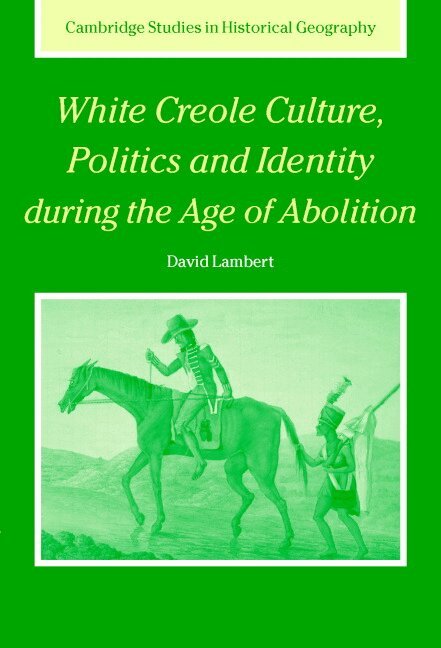
    White Creole Culture, Politics and Identity during the Age of Abolition

    AvDavid Lambert

    Inbunden, Engelska, 2005

    Del 38 i serien Cambridge Studies in Historical Geography

    1 513 kr

    Beställningsvara. Skickas inom 10-15 vardagar. Fri frakt över 249 kr.

    Fler format och utgåvor

    Häftad

    505 kr

    Beskrivning

    David Lambert explores the political and cultural articulation of white creole identity in the British Caribbean colony of Barbados during the age of abolitionism (c.1780-1833), the period in which the British antislavery movement emerged, first to attack the slave trade and then the institution of chattel slavery itself. Supporters of slavery in Barbados and beyond responded with their own campaigning, resulting in a series of debates and moments of controversy, both localised and transatlantic in significance. They exposed tensions between Britain and its West Indian colonies, and raised questions about whether white slaveholders could be classed as fully 'British' and if slavery was compatible with 'English' conceptions of liberty and morality. David Lambert considers what it meant to be a white colonial subject in a place viewed as a vital and loyal part of the empire but subject to increasing metropolitan attack because of the existence of slavery.

    Produktinformation

    • Utgivningsdatum:2005-07-21
    • Mått:161 x 236 x 28 mm
    • Vikt:550 g
    • Format:Inbunden
    • Språk:Engelska
    • Serie:Cambridge Studies in Historical Geography
    • Antal sidor:258
    • Förlag:Cambridge University Press
    • ISBN:9780521841313

    Utforska kategorier

    • Historisk geografi inom Historia och arkeologi

    Mer om författaren

    David Lambert is Lecturer in Human Geography at Royal Holloway, University of London. This is his first book.

    Recensioner i media

    Review of the hardback: 'White Creole Culture is an exemplary cultural history, with its in-depth exploration of individuals and moments, its interdisciplinary range, its utilisation of a range of texts from court cases and poetry to rebel flags and the colonial press, and its eloquent account of the conjunctural formation of white colonial identities across metropole and colony.' Journal of Historical Geography

    Innehållsförteckning

    • List of illustrations; Acknowledgements; Introduction: white creole culture, politics and identity; 1. The geographical 'problem of slavery'; 2. Joshua Steele and the 'improvement' of slavery; 3. Making a 'well constituted Society': the ambitions and limits of white unity; 4. Locating blame for the 1816 Rebellion; 5. Anti-Methodism and the uncertain place of Barbados; 6. 'Days of misery and nights of fear': white ideas of freedom at the end of slavery; Epilogue; Bibliography; Index.