• Fri frakt över 249 kr
  • •
  • Snabba leveranser
  • •
  • Billiga böcker
Kundservice

Du är på sajten för privatpersoner.

Företag, bibliotek eller offentlig verksamhet?

Du handlar på classic.bokus.com, där alla dina funktioner finns intakta.
Till classic.bokus.com
Bokus logotyp. Gå till startsidan.
  • Erbjudanden
  • Nyheter
  • Student
  • Topplistor
  • Barn & ungdom
  • Bokus Play
  • E-böcker
  • Pocketböcker
  • Spel & pussel

10% rabatt på allt med kod: NYSTART10 →

Sidfot

Mina sidor

    Hjälp

    • Kundservice
    • Vanliga frågor och svar
    • Frakt och leverans
    • Retur vid ångerrätt
    • Reklamera vara
    • Betalning
    • Köpvillkor
    • Allmänna villkor
    • Information om webbplatsens tillgänglighet

    Om Bokus

    • Om oss
    • Pressrum
    • För studenter
    • För företag
    • För bibliotek och offentlig verksamhet
    • För leverantörer
    • Hållbarhet

    Populärt

    • Aktuella erbjudanden
    • Presentkort
    • Studentlitteratur
    • Nya böcker
    • Topplistor
    • Signerade böcker
    • Engelska böcker

    Inspiration

    • Boktips
    • BookTok
    • Populära bokserier
    • Barnbokskaraktärer
    • Populära författare
    Logotyp för Bokus
    Följ oss på Facebook (extern länk)Följ oss på Instagram (extern länk)Följ oss på YouTube (extern länk)Följ oss på TikTok (extern länk)
    bokus @ CookiesAnpassa cookiesIntegritetspolicyKöpvillkor
    Till Citymail hemsida (extern länk)Till Budbee hemsida (extern länk)Till Postnord hemsida (extern länk)Till Schenker hemsida (extern länk)Till Early Bird hemsida (extern länk)Till Walleys hemsida (extern länk)
    1. Språk och ordböcker
    2. Språkvetenskap och lingvistik

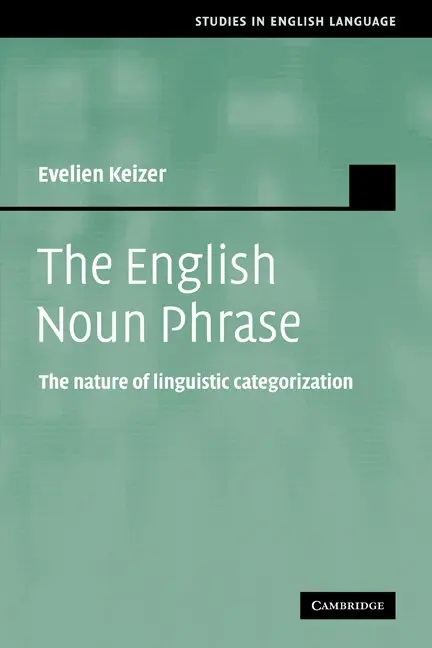
    The English Noun Phrase

    The Nature of Linguistic Categorization

    AvEvelien Keizer

    Inbunden, Engelska, 2007

    Del i serien Studies in English Language

    1 540 kr

    Beställningsvara. Skickas inom 10-15 vardagar. Fri frakt över 249 kr.

    Fler format och utgåvor

    Häftad

    615 kr

    Beskrivning

    English has an interesting variety of noun phrases, which differ greatly in structure. Examples are 'binominal' (two-noun) phrases ('a beast of a party'); possessive constructions ('the author's opinion'); and discontinuous noun phrases ('the review [came out yesterday] of his book'). How are these different noun phrases structured? How do we produce and understand them? These questions are central to this study, which explores the interaction between the form of noun phrases, their meaning, and their use. It shows how, despite the need in linguistic analysis for strict categories, many linguistic constructions in fact defy straightforward classification - and concludes that in order to fully explain the internal structure of utterances, we must first consider the communicative, pragmatic and cognitive factors that come into play. Drawing on a range of authentic examples, this book sheds light not only on the noun phrase itself but also the nature of linguistic classification.

    Produktinformation

    • Utgivningsdatum:2007-08-09
    • Mått:152 x 229 x 25 mm
    • Vikt:750 g
    • Format:Inbunden
    • Språk:Engelska
    • Serie:Studies in English Language
    • Antal sidor:394
    • Förlag:Cambridge University Press
    • ISBN:9780521849616

    Utforska kategorier

    • Språkvetenskap och lingvistik inom Språk och ordböcker

    Mer om författaren

    Evelien Keizer is Senior Researcher at the Amsterdam Center for Language and Communication at the University of Amsterdam. She is co-editor of Fuzzy Grammar: A Reader (2004).

    Innehållsförteckning

    • 1. Introduction; Part I. The Structural Approach: Possibilities and Limitations: 2. Headedness within the NP; 3. Close appositions; 4. Appositions with of; 5. Binominals; 6. Pseudo-partitives; 7. Sort/kind/type-constructions; 8. Conclusion; Part II. The Cognitive-Pragmatic Approach: Some Applications: 9. The flexibility of language; 10. Complements and modifiers; 11. Discontinuous NPs; 12. Possessive constructions: 'the author's opinions vs. the opinion of the author'; 13. Conclusion.