• Fri frakt över 249 kr
  • •
  • Snabba leveranser
  • •
  • Billiga böcker
Kundservice

Du är på sajten för privatpersoner.

Företag, bibliotek eller offentlig verksamhet?

Du handlar på classic.bokus.com, där alla dina funktioner finns intakta.
Till classic.bokus.com
Bokus logotyp. Gå till startsidan.
  • Erbjudanden
  • Nyheter
  • Student
  • Topplistor
  • Barn & ungdom
  • Bokus Play
  • E-böcker
  • Pocketböcker
  • Spel & pussel

10% rabatt på allt med kod: NYSTART10 →

Sidfot

Mina sidor

    Hjälp

    • Kundservice
    • Vanliga frågor och svar
    • Frakt och leverans
    • Retur vid ångerrätt
    • Reklamera vara
    • Betalning
    • Köpvillkor
    • Allmänna villkor
    • Information om webbplatsens tillgänglighet

    Om Bokus

    • Om oss
    • Pressrum
    • För studenter
    • För företag
    • För bibliotek och offentlig verksamhet
    • För leverantörer
    • Hållbarhet

    Populärt

    • Aktuella erbjudanden
    • Presentkort
    • Studentlitteratur
    • Nya böcker
    • Topplistor
    • Signerade böcker
    • Engelska böcker

    Inspiration

    • Boktips
    • BookTok
    • Populära bokserier
    • Barnbokskaraktärer
    • Populära författare
    Logotyp för Bokus
    Följ oss på Facebook (extern länk)Följ oss på Instagram (extern länk)Följ oss på YouTube (extern länk)Följ oss på TikTok (extern länk)
    bokus @ CookiesAnpassa cookiesIntegritetspolicyKöpvillkor
    Till Citymail hemsida (extern länk)Till Budbee hemsida (extern länk)Till Postnord hemsida (extern länk)Till Schenker hemsida (extern länk)Till Early Bird hemsida (extern länk)Till Walleys hemsida (extern länk)
    1. Samhälle och politik
    2. Sociologi och antropologi

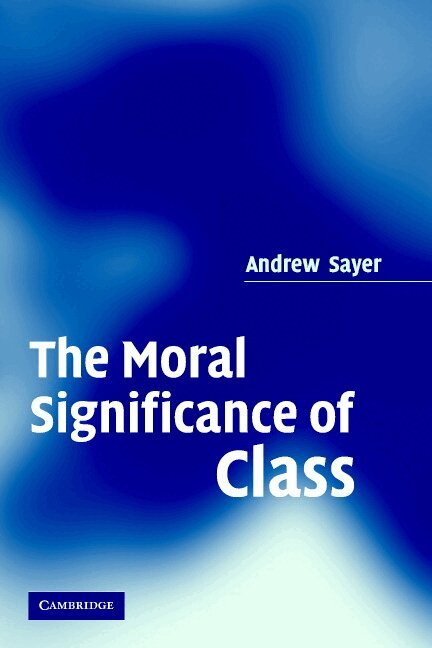
    The Moral Significance of Class

    AvAndrew Sayer

    Inbunden, Engelska, 2005

    1 335 kr

    Beställningsvara. Skickas inom 10-15 vardagar. Fri frakt över 249 kr.

    Fler format och utgåvor

    Häftad

    597 kr

    Beskrivning

    The Moral Significance of Class, first published in 2005, analyses the moral aspects of people's experience of class inequalities. Class affects not only our material wealth but our access to things, relationships, and practices which we have reason to value, including the esteem or respect of others and hence our sense of self-worth. It shapes the kind of people we become and our chances of living a fulfilling life. Yet contemporary culture is increasingly 'in denial' about class, finding it embarrassing to acknowledge, even though it can often be blatantly obvious. By drawing upon concepts from moral philosophy and social theory and applying them to empirical studies of class, this fascinating and accessible study shows how people are valued in a context in which their life-chances and achievements are objectively affected by the lottery of birth class, and by forces which have little to do with their moral qualities or other merits.


    Produktinformation

    • Utgivningsdatum:2005-05-12
    • Mått:159 x 235 x 20 mm
    • Vikt:521 g
    • Format:Inbunden
    • Språk:Engelska
    • Antal sidor:256
    • Förlag:Cambridge University Press
    • ISBN:9780521850896

    Utforska kategorier

    • Sociologi och antropologi inom Samhälle och politik

    Mer om författaren

    Andrew Sayer is Professor of Social Theory and Political Economy at the Department of Sociology, Lancaster University. His publications include Microcircuits of Capital (1988, with K. J. Morgan), Method in Social Science (1992), The New Social Economy (1992, with R. A. Walker), Radical Political Economy: A Critique (1995), and Realism and Social Science (2000), and over eighty articles.

    Recensioner i media

    'It is stimulating and insightful both in the overall thrust of its argument and the details of its analysis … a book of bread relevance to anyone interested in sociological theory, the normative dimensions of culture, and inequality.' American Journal of Sociology

    Innehållsförteckning

    • Preface and acknowledgements; 1. Introduction; 2. From habitus to ethical dispositions; 3. Recognition and distribution; 4. Concepts of class: clearing the ground; 5. Struggles of the social field; 6. Moral and immoral sentiments and class; 7. Responses to class I. egalitarianism, respect(ability), class pride and moral boundary drawing; 8. Responses to class II. explanations, justifications and embarrassment; 9. Conclusions and implications; References.